Poker course review
Multiway Mastery review: is Isaac Haxton’s course worth Buying?
Isaac Haxton’s course explains what changes when a third player stays in the pot. Detailed solver lessons, practical adjustments and a narrow, advanced focus.
A practical framework for three-way pots
Multiway Mastery is a strong choice for experienced hold’em tournament players who want to understand three-way pots rather than borrow heads-up rules and hope they hold. Its best lessons connect solver output to a practical decision: who can raise behind, whose equity a bet denies, and which player can exploit an opponent’s mistake.
The limitation is breadth. The course goes deep into two formations and a selected group of boards. It does not cover every kind of multiway pot, and the harder lessons require active study. It makes more sense as targeted training than as a first major course purchase.
The verdict: Multiway Mastery
Specialist training for three-way pots, for experienced tournament players.
The good
tournament players comfortable with ranges, check-raises and solver explanations who struggle when a third player stays in the hand.
The bad
you need preflop foundations, a complete tournament syllabus, or instruction focused on four- and five-way live pots.
Multiway Mastery tackles a familiar problem: a postflop decision that would be straightforward against one opponent becomes uncomfortable with a third player involved. A cheap call stops looking cheap. A strong hand wants to call rather than raise. A lead that appears to attack the preflop raiser is really putting pressure on someone else.
Isaac Haxton builds the course around those changes. Real tournament hands introduce the questions, then detailed solver work explains how the players’ ranges interact. This is specialist training for players who already understand postflop fundamentals, not a complete poker course or a collection of quick fixes.
What is included?
The course contains more than seven hours of instruction, taught by Isaac Haxton. The current offer includes one month of GTO LAB Pro. Lessons stream through the GTO LAB website.
The teaching follows two main formations:
- A preflop opener, a late-position caller and the big blind.
- A preflop opener with both blinds calling.
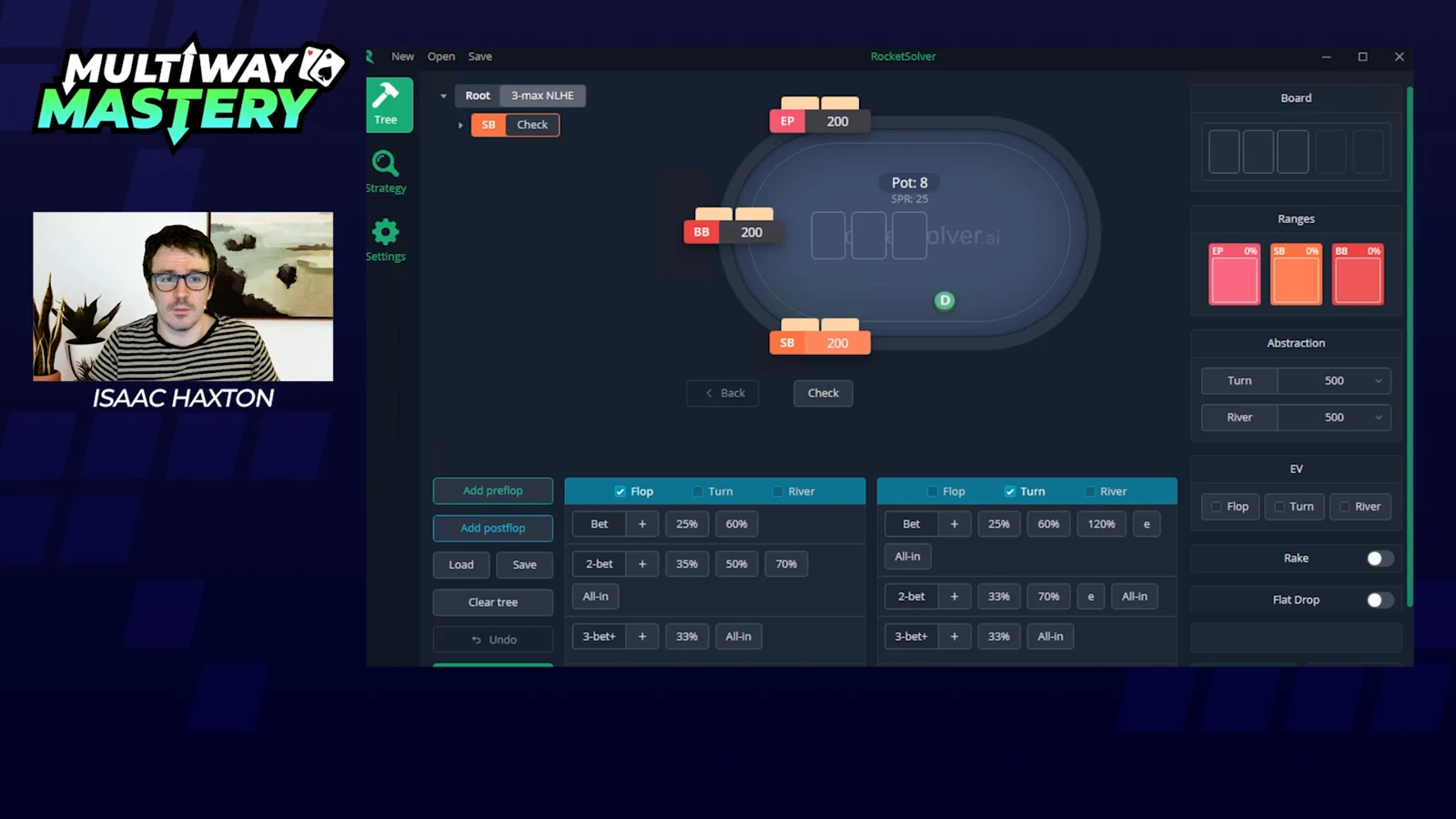
An opening lesson explains the scope, followed by an introduction to Rocket Solver. The main sections begin with hand discussions involving Daniel Dvoress before moving into detailed analysis of individual boards and subsequent decisions.
The Rocket demonstration is part of the teaching. Watching Haxton work through it is different from having software to run your own three-way solves. The streaming lessons need no special software to view; do not assume the included Pro month also gives you a Rocket licence.
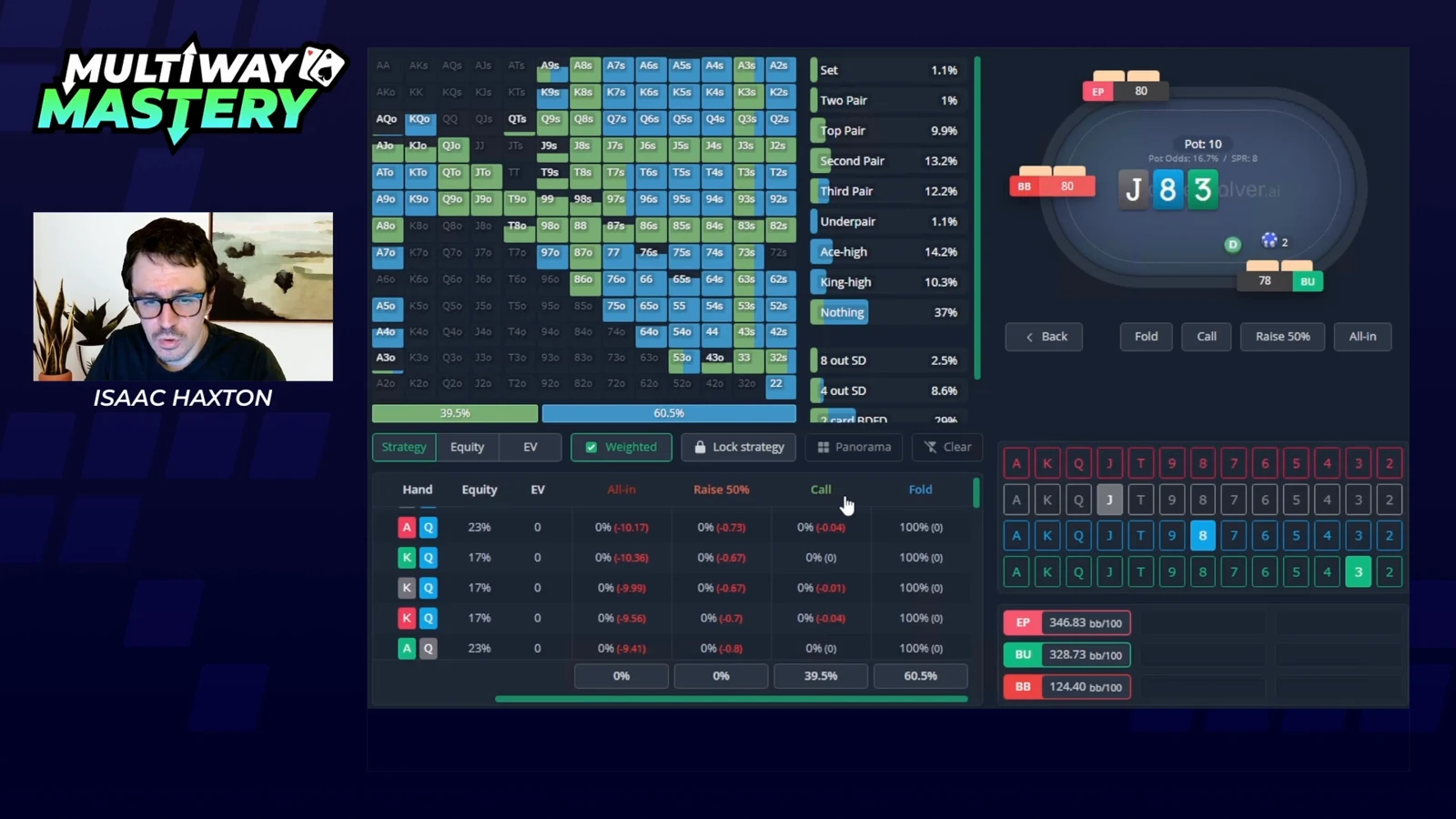
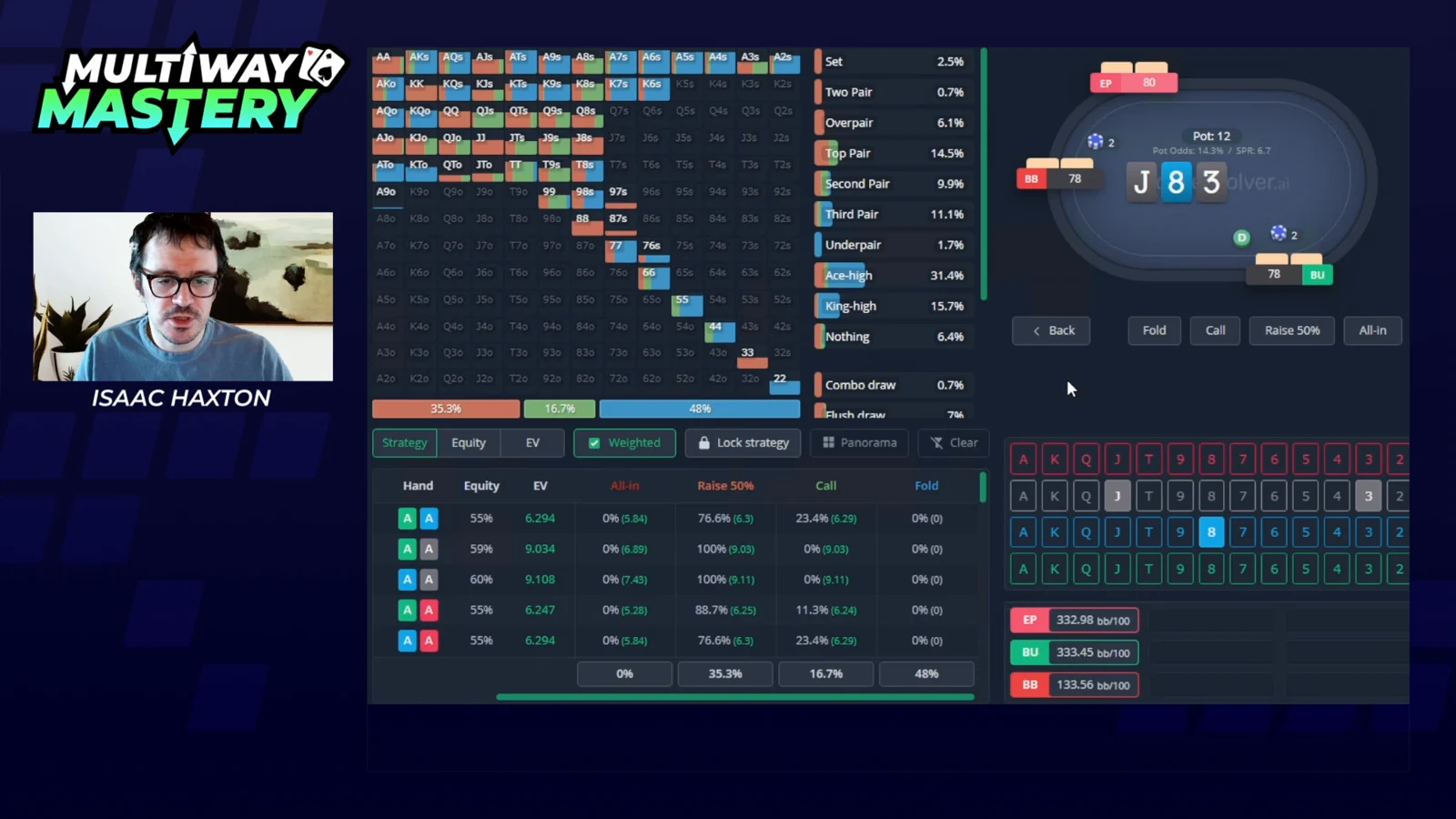
The first formation spends substantial time on J83 rainbow and its two-tone counterpart. The second explores boards including A96, T53, QJ9 and J73. These are not simply separate examples to memorise. The comparisons show how changing the texture, position or action changes the job of each range.
The course explicitly excludes four-or-more-player pots and three-player formations with no blind involved. That is important for buyers whose main problem is a live table where several players routinely see the flop.
The lesson that makes the course click
One introductory hand puts pocket fours in the big blind, facing a small button bet with the original raiser still to act. Looking only at the price encourages a call. Haxton instead works through what happens next.
The bettor has chosen to bet into two opponents. The opener can still have a strong hand and raise. Pocket fours has very few comfortable improvements, and surviving the flop does not make later streets easy.
This is a better starting point than a rule such as “fold more multiway”. It identifies why this particular call is unattractive. A different weak pair can have more useful ways to improve, and closing the action would change the calculation again.
That progression is the course’s central strength: identify the practical question, reason through the ranges, then inspect the model. The hand discussion gives the solver work a purpose.
The explanations behind the coloured ranges
Rocket Solver takes up much of the screen during the technical lessons. Haxton moves between players, actions and hand classes, explaining why the strategy takes its shape.
An especially useful example comes from the J83 rainbow work. In one big-blind decision, continuing by calling can include strong hands because the opener still has the opportunity to raise. Once the opener check-raises and the button folds, the situation changes: the big blind can now have reasons to play strong hands much faster.
The value is not a universal instruction to slow-play sets. It is seeing why a third player’s available actions can change the best way to use a strong hand.
Comparing the rainbow and two-tone versions also gives the study more structure. Keeping the ranks similar makes it easier to notice the effect of draws and changing continuation ranges, rather than treating every new board as an unrelated puzzle.
There is a trade-off. Repeatedly following branches of the same hand takes concentration. Players looking for rapid-fire hand reviews or a short list of actions will find the presentation slower than they want. The course rewards pausing to predict an answer before Haxton opens the next range.
Why a lead can be about the third player
The T53 rainbow lesson offers one of the clearest examples of genuinely multiway reasoning. A small-blind lead is not explained simply by saying that the board hits the small blind.
Haxton compares it with A96 and examines how the big blind’s prospects have improved. Allowing a free card becomes more costly. Leading applies pressure to that third range, even though the preflop raiser is also in the pot.
The wider lesson also examines a model without the small-blind lead, so you can see who benefits from having that option. That comparison explains the lead much better than a frequency on screen would on its own.
This is where the specialist focus pays off. You have to consider who gains and who loses from an action across all three ranges. Looking only at the opponent you would face heads-up can miss the reason for the play.
Does it cover exploits, or only solver strategy?
It covers both, and the useful part is the connection between them.
In the A96 analysis, Haxton examines the relationship between the opener’s betting frequency and the small blind’s raising response. If the opener bets too much, the small blind may have suitable hands to raise more aggressively. The big blind does not automatically have the same opportunity just because it has spotted the same mistake.
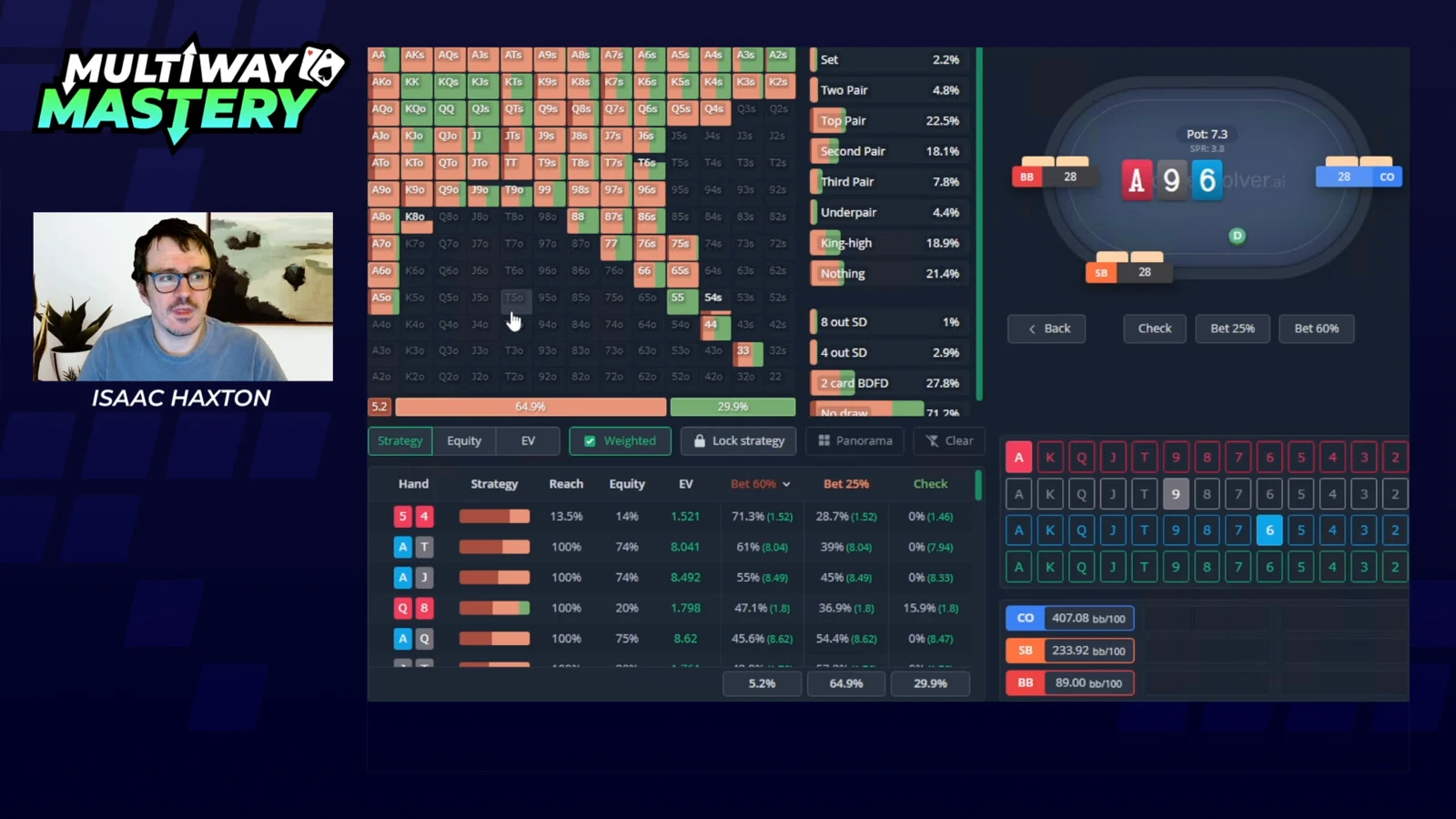
That distinction is valuable. “Villain bets too much, so fight back” is incomplete advice in a three-way pot. Position, range strength and the remaining player’s involvement determine who can profitably make the adjustment.
The QJ9 two-tone material adds a more familiar practical concern. A solver line can depend on an opponent folding a strong-looking hand. Haxton questions whether a real opponent will release pocket kings and explains why marginal aggression may need to come down if that fold is unlikely.
These are conditional adjustments, not claims that every opponent behaves a certain way. The course gives a way to connect a read with a decision instead of treating the solver’s mixed strategy as an instruction to follow regardless of the table.
What happens after the flop?
Multiway Mastery does not stop at the first betting decision. Lessons follow different branches, including situations where a player folds and the pot becomes heads-up.
The J73 turn work is particularly useful for seeing why a turn card cannot be judged in isolation. Previous actions have already shaped the ranges. An overcard may help one player’s remaining hands more than the other’s, while a lower card or a suited turn changes that relationship differently.
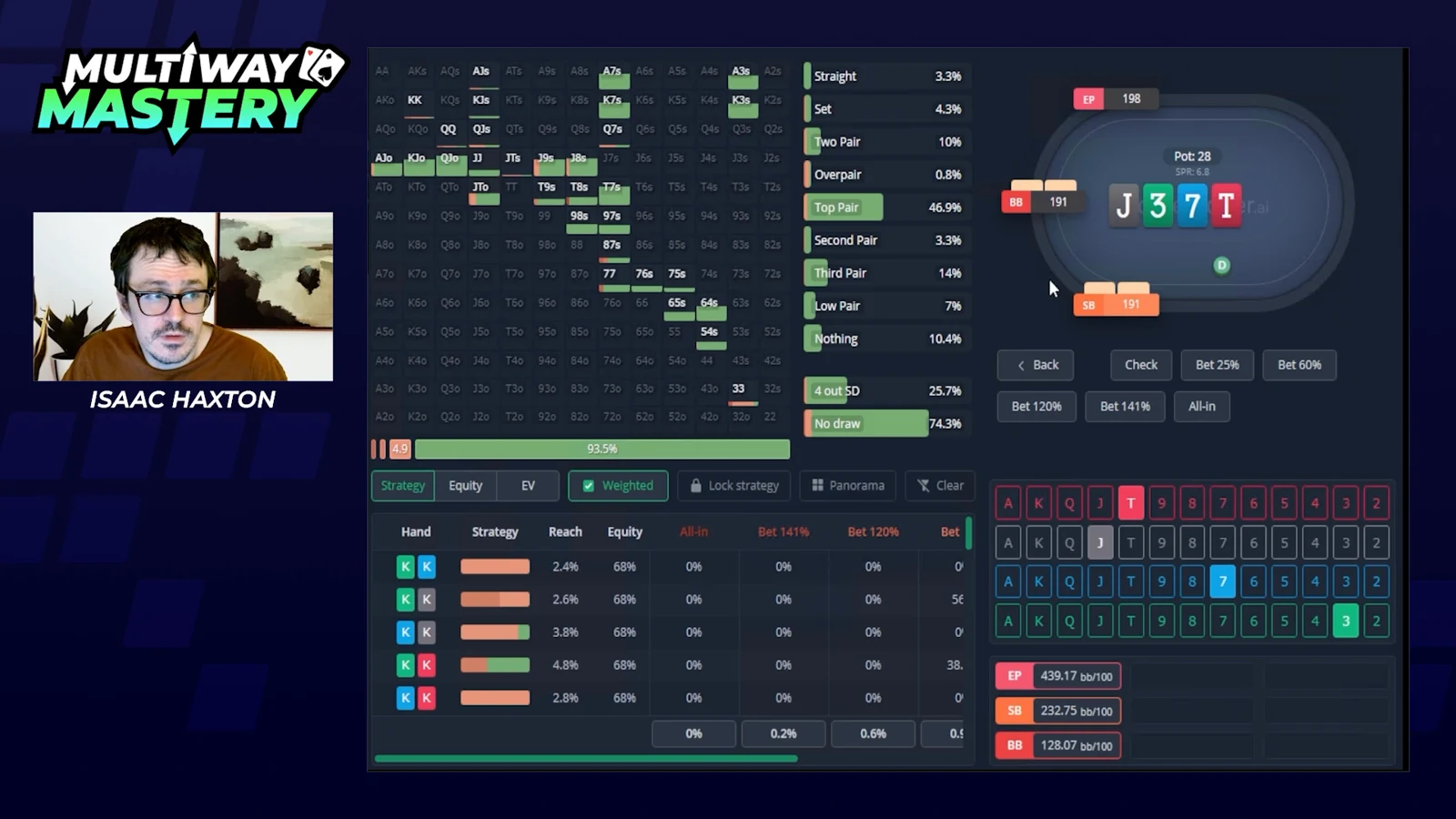
This makes the material more demanding, but also more relevant to actual hands. Learning a flop response without understanding the range it takes to the turn can leave the next decision just as uncomfortable.
Where the course falls short
The coverage has a clear limit. The two formations make a connected course, but leave plenty of multiway poker outside it. If you need broad coverage of limped pots, several callers or other seating arrangements, you will need something else alongside this.
Some difficult decisions remain difficult. In the more complex QJ9 analysis, Haxton sometimes works through a possible explanation without claiming to have a simple answer for every combination. That is better than false confidence. It still means you should expect mixed strategies that take work to understand and remember.
You need the foundations first. The lessons expect you to follow ranges, equity realisation, mixed actions and betting trees. The software introduction explains the display, but those poker ideas need to be familiar already.
The format needs active study. Several dense lessons in a row can leave you remembering very little. You need time to work out why an action makes sense before worrying about the exact combinations on screen.
How to get useful study out of it
Start with one of your own hands where the third player made the decision awkward. Use the relevant lesson to check who can still raise, who benefits from a free card and how a fold would change the pot.
Keep a short explanation you can use in another hand. The pocket-fours lesson is a good example: the poor ways to improve and the action still behind explain the fold. Copying the displayed action would miss why a different underpair might continue.
Then compare the lesson with your hand. Check the stack depth, formation, board texture and action so far before carrying the idea across. Calling both hands a “three-way flop” tells you very little about whether the same play works.
That gives the long solver branches a useful purpose: helping you recognise what makes the decision difficult when it comes up again.
Is Multiway Mastery worth the money?
At the $399 price assessed for this review, Multiway Mastery makes sense if three-way postflop pots are a recurring weakness in your tournament game. Haxton’s best explanations show which player changes the decision and why. Simply tightening your heads-up strategy would leave those questions unanswered.
If you are still learning preflop play or heads-up pots, there are bigger gaps to fill first. This course cannot provide a full grounding in tournament decisions. And if your main game regularly goes four or five ways to the flop, the title promises more than the actual coverage offers you.
One month of Pro adds to the package. The lessons themselves still need to solve a recurring problem in your game for the purchase to make sense.
Lifetime access applies to the course, not an indefinite Pro membership. Check the renewal charge and cancellation terms for that included month before paying. GTO LAB’s Multiway Mastery purchase terms say the course purchase is non-refundable, so do not treat it as a trial.
Bottom line: Haxton makes a strong case for studying three-way pots on their own terms. The board comparisons and position-specific adjustments explain decisions that heads-up rules can miss. It is a good specialist purchase for an experienced tournament player with that weakness, as long as you are comfortable with the narrow coverage and slow, detailed lessons.
Official course page: Multiway Mastery at GTO LAB (opens in a new tab)
Frequently asked questions
Is Multiway Mastery suitable for beginners?
Not as a first course. You need to be comfortable following ranges, check-raises and solver explanations before the detailed analysis becomes useful.
Is it only about tournament poker?
The examples and framing are tournament-oriented. Concepts such as action remaining behind and equity denial also matter elsewhere, but exact strategies should not be transferred to a different game or setup unchanged.
Does it cover pots with four or more players?
No. The stated focus is three-way pots in two formations involving the blinds.
Does it teach practical adjustments?
Yes. The lessons connect deviations to specific positions and ranges, including how to respond to excessive betting and opponents who do not make the folds a solver strategy expects.
How much does it cost?
The price assessed for this review was $399. Confirm the current checkout price before buying. The offer includes one month of GTO LAB Pro; the course videos have lifetime access.