Poker course review
Tournament Savagery review: is it worth $999?
Nick Petrangelo and Daniel Dvoress explain how stack sizes and payout pressure change tournament decisions. Deep ICM instruction, practical hand reviews and linked drills, with a $999 price and an advanced workload.

Tournament strategy under payout pressure
Tournament Savagery is a strong course for experienced MTT players who want a deeper understanding of ICM, stack distributions and postflop play under payout pressure. The progression through tournament stages gives the theory a clear structure, while the coaches repeatedly connect it to decisions against real opponents.
It is not an efficient first purchase for a beginner. Some lessons are dense, the postflop section is a selection of important situations rather than a complete position-by-position manual, and continued access to the linked drills requires a subscription.
The verdict: Tournament Savagery
Deep ICM training for experienced tournament players.
The good
explaining how the value of a decision changes with the surrounding stacks and tournament stage.
The bad
a large upfront investment, plus ongoing tool access if the drills remain part of your routine.
A tournament stack can be worth more than its chip count suggests. Near the bubble, a profitable chip gamble may be a poor prize-money decision. Once the bubble bursts, carrying the same caution into the next level can become a mistake. At a final table, even the chip leader can throw away opportunities by applying pressure in the wrong way.
Tournament Savagery is built around those changes. Nick Petrangelo and Daniel Dvoress follow tournament play from the early levels through the money bubble and into short-handed final tables. Their best explanations do more than show which hands a solver plays. They explain when the output needs interpreting, how the other stacks change a decision, and where human opponents create room to adjust.
This is advanced tournament training with a substantial price attached. The question is not whether there is enough theory. It is whether that theory addresses the decisions holding back your tournament game.
What does Tournament Savagery cover?
The course has four main teaching sections after the introduction: preflop, postflop, blind versus blind, and unusual situations. The preflop sequence provides the backbone. It starts with chip-value decisions, follows rising payout pressure towards the bubble, resets after the money is reached, then builds towards the final table.
| Section | Main focus |
|---|---|
| Preflop | Unequal stacks, defending and calling ranges, bubble pressure, post-bubble adjustments and final-table stack roles |
| Postflop | Common early-stage situations, check-raising, calling, turn play and how payout pressure changes later-street decisions |
| Blind versus blind | Wide ranges, opening and limping strategies, and the opportunities left after a limp and check |
| Unusual situations | Extreme stack distributions and counterintuitive decisions involving multiple all-in players |
This order matters. Bubble play is easier to understand when it has been compared with the less pressured decisions leading up to it. The final-table material then builds on those relationships instead of introducing an unrelated set of rules.
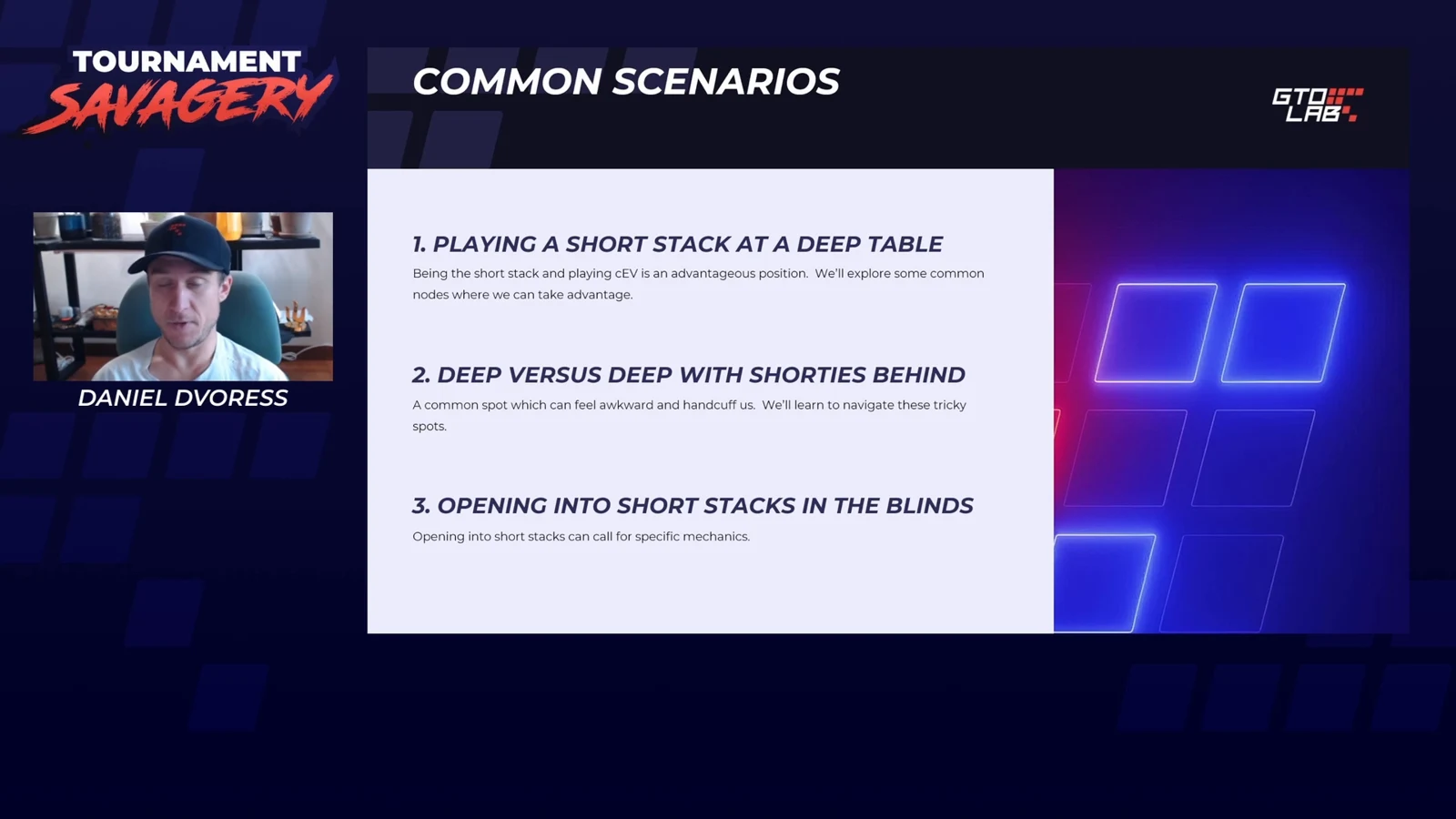
The current official offer advertises approximately 25 hours of video, 39 linked drills, a private Discord channel and subtitles in ten languages. The videos are streamed through GTO LAB. Those platform features sit alongside the lessons; the real reason to buy is the depth of the instruction.
It teaches when to question a solver result
Petrangelo’s discussion of mid-stage defending is a good example of the teaching style. He compares chip-value ranges with situations progressively closer to the money. The point is not simply to observe that the ranges tighten.
He asks whether adopting every early ICM adjustment makes sense when many hands remain before the largest prizes are awarded. Stack size relative to the field, future opportunities and the limitations of the model all enter the discussion.
That is a useful distinction for players who have started studying ICM and now feel obliged to take every displayed fold literally. A simulation answers the question it was given. Applying its answer to a tournament still requires understanding the setup and assumptions.
There is an important qualification: questioning an output does not make ignoring ICM correct. The lesson compares situations and identifies where adjustments deserve more or less weight. It is an argument for informed interpretation, not permission to dismiss an uncomfortable fold.
This is where the course is strongest. You see the theoretical baseline, then get a clear reason why the practical decision may change.
Bubble play is about more than having ten big blinds
Dvoress’s bubble discussion challenges a common shortcut: treating a particular number of big blinds as the point where it is automatically time to gamble.
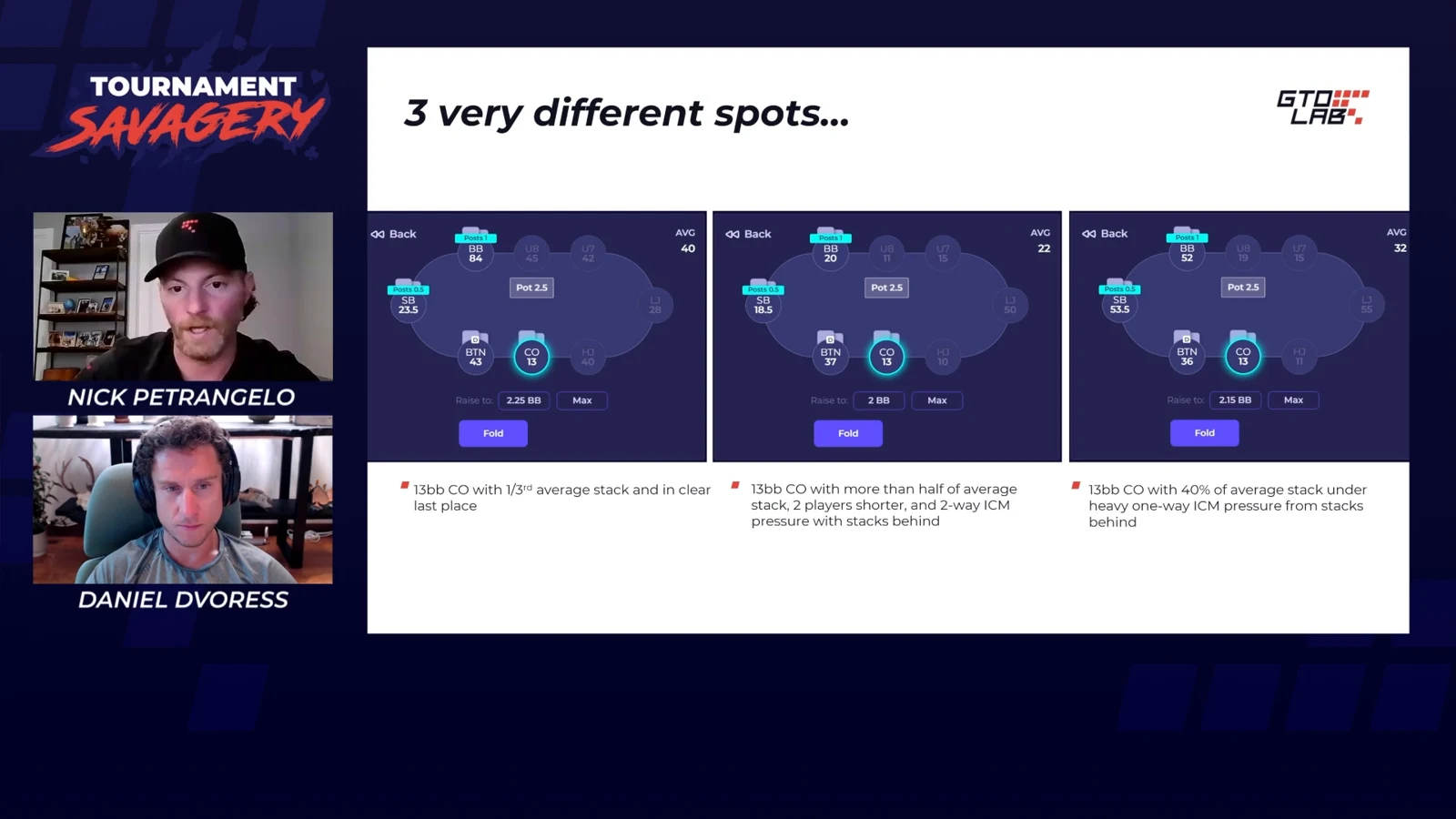
Ten big blinds does not describe the entire situation. The average stack, the distance from the money and what a double-up would actually achieve can change the value of taking a risk. A short stack that would become competitive after doubling is in a different position from one that would still be far below the field average on a flat part of the payout structure.
The examples make this more concrete than a general warning to protect tournament life. They ask what the extra chips buy, not just whether the hand has enough equity to win chips.
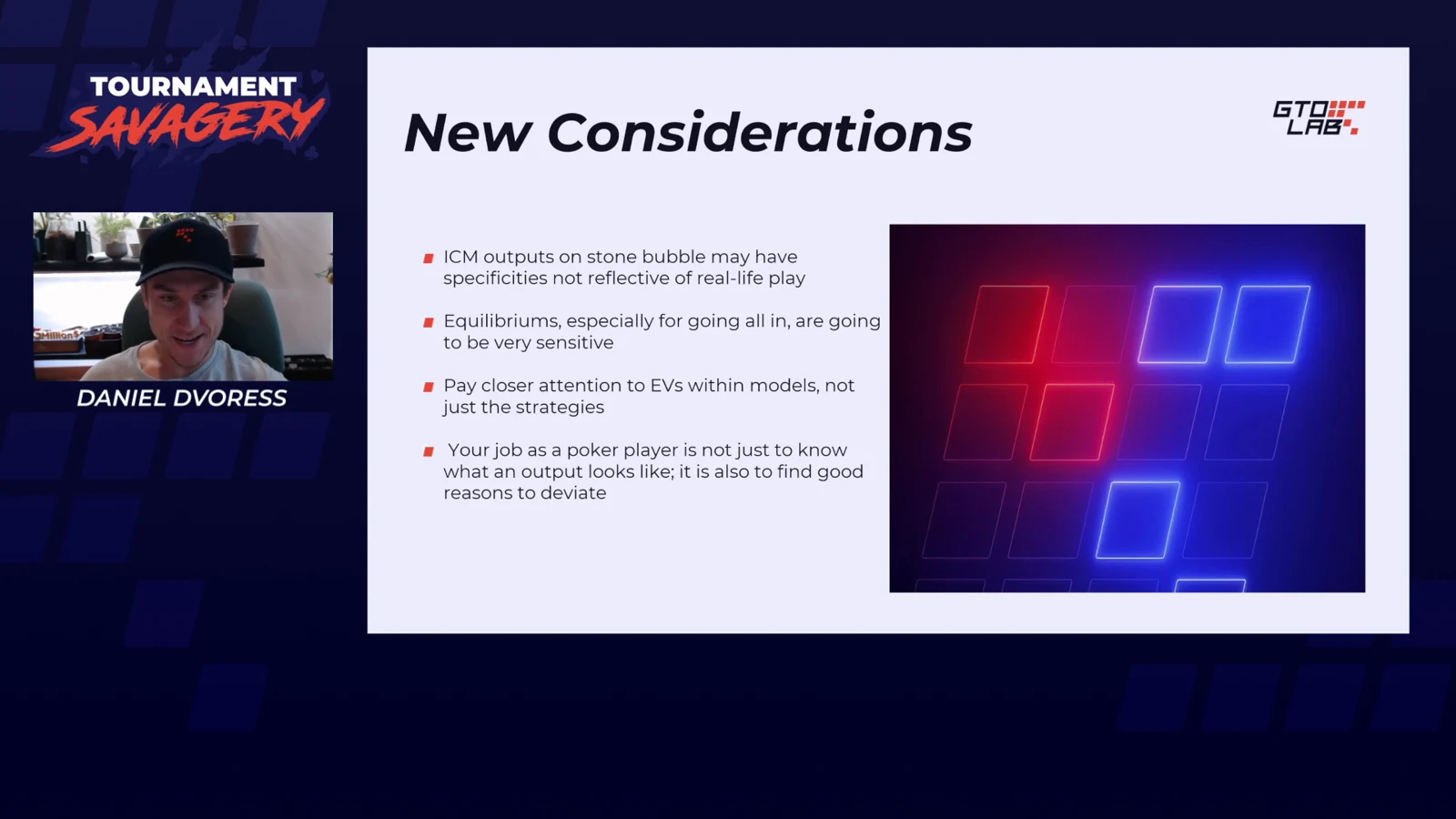
Another useful point is the gradual buildup of pressure before the bubble. It does not suddenly appear when the tournament becomes hand-for-hand. Equally, the same pressure does not apply identically to every player at the table.
This is a valuable part of the course for players who know the definition of ICM but still reduce it to “play tighter near the money”. It replaces that instruction with questions that distinguish one bubble decision from another.
The post-bubble reset gets proper attention
Reaching the money changes the incentives sharply. Dvoress contrasts that shift with the more gradual rise in pressure beforehand.
The practical lesson is not that ICM disappears. In a large field, the next meaningful jumps may be distant enough that much of the immediate survival pressure has eased. In a small field, the bubble can burst with relatively few players remaining and important payouts still close.
That distinction helps prevent two opposite errors: continuing to play as though the next elimination decides whether you cash, or assuming that every in-the-money decision is suddenly about chips alone.
The order helps here. You have just studied why those risks were expensive, so the post-bubble lesson can show exactly which conditions have changed. That is easier to follow than a collection of unrelated bubble and final-table hand reviews.
The chip-leader lessons are more nuanced than “apply pressure”
A large stack creates opportunities, but it does not make every aggressive action attractive. Dvoress explains why absolute stack depth still matters when the chip leader opens into covered players.
If a defender only has to risk a small portion of a reasonably deep stack, being covered does not automatically stop that player from defending. Treating every shorter opponent as though they face an immediate tournament-life decision overstates the chip leader’s freedom.
The course also distinguishes preflop pressure from advantages available after the flop. Winning the pot immediately is not the only way a large stack benefits. Opponents’ tighter thresholds can create opportunities across multiple streets, so forcing everything into a shove-or-fold decision may give some of those opportunities away.
This does not turn passivity into the answer either. The useful takeaway is that the chip leader has several ways to use an advantage. Choosing between them requires more than noticing that everyone else has fewer chips.
That level of detail helps justify an advanced course. It addresses mistakes a player can still make after learning the basic relationship between a big stack, shorter stacks and payout pressure.
Postflop ICM is a major reason to consider it
Preflop charts cannot explain what happens when a covered player reaches the turn with a marginal bluff-catcher. Tournament Savagery extends the discussion into betting, calling and sizing decisions after the flop.
In the simplified betting-model lesson, Dvoress starts with chip-value reasoning and then introduces payout pressure. The comparison makes the mechanism easier to follow: losing chips and winning the same number of chips no longer have equal and opposite effects on prize equity.
A call that breaks even in chips therefore cannot automatically be treated as acceptable, and the requirements for a value bet can change too.
These explanations give the later hand reviews a purpose. A small bet or cautious-looking line starts to make sense once you understand how the payouts change the cost of putting more chips into the pot. Without that explanation, it can look like another odd solver result to remember.
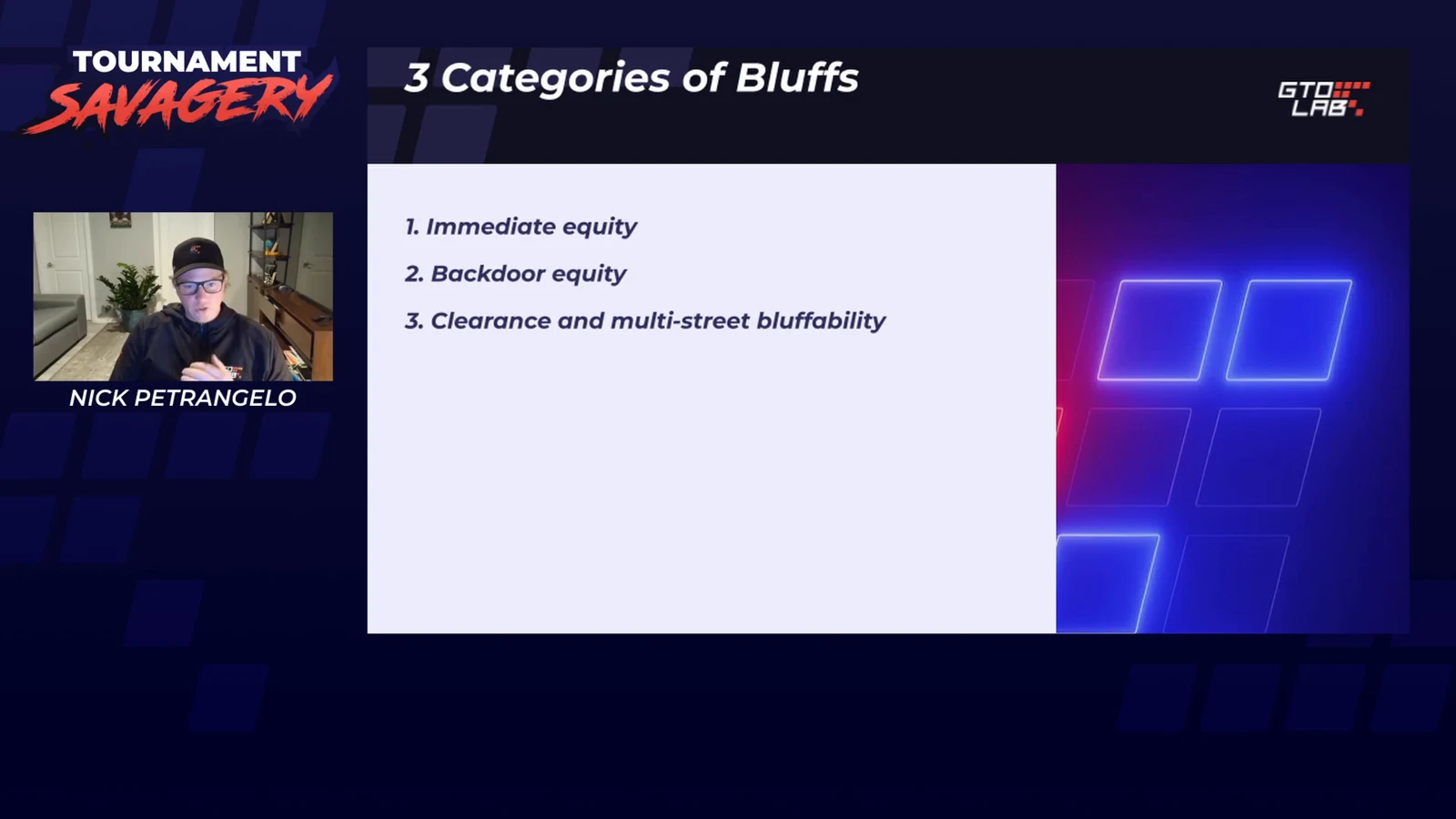
The early-stage lessons cover a selection of situations. Petrangelo says in the introduction that he chose common spots and concepts he considers useful to experienced players. That keeps the course focused. If you want a complete cash-game-style syllabus covering every position pair, there are gaps you will need to fill elsewhere.
Real hands give the technical work a setting
The final-table section includes actual streamed hands, not only abstract ranges. Seeing the action before the analysis makes it easier to understand why a decision became difficult and which earlier choices shaped it.
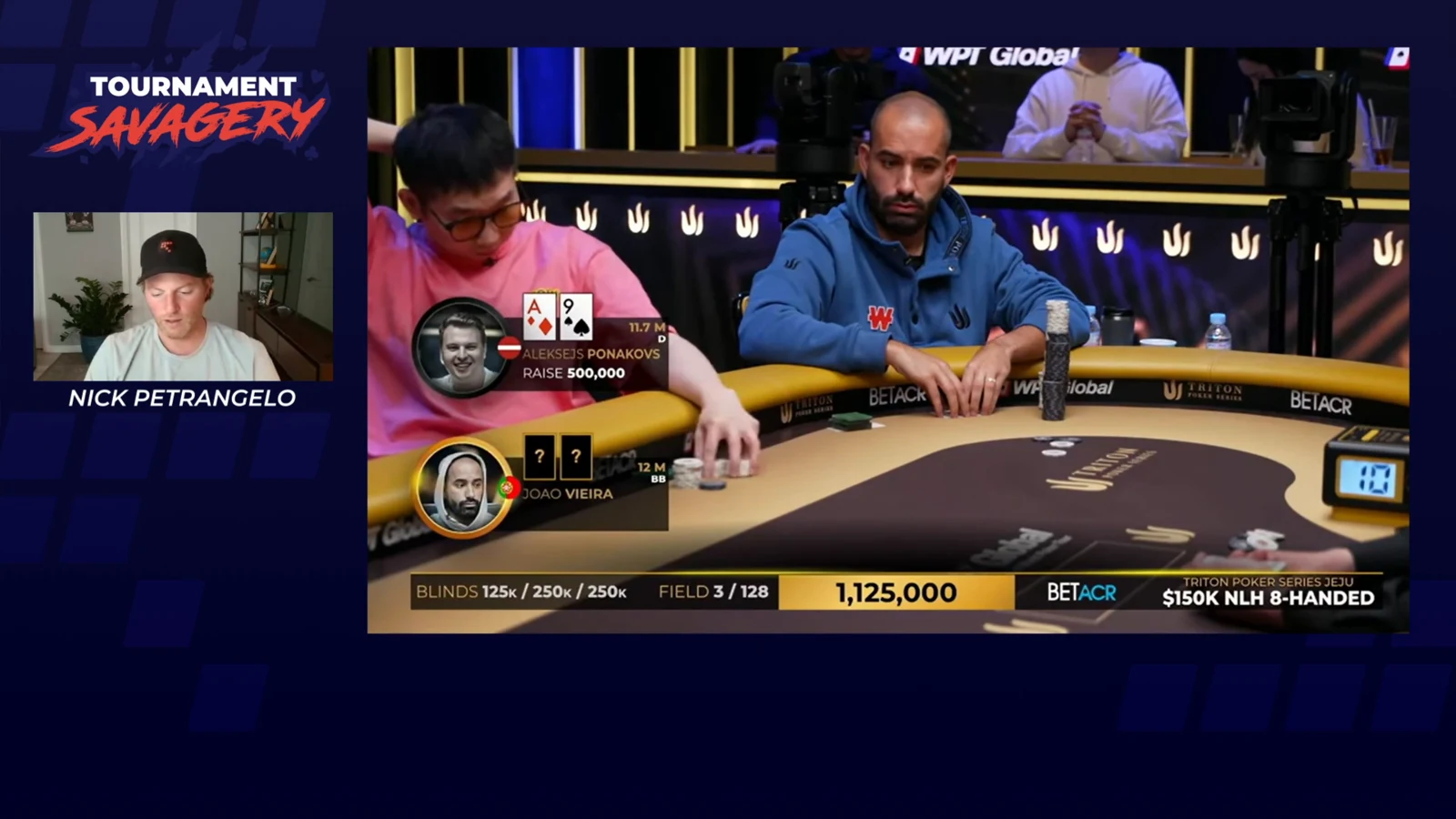
The presentation alternates between slides, software and hand footage. That variety helps, although it remains a technical course. Long stretches involve following ranges and listening carefully to the explanation. It is better suited to a planned study session than background viewing while playing several tables.
Dvoress is particularly effective when separating concepts that initially look similar. Petrangelo’s more conversational style brings the discussion back to how people play and which mistakes deserve attention. The difference in delivery keeps the course from sounding like one long software demonstration.
Blind versus blind is not treated as an afterthought
Wide ranges can make blind-versus-blind play feel disconnected from the rest of tournament study. Petrangelo brings it back to a familiar starting point: work out what each player can hold after the preflop action.
In the limp-check lesson, the small blind’s limping range and the big blind’s checking range do not contain the same types of hands. Understanding which strong hands the big blind would normally raise helps explain the boards on which the small blind can apply pressure.
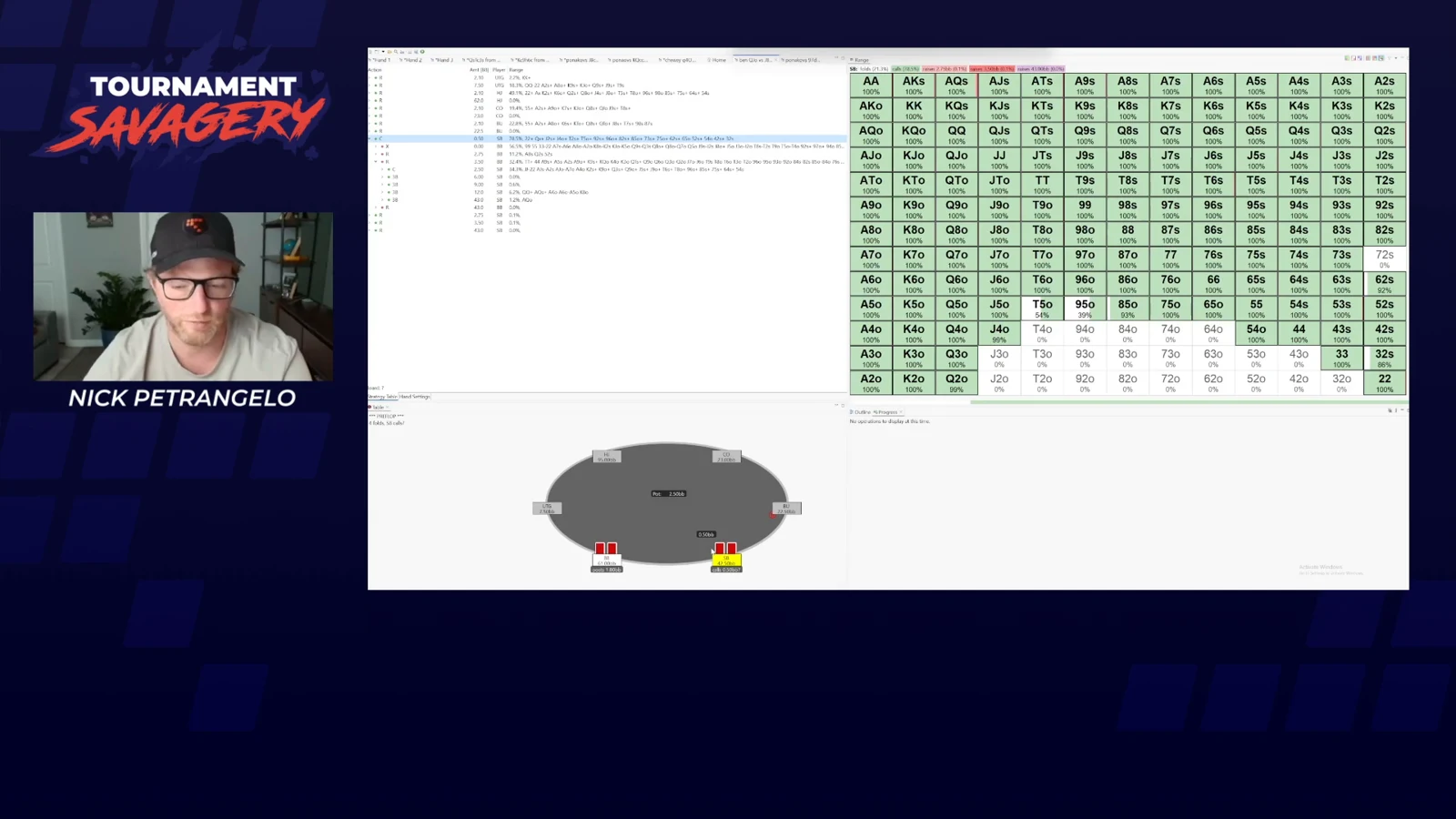
The lesson also considers opponents who fail to raise enough. That preflop mistake can change how the small blind builds a strategy before the flop is even dealt.
This is a useful inclusion because it deals with repeatable decisions, not just rare final-table highlights. It also demonstrates the course’s broader approach: begin with the ranges, identify what the opponent changes, then adjust the response.
Drills, access and the ongoing cost
The linked drills load prepared situations in GTO LAB’s trainer. You can practise the lesson through repeated decisions without first having to rebuild every setup.
The distinction to understand before buying is simple: lifetime access applies to the course videos. Continued use of the practice links requires an active Tools or Pro subscription. One month of Pro is included in the $999 purchase.
The videos stay available after that month. If you plan to keep using the drills, allow for a Tools or Pro subscription beyond it. There is a lot to study here, and one month may be too short for your schedule.
The instruction can justify the purchase on its own. If the trainer is central to how you intend to study, include that ongoing cost in the decision.
Tournament Savagery or the 26-Day Training Plan?
The GTO LAB 26-Day Training Plan is the more structured starting point for someone who wants a topic and a practice task laid out day by day. Tournament Savagery is the deeper option for a player who already has a study routine and wants more explanation of tournament incentives and difficult decisions.
Both cover unequal stacks, ICM and postflop play, but they serve different needs. If you need someone to lay out the next day’s work, the 26-Day Plan is the closer fit. If you already study regularly and want to understand why a final-table strategy changes, Savagery goes further into the explanation.
For a much narrower weakness in three-way pots, Multiway Mastery is the specialist alternative. It concentrates on two formations instead of following the tournament from early levels to the final table.
Buying the largest course is not automatically the best decision. The most useful one is the course whose depth and scope match the next area you can realistically study.
Where it falls short
You need to be ready for the technical work. The detailed explanations are a strength, but they ask you to follow the ranges closely. If ranges, solver outputs or basic tournament equity are unfamiliar, you will spend too much of the lesson catching up.
The high-roller setting needs interpretation. Hands against strong opponents are useful for understanding the mechanics. Their exact ranges should not simply be transplanted into a low-stakes field with different opening, calling and bluffing habits.
There is no universal action list at the end. Some lessons replace an oversimplified rule with a more complicated but more accurate question. That is valuable for advanced study, less attractive for someone who wants a short checklist to use immediately.
The full practice routine can cost more than $999. Lifetime video access does not cover continued use of the linked trainer. That matters if the exercises are part of the study routine you are buying this for.
Is Tournament Savagery worth buying?
Tournament Savagery is worth considering if you already understand MTT fundamentals and keep running into difficult decisions under payout pressure. It explains how the surrounding stacks change whether you should attack, call or protect the stack you have.
The strongest material challenges useful-but-incomplete rules: tighten up near the bubble, gamble when short, pressure everyone when leading. The coaches show why each can fail when the surrounding conditions change.
At $999, you need time to work through those explanations and compare them with your own hands. Buying it cannot promise a tournament result. If it is going straight into a backlog, the depth will do little for you.
Bottom line: this is excellent advanced ICM instruction, with enough postflop work to go well beyond preflop ranges. The price and study demands make it a poor first course. For an experienced tournament player ready to do that work, there is a clear reason to consider it, provided the extra cost of continued drill access fits the budget.
Official course page: Tournament Savagery at GTO LAB (opens in a new tab)
Frequently asked questions
Who teaches Tournament Savagery?
Nick Petrangelo and Daniel Dvoress. Both appear across the course, with different presentation styles and areas of emphasis.
Is it suitable for beginners?
Not as a first tournament course. Familiarity with ranges, basic ICM and solver analysis makes the technical lessons much easier to use.
Does it cover postflop play?
Yes. There is a substantial postflop section covering selected early-stage situations, payout-pressure mechanics and final-table hands, plus dedicated blind-versus-blind material.
Is the course a subscription?
The course is a one-time purchase with lifetime video access. The linked trainer exercises require an active Tools or Pro plan after the included access ends.
Does it teach more than folding under ICM?
Yes. The lessons examine opportunities to apply pressure, limits on chip-leader aggression and situations in which a solver output needs interpretation. Survival is one part of the decision, not the whole strategy.