Poker course review
The Game Plan review: is Kevin Rabichow's course worth it?
A closer look at the study methods, poker strategy and who will get the most from this course.
The complete review
A practical study plan with an emphasis on heads-up hold'em.
US$999 once
You’ve watched plenty of poker videos, but when you sit down to study, you’re still not sure what to work on. Sound familiar?
That’s the problem Kevin Rabichow tackles in The Game Plan. His course helps you assess your game, choose what to study and turn the information you find into a plan you can actually use at the tables.
The verdict: The Game Plan
A practical study plan with an emphasis on heads-up hold'em.
The good
Rabichow shows how he turns questions about his game into study and practice.
The bad
The $999 price and heads-up examples won't suit every player.
There is a catch, though. A lot of the practical strategy work is built around heads-up no-limit hold’em, and the lessons get technical. The course costs $999, so it’s worth knowing how much of it fits your game before you buy it.
Who is The Game Plan for?
The strongest fit is a player who already knows poker fundamentals and wants to get more out of their study time. Perhaps you have a database full of hands but aren’t sure where to start. Or you’ve opened a solver, found a mountain of information and struggled to turn it into something you can remember.
Rabichow has something useful to say about both. The course spends time on how to pick a problem, choose a way to investigate it and practise what you learn.
The examples are much more specific. The main game plan follows heads-up hold’em. If that’s your game, you can follow the work much more directly. If you play six-max or tournaments, you can still use the study process, but you’ll need to do more work translating the strategy examples to your own games.
And if you’re new to poker? You don’t need to start with a $999 course full of solver reports. A course that teaches the basics of your game first is a more sensible place to spend your money.
Finding out what you need to study
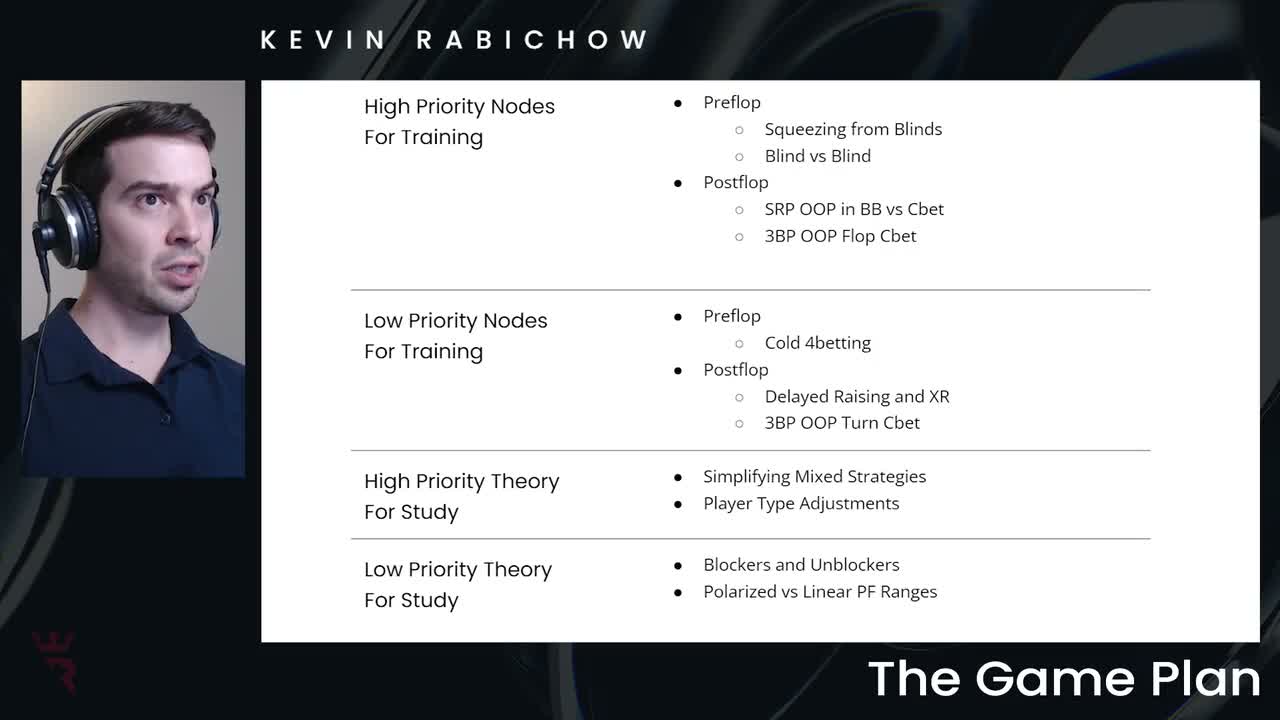
The course starts with an evaluation of your game. Rabichow asks you to look at what you understand, how you make decisions and how you currently study. From there, you choose a smaller set of priorities.
That sounds simple, but the useful part is seeing him work through an example. A player might feel uncomfortable in a lot of spots, for instance, yet the answer isn’t to try to fix all of them at once. Common decisions can deserve attention before a rare situation that hardly comes up.
It’s a practical way to get some direction when your study has become a collection of random videos. You still have to judge your own game, though. Filling out a worksheet won’t automatically tell you where you’re losing money, and Rabichow acknowledges that deciding what to do with the answers can be difficult.
What does it teach you about solvers?
Quite a lot of the course is devoted to poker tools. Rabichow works with pre-solved libraries, trainers and custom simulations. He shows how he uses them to explore a question about his game, then goes beyond looking up whether he played one hand correctly.
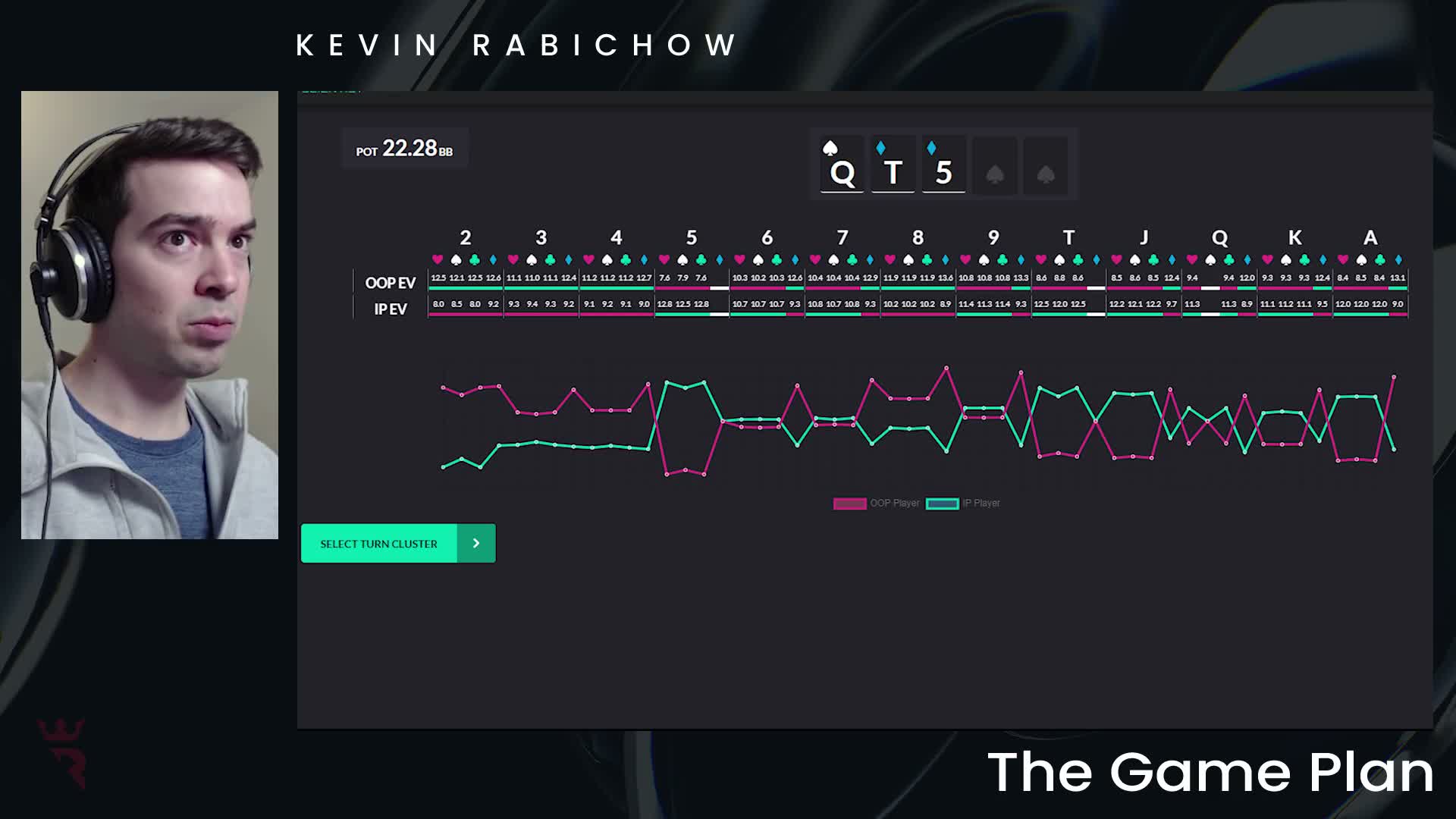
One example looks at how different turn cards change a strategy after a flop check-raise. Instead of treating every card as an entirely separate problem, he groups runouts that lead to similar decisions. That gives you an idea of how he tries to make solver work manageable.
He also shows how to set up drills for a particular spot and review the decisions afterwards. That’s helpful if you’re comfortable with the basics and want a better way to practise. This isn’t a gentle introduction to poker terminology, though. Ranges, bet sizes and simulation settings come up throughout, so expect to pause and work through some of it.
Another thing to keep in mind: the software shown in a lesson isn’t necessarily included in the course price. You can follow Rabichow’s explanations without buying every tool he demonstrates, but doing the same exercises yourself may mean spending more on software.
Using your own hands
The database lessons are among the more useful parts of the course for an online player. Rabichow shows how a stat can point you towards a question, then digs into the hands to see whether the first explanation holds up.
In one river spot, he starts by wondering if he’s missing too many bluffs. After reviewing hands and comparing similar simulations, he considers a different possibility: he may have folded too many hands that could have called. That’s a good example of why a number on its own doesn’t tell you what went wrong.
He also looks at opponents’ tendencies. Here too, he has to work with the hands available and be careful about small samples. You get to see how he checks an idea against the hands he has.
There is a separate example of preparing for Fedor Holz, where Rabichow goes through his notes and hand histories to build a plan for a possible future heads-up match. He also points out when the sample is too small to confirm a read. If you’re looking for a way to organise information on an opponent, that’s a useful look at how he does it.
If you play live, these demonstrations will be harder to follow on your own. They rely on an online hand database, and you won’t have the same hand histories from your usual live games to work with.
Building a game plan
The game-plan section takes those study methods into heads-up pots. Rabichow looks at common spots, sorts boards into groups and works towards a plan with fewer decisions to remember.
For example, he studies flop betting and defence against different sizes. There are also lessons on turn probes and river decisions, with trainer sessions and hand reviews to show how he follows up on the work.
Single-raised and three-bet pots get the most attention in the main game-plan work. There’s an overview of four-bet pots too, though that part doesn’t get the same full breakdown.
This approach is useful when you’re staring at a solver screen full of coloured squares and struggling to remember what they mean. Rabichow looks for patterns, chooses what matters to his game and then practises those decisions.
Just be careful about treating his finished plan as a set of rules for your own game. His examples depend on the ranges and bet sizes used in those simulations. A tournament player, for example, will have to account for different stacks and opponents.
Coaching, study groups and mental game
There’s useful advice here for players who work with others too. Rabichow talks about preparing specific questions for a coach and getting more out of a study group. He also discusses how to learn from recorded videos and poker streams without simply watching the biggest pots.
These lessons teach you how to choose and use those resources. Private coaching isn’t listed as part of the purchase, so check the cost if you decide to arrange it separately.
One area that gets less attention is the mental game. The evaluation asks you to think about it, but Rabichow says the course has very little dedicated mental-game instruction. If tilt or confidence is the main reason you’re looking for help, this isn’t the course to buy for that alone.
Price and what you get
Run It Once lists The Game Plan at $999 as a one-time purchase with lifetime course access. The seller also lists ranges and a private Discord group. Its page mentions four weeks of seminars, but it’s worth checking the current details with Run It Once if those sessions are an important reason for your purchase.
That’s a serious amount of money, especially if you play for smaller stakes. Before spending it, think about how much time you have to put the methods to use and how closely the heads-up examples fit the poker you play.
The course page doesn’t list access to the software he demonstrates as included. If you want to follow the same exercises yourself, check what you already have and what it would cost to add the tools you need.
The verdict
The Game Plan is a strong option for an experienced player who wants to get organised and is willing to do the work away from the table. Rabichow gives you more than a study timetable: he shows how he investigates questions and changes his mind when the evidence points somewhere else.
Heads-up players will get the most direct use from the strategy examples. Players in other formats can take ideas from his study process, but should be comfortable adapting the practical work. If you’re looking for a beginner course, a mental-game course or ready-made answers for every situation, your $999 is better spent elsewhere.
See The Game Plan at Run It Once