Poker course review
From the Ground Up review: a strong first cash-game course
Peter Clarke's compact course gives new cash players a joined-up game plan. Its old slide deck and lack of built-in practice now show.

A coherent first course with a practice gap
From the Ground Up is a beginner course that refuses to keep the beginner comfortable for long. The opening lessons start with equity and sensible preflop ranges. Halfway through, Peter Clarke is building polar 3-bet ranges and working out how much of a range can fold.
The climb stays manageable because each idea returns later. Clarke frames the opening charts around rake and position, then tells you to scan the players behind before using them. Equity denial becomes the link between those early choices and the later work on 3-bet defence.
The verdict: From the Ground Up
From the Ground Up still earns its place as a first serious course for online cash. The lessons connect preflop ranges to sizing and later-street range work in a system that remains coherent from start to finish. The catch is practice: the course gives you five static charts and no built-in drills, so the hand review and repetition are yours to supply.
The good
The range logic stays connected from preflop into river play, and the one-off price includes lifetime access.
The bad
There are no built-in drills, and the offer does not promise personal coach feedback. The slide presentation also looks dated.
A beginner course that keeps asking why
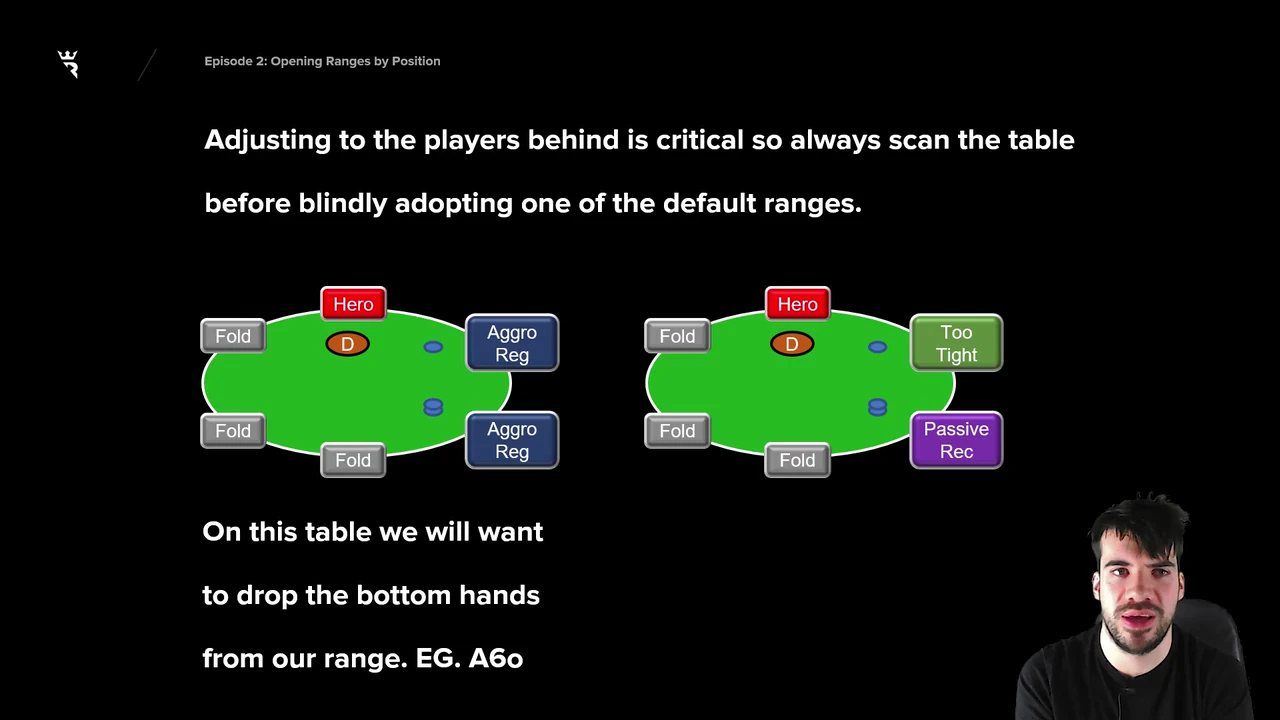
The five opening charts are the first sign that this course has aged better than its presentation. They give you ranges for UTG, HJ, cutoff, button and small blind, but Clarke never treats them as orders. In the opening-ranges lesson, he explains why a hand needs to remain profitable after rake and why an opening range must survive pressure from aggressive players.
That distinction matters. A new player can copy a red square from a chart and still have no idea what to do when the table changes. Clarke shows the default, then tightens it against active 3-bettors and widens it when the players behind are passive. The chart becomes a starting point for a decision.
The rest of the first chapter maps the common preflop branches: limpers, in-position calls, big-blind defence and small-blind 3-bets. Together with the opening ranges, those topics give a new player an ordered list of spots to study.
The flop lessons give the course its shape
Selective and unselective c-betting sounds like specialist language for a first course. Clarke makes it useful by tying the choice to range advantage and board texture. Some flops let the preflop raiser bet almost everything for a small size. Other flops need a split between value, draws and checks.
The lesson works because it gives the student a question to ask before reaching for a bet button. The following videos turn to call-only defences and two different types of flop raise.
The bet-sizing lesson is another strong piece of teaching. Clarke groups sizes by the job they do, from a small block through a normal value bet to a big polar bet and an overbet. The labels are easy to remember. More importantly, each one is attached to a range shape rather than a magic percentage of the pot.
The theory climbs quickly
After the flop chapter, the course introduces combinations, blockers and what Clarke calls pyramidal defence. Then it moves into polar and linear 3-bet ranges, followed by mixed strategies and defence against 3-bets.
The explanations are clear, but this is where the beginner label starts to stretch. A student who has never counted combinations or thought in ranges will need to pause the videos and work through examples away from the player. There is no quiz or drill inside the course to check that the idea has landed.
That gap does not make the theory misplaced. Learning why a 3-bet range changes with fold equity, position and the presence of a calling range is more useful than memorising a chart for one game. The problem is the handoff from explanation to practice. Clarke teaches the concept, then leaves the student to build the repetition.
Clarke recognises that gap later. His final non-strategy lesson warns against watching videos without hand review or notes. The warning is useful, but it does not supply the missing exercise.
Turn and river work stays connected
The turn chapter covers float betting, probing after the preflop raiser checks back and double barreling. The probing and double-barrelling lessons reuse the earlier ideas about range advantage and bet size, so the section does not feel like a collection of unrelated turn tricks.
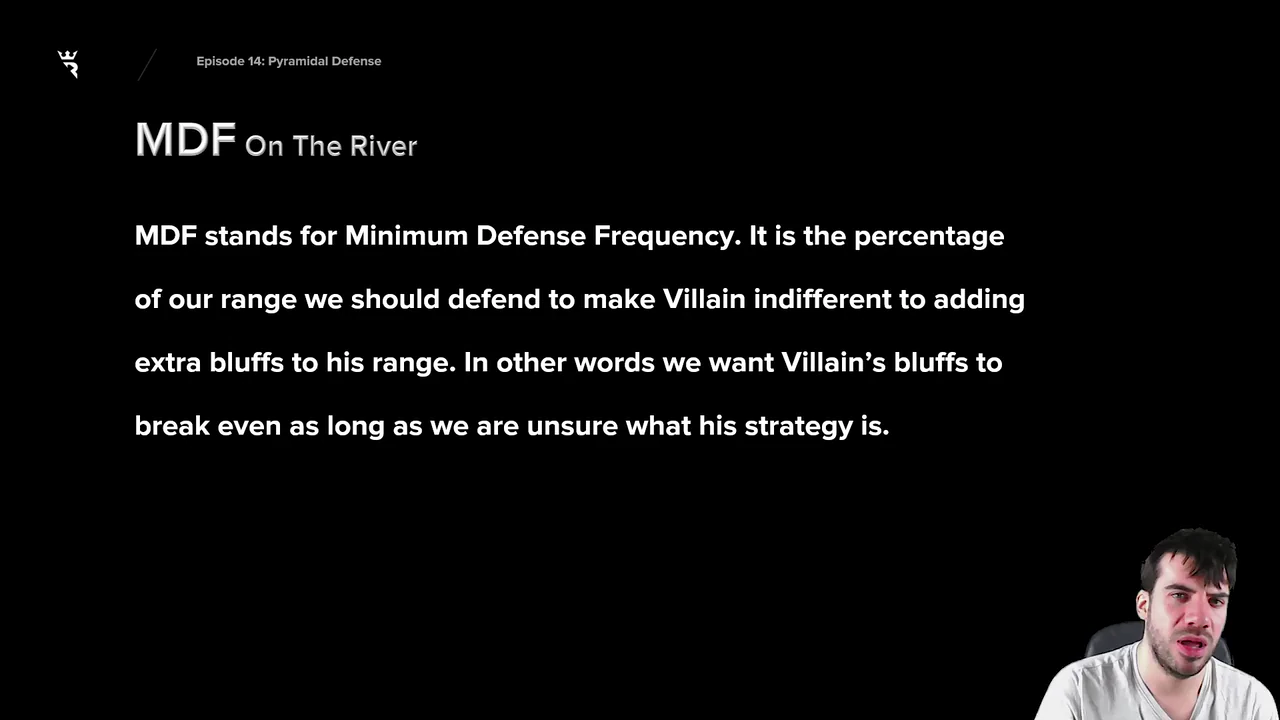
The river chapter moves from bluff-catcher selection and bluff choice into exploitative folds, exploitative calls and attacks on capped ranges. The bluff-catcher material works because it gives the student a decision rule. Clarke judges a bluff catcher through blockers, the opponent and the hands that can reach the river, rather than by the absolute strength of one pair.
The final strategy lessons return to flop range construction in single-raised and 3-bet pots. Range checking is presented as the correct response when the caller’s range has caught up with the preflop raiser. High-frequency betting and polar betting then sit at opposite ends of the same framework. That return gives the course a proper ending instead of stopping after a few river examples.
The current listing adds a later closing lesson called Taking the Next Step. It sits after Clarke’s three non-strategic tips and frames the course as the start of continued study.
The package is useful, but thin
The supporting PDF contains five clean opening-range charts. They are handy to keep beside a table and they match the ranges taught in the course. They remain static charts, with no trainer, range viewer or recall exercise attached.
Run It Once also advertises one free month of Essential membership and access to its strategy forums. Those benefits can help a student find more videos and ask questions, but the Essential month is temporary. The course purchase itself is lifetime access and does not require a continuing subscription.
The presentation is the clearest sign of age. Clarke speaks over black slides, simple diagrams and an on-screen camera cutout. The material is readable and the explanations do the work, but nobody will mistake it for a current interactive course. The course materials add no workbook or marked assignments beyond the charts.
Price and alternatives
At US$99.99 once, From the Ground Up is an easy course to place. It offers a fixed route through online NLHE cash without asking the buyer to keep a membership active. That makes it especially useful for someone with a small study budget who wants an ordered first curriculum.
The Upswing Lab 2.0 review covers the broader subscription alternative. The Lab adds a much larger library, regular coaching and community access while the membership remains active. It suits a player who will use those ongoing features. From the Ground Up is the cleaner purchase for a self-directed cash player who wants to own one compact course.
Clarke also teaches the much larger Carrot Poker School. That programme adds written homework, exams and a longer route into advanced theory, at a far higher price and workload. From the Ground Up is the sensible place to find out whether his style works for you.
Who should buy From the Ground Up?
The best fit is a new online NLHE cash player who understands the rules and wants a reasoned game plan. The course works best if you pause it, take notes and review your own hands after each chapter. A player around micro or low stakes can use the ranges as a starting point and keep returning to the postflop framework as the games get tougher.
It is a poor fit for someone looking for live-game adjustments, current pool data or a practice app. An established cash regular will recognise much of the theory, and a tournament player will need a course built around stack depth and ICM.
Final verdict
From the Ground Up is still a strong first serious course for an online cash player. The lessons connect preflop ranges to sizing and later-street range work in a system that stays coherent from start to finish. Clarke explains the reason for a line often enough that the student can adapt it instead of copying it blindly.
The weak point is practice. Five static charts and a set of short videos cannot tell you whether you can use blockers, range advantage or river selection under pressure. You have to provide the hand review and repetition yourself.
That is a fair trade at US$99.99. Buy it for the structure and Clarke’s explanations. Skip it if you need an interactive trainer, guaranteed personal coach feedback or a course aimed at live cash.
Official course page: From The Ground Up: NLHE at Run It Once (opens in a new tab)