Poker course review
From the Ground Up MTT review: a good first tournament course?
Owen Shiels gives newer tournament players a proper study path. The exercises are a big reason to choose it, provided you’ll actually do them.
You can play a lot of tournaments and still feel lost when your stack gets short. Perhaps you've learned which hands to open, but someone shoves over your raise and suddenly that chart isn't much help. From the Ground Up MTT is a good course for getting past that stage.
Owen Shiels starts with the things a newer tournament player needs to understand, then keeps building on them. Stack sizes matter throughout the course. So do the players left to act and the money at stake when a tournament gets close to the end. He gives you starting points, explains when they need to change, and sets work for you to do between lessons.
The verdict: From the Ground Up: MTT
A good first hold'em tournament course for players who will put time into the exercises.
The good
Stack-size changes get clear explanations, and the later lessons build on the work you've already done.
The bad
Experienced regulars will know a lot of this already. The software discussion is older, and some later-street lessons leave much of the hand analysis to you.
At $149.99 with lifetime access, it's a worthwhile option for someone who wants to take low-stakes no-limit hold'em tournaments more seriously. The main thing to understand before buying is how much of the learning happens away from the video. If you skip the exercises, you'll miss a large part of what makes this course useful.
Who this course is for
From the Ground Up MTT suits players who know the rules and have played some tournaments, but haven't studied them in any real order. It also makes sense for a cash player trying to get used to changing stacks and tournament payouts.
Shiels doesn't assume you already understand every bit of poker shorthand. Early lessons explain position and stack-to-pot ratio before using those ideas in more difficult decisions. You can follow the course without already knowing how to read a solver screen, though you'll see poker software used to explain some of the examples.
| Where you are now | How the course fits |
|---|---|
| You've played a few hold'em tournaments and mostly go by feel | A good starting point, provided you're willing to work through the exercises. |
| You know your opening hands but get lost after the flop | The postflop lessons connect your first decision to the rest of the hand. |
| You're moving from cash games to MTTs | Changing stacks and payout pressure get proper attention. Some of the early material will be familiar. |
| You're already comfortable building ranges and studying ICM | Much of this will be a refresher. It isn't the obvious next purchase for an experienced tournament regular. |
| You mainly want PLO or detailed bounty-tournament training | Look elsewhere. This is a hold'em MTT foundation course, with only brief bounty discussion. |
The name can cause some confusion. This is Owen Shiels's tournament course. From the Ground Up: NLHE is Peter Clarke's separate cash-game course. Make sure you're looking at the one for the games you play.
Preflop is where the course gets going
There's a sensible reason Shiels deals with short stacks before getting deep into opening ranges. A tournament chart doesn't tell you much if you don't understand what the stacks behind you can do to your raise.
The shove and reshove lessons give you a good look at that problem. He uses HoldemResources Calculator to change the assumptions about an opponent, then checks what happens to the decision. A shove that works against one calling range can become a bad idea against another. Seeing that change helps you understand when to follow a chart and when to question it.
That approach continues through the rest of the preflop material. In the three-betting examples, Shiels builds a range from scratch, explains which hands belong in it and then adjusts it for the situation. He comes back to an earlier homework task too, so you can compare your attempt with the way he works through it.
For a newer player, that's useful teaching. You have something to start from at the table and a way to work on it later. If you already spend your study time doing this, the explanations can feel slow. Shiels will often stay with a point until he's explained the reason from several angles.
The blind-defence material is another good example of where he adds value. He deals with the temptation to call because the price looks cheap, then shows why the hand still needs to play well after the flop. That's a much better lesson for a developing player than simply being told to defend more hands.
The flop lessons give you a plan for the turn
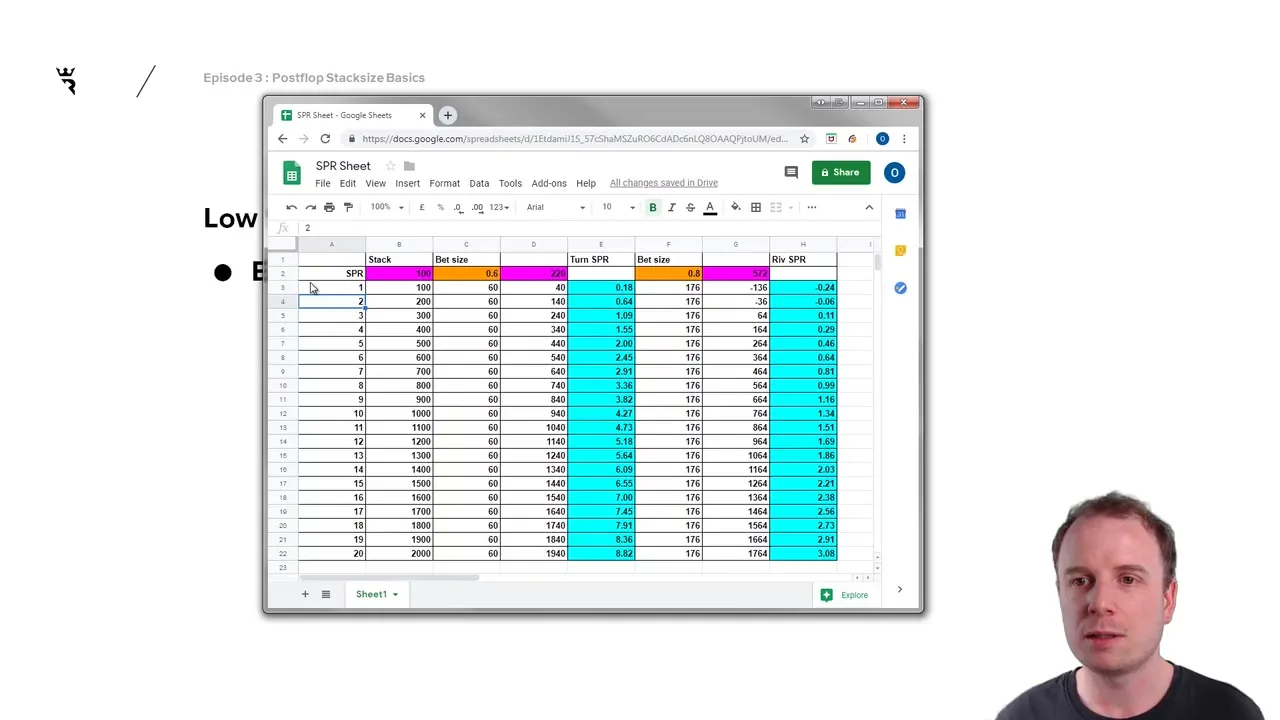
One of the better things about this course is how often Shiels brings a decision back to what happens next. In an early lesson, he changes bet sizes in a spreadsheet to show how much would be left for the river. It's a simple demonstration, but it gives a newer player a reason to care about sizing beyond choosing a familiar button.
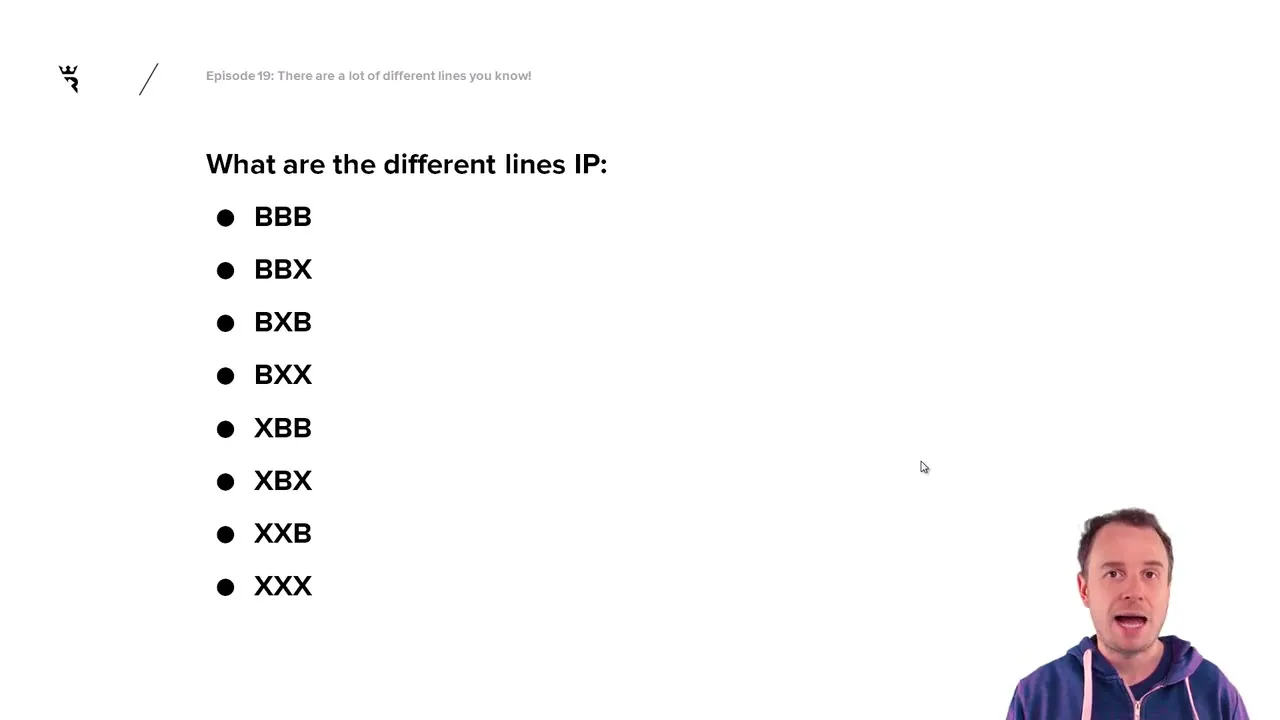
Later, he works through the different ways a hand can play out when you're in position. The flop decision becomes easier to understand when you've thought about what happens if the opponent calls. It also gives you a plan to come back to when the next card arrives.
The same ideas are then worked through from the other side of the table. When you're the caller, for example, an opponent who fires once and gives up needs a different response from someone who keeps betting. Shiels explains why calling can sometimes keep an aggressive player's bluffs in the hand. He also shows how floating too much creates problems of its own.
This is the part that makes the course worth a look if you tend to bet the flop and then lose your way. The lessons connect. By the time you reach the turn material, you're expected to know why you bet or called on the flop, and to reconsider the hand when something changes.
There are limits to how far this goes. The river-calling lesson is mainly a way of thinking through the decision, with work for you to do on your own hands. You don't get a long series of complete river hand reviews in that lesson. The multiway section is fairly brief too. It explains the main problems, but you'll need more study if multiway pots are your biggest struggle.
ICM gets proper attention
The ICM section is one of the stronger reasons to choose the tournament edition. Shiels starts by explaining why winning chips and winning prize money aren't always the same thing, then puts changing stacks into a calculator so you can see the effect.
In one example, he replaces an equal-stack situation with a table that has two very short stacks. The calling decision changes considerably. It's a useful way to explain why a call that looks fine in isolation can be expensive at a final table.
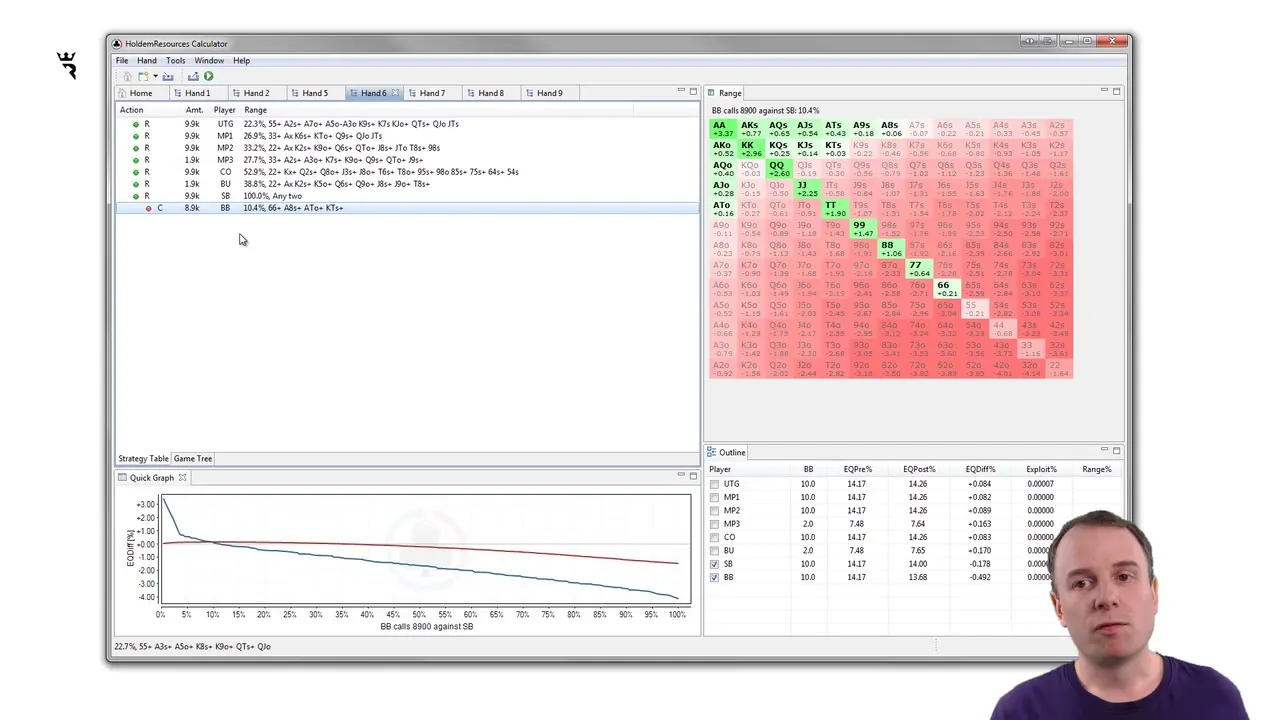
He doesn't leave it at the calculator result either. Another example changes how often the opponent calls, and the supposed pressure play stops working so well. That matters if you've heard that a big stack should bully everyone but haven't thought much about who will actually fold.
The postflop ICM teaching is more general. You get explanations about playing pots against different stacks and how payout pressure changes the hands you're happy to put money in with. You don't get the same kind of worked calculator demonstration as in the preflop section. It's useful grounding, but an experienced player looking for detailed modern postflop ICM study will want more.
Shorthanded and heads-up play also get their own teaching after this. That's a worthwhile inclusion for someone who rarely reaches the final few players and feels uncomfortable when the table suddenly becomes much smaller.
You need to do the homework
The exercises aren't an afterthought. Early work asks you to get comfortable with stack sizes and to build ranges. Later, you're working across different flops, changing positions and then taking those ranges onto the turn. Eventually Shiels asks you to bring in hands from your own games.
That progression is probably the best reason to work through the course in order. If you jump straight to a turn lesson, some of the work it refers to comes from the flop lessons you've skipped. You can still revisit a specific problem, but this makes more sense as a course you study properly from the start.
You don't have to be a solver user to begin. Shiels does use tools such as HoldemResources Calculator and an equity calculator, and some exercises are better with software that lets you change ranges and compare the results. Those tools can mean an extra cost. A tool appearing on his screen doesn't mean its licence comes with your purchase.
It isn't a guide to operating PioSolver either. He uses solver output to help explain certain ideas, but learning the software itself is a separate job. For reviewing your own hands, he also gives options such as written notes, so owning a tracker isn't the only way to do that work.
The exercises are largely yours to work through. Shiels returns to earlier homework in some of the examples, which gives you a chance to compare his reasoning with yours. You'll get more from those lessons if you've already made an attempt yourself.
What the older material means for you
From the Ground Up MTT launched in March 2020. The age doesn't make its explanations of stack sizes or range construction useless. Those are still good reasons to study it. It does mean you should be careful about treating every comment on the games as advice about today's player pools.
Shiels makes several lower-stakes assumptions when choosing exploits. He often explains the reasoning well, but you still need an opponent who makes the mistake he's describing. A remark about how rarely players bluff a certain spot isn't a current database study just because it appears in a course that's still for sale.
Some software discussion belongs to that period too, particularly around postflop ICM. Buy this for the foundation it teaches, with the understanding that you'll need newer material if you want to go further into today's tools.
Bounties come up in the short-stack and game-selection discussions, but they don't get a full teaching section. If progressive knockouts are the main reason you're shopping for a course, this shouldn't be your whole study plan.
The off-table teaching is more useful than a few closing words about staying positive. Shiels talks through the effect of field size and tournament choice on the swings you'll face, using his own results to give the discussion a concrete example. That's worth including in a course aimed at newer players, who may have very little idea of how rough tournament results can get. His tilt advice comes from his experience as a player; he makes clear that he isn't a mental-game specialist.
Is it worth $149.99?
For a newer low-stakes hold'em tournament player who needs a proper study path, yes. The strongest parts are the way Shiels explains changing stacks and gets you to work through decisions yourself. The postflop material follows that same approach, and the ICM examples give you a useful first look at decisions that cash-game experience alone won't prepare you for.
The current Run It Once offer is $149.99 with lifetime access. It's sold as a separate course, so you aren't signing up to a recurring course fee. The lifetime access is helpful here because the exercises are a reason to return to lessons, and there's no need to rush through them in one month.
An experienced MTT regular who already does this sort of range work should be more selective. There's a lot of familiar ground, and the more advanced later-street questions often become work for you to take further yourself. If you already understand the basics of tournament stacks and payout pressure, the Tournament Savagery review is worth reading for a more advanced option.
But if you're still making most tournament decisions by feel, From the Ground Up MTT is a good place to start putting a reason behind them. Be honest about whether you'll do the work between videos. That's where the purchase makes sense.
See From the Ground Up MTT at Run It Once. The opening two lessons are free there, so you can try Shiels's teaching before paying.