Poker course review
Solving the PLO Puzzle review: is this the right course for you?
Richard Gryko and Cory Mikesell focus on single-raised pots. Here is who gets the most from their course.
Run It Once · Gryko & Mikesell
SOLVING THE PLO PUZZLE
$499; $374.25 shown when checked
Solving the PLO Puzzle is a course from Run It Once coaches Richard Gryko and Cory Mikesell. Its focus is PLO cash game pots where there was one raise before the flop.
That might sound like a small part of the game to spend a whole course on. But if you've ever made a continuation bet and then had no idea what to do on the turn, you can probably see the appeal.
The verdict: Solving the PLO Puzzle
Detailed single-raised pot training for players who already know PLO.
The good
The coaches explain decisions across all three streets, with hand reviews to bring the ideas together.
The bad
It gets technical quickly and covers a specific part of your game for a substantial price.
Here's the short answer. PLO Puzzle is a strong option for players who already know their way around Omaha and want to understand postflop decisions in more detail. It gets technical fast, though, and the narrow focus makes it a costly first course if you still need help with the basics.
What's included in PLO Puzzle?
Gryko and Mikesell teach through slides, examples and solver analysis. The course finishes with three longer videos where they look at hands together.
The lessons start on the flop and follow the action through the turn and river. They cover play both in and out of position, including what happens when you're the preflop raiser and when you're defending against one.
Run It Once also advertises more than 100 quizzes with answers and board-frequency sheets. Those sheets come up in the videos, where the coaches use them to compare different flops. The seller offers two sample videos on its course page, so you can get a feel for the teaching before paying.
Who should take this course?
This makes the most sense for a PLO cash player who knows the basics and wants to put serious work into postflop play. Terms like ranges, blockers and equity come up early. You don't need to be a high-stakes professional, but it helps if those ideas aren't completely new to you.
If you're just moving over from hold'em and still working out which four-card hands are worth playing, there's a better place to start. PLO Launch Pad begins with the foundations. PLO Puzzle is the sort of course you can come back to once those foundations feel comfortable.
It's also worth keeping the name of the topic in mind: single-raised pots. If your biggest problem is what to do in 3-bet pots or you want a full PLO tournament course, that isn't what this purchase is built around.
Here are a few situations where PLO Puzzle makes sense:
- You often c-bet the flop but aren't sure which turns to continue on.
- You get check-raised and struggle to work out which hands can continue.
- You want to understand turn probes or river decisions after earlier streets have checked through.
- You already use ranges in your study and want a closer look at heads-up PLO pots.
And here is where to be careful: knowing the rules of PLO isn't quite the same as being ready for this course. You should be reasonably comfortable with the idea of a range, and with terms like equity and blockers. Otherwise the first few lessons can feel like joining a conversation halfway through.
The flop lessons go well beyond when to c-bet
The opening lesson challenges some familiar reasons for betting. Gryko takes ideas like betting because you raised before the flop or betting to protect your hand and explains why those answers can get you into trouble.
That opening gives you a good idea of the course. The coaches want you to think about what a bet does against the other player's range, rather than just remember that a certain flop is a betting spot.
Mikesell then looks at different board types. One useful comparison is between a dry flop and a much more connected one. A hand can be strong enough to have value but still be uncomfortable facing a raise, and the lesson explains why that matters when deciding whether to bet.
There is a full lesson on facing a flop check-raise too. Mikesell comes back to different types of boards and shows why the hands you can continue with won't always have the same properties. He also discusses what might change if your opponent tends to raise mainly strong hands.
That is a good example of what the course does well. You get the underlying reason for a decision, along with an example of when you might need to change it. You'll still need to judge whether you have a good read on the person you're playing.
The out-of-position section takes work
The third section looks at situations where you raised before the flop but have to act first afterwards. A lot of the discussion uses range data and betting frequencies, including a lesson built around a cutoff-versus-button board-frequency sheet.
The value here is seeing why the same type of hand can play differently when the ranges change. One lesson compares defending the big blind against a button raise with opening the cutoff and being called by the button. Gryko walks through the similarities before showing where the different preflop ranges matter.
But this is not light viewing. If you're unfamiliar with solver terminology, you can spend a lot of time stopping the video to work out what the chart is showing. The coaches explain their thinking, but you'll get more from it if you're already comfortable with the basic terms.
What if your opponent keeps betting?
Gryko spends time looking at the player on the other side of the hand. In one lesson he talks through different opponents, including someone who bets too often on the flop and another who keeps firing once they start.
That is a useful inclusion. A solver output can show you what happens against the ranges it was given, but it can't tell you that the particular player across the table always does the same thing. Gryko uses those examples to show how a player's habits can change the decision you're considering.
This isn't a course on physical tells or a shortcut to reading everyone at the table. The examples are about adjusting a PLO strategy when you have a reason to believe an opponent plays differently from the model.
Turn and river play get proper attention
The turn section is the largest part of the course. There are lessons on double barrels, delayed bets and probes, plus a closer look at what happens after a flop check-raise.
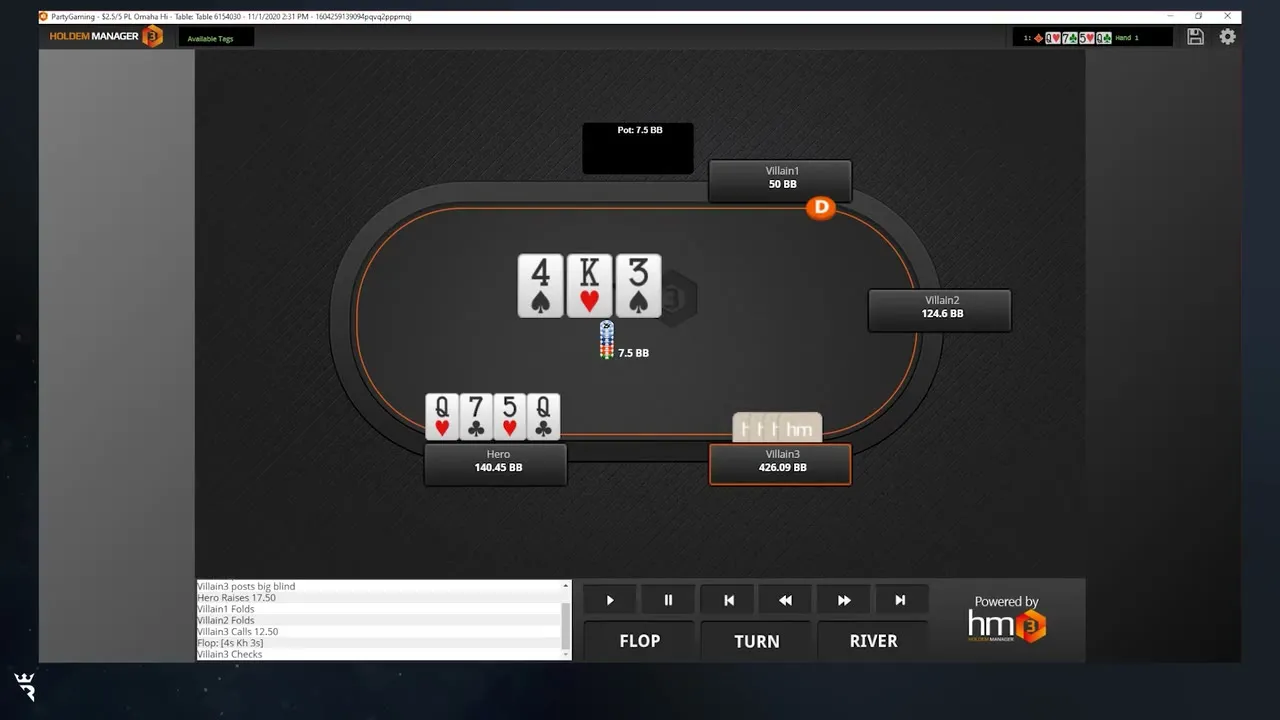
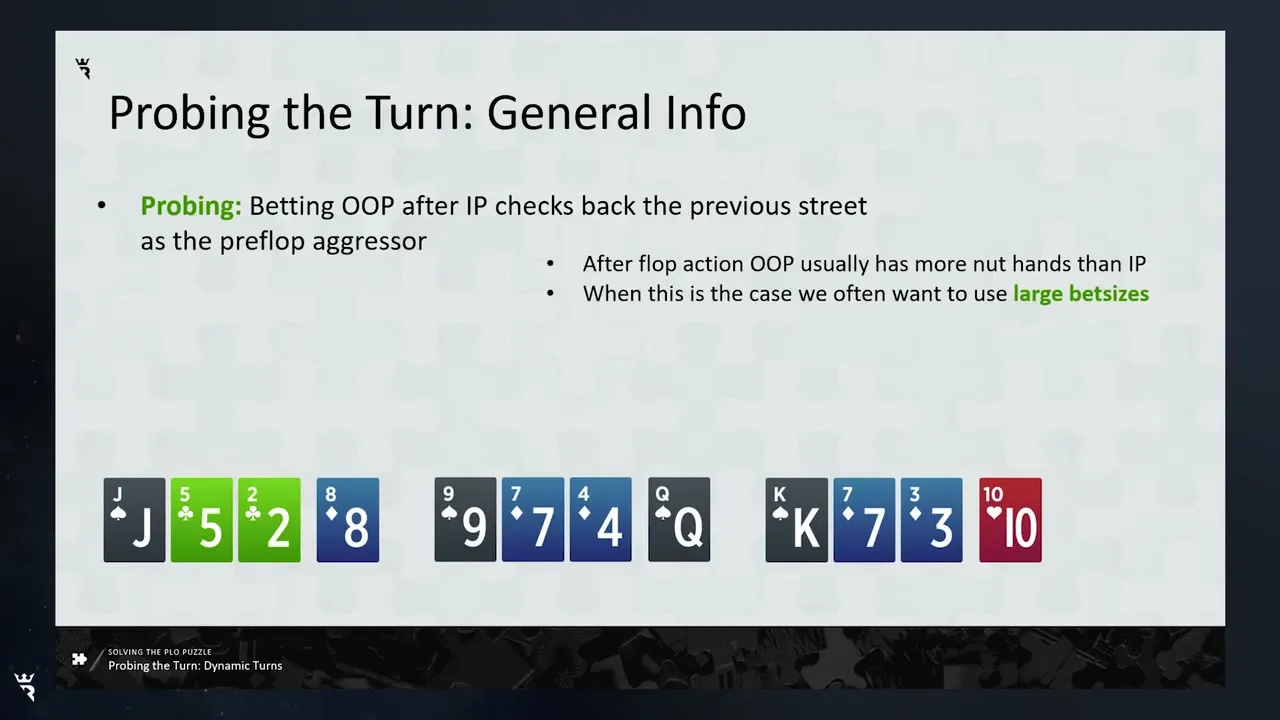
The probing lessons are a good example of how detailed this gets. Gryko separates different turn cards and explains why the size of a bet can change with the board. That gives you more to work with than a simple rule to bet whenever the other player checks.
The river material is useful for a different reason: it spends time on situations that are easy to overlook. There is a lesson on getting value after a hand has been checked down, as well as a longer discussion of bet sizing and a separate video on facing aggression.
There is also a lesson for the spot where you check back the flop and then face a turn probe. Gryko discusses how the decision changes with the size of the bet and the preflop position of the raiser. If you've been looking for one simple answer to every probe, you'll see why that can be a problem.
The river work goes further than choosing a bet. In the lesson on facing aggression, Gryko discusses bluff-catching and how the earlier action can change the value of a blocker. That gives the player facing a bet some attention too, instead of leaving the course entirely focused on the person doing the betting.
This is where the narrow focus pays off. Instead of racing through a few river tips, the coaches have room to show why the earlier action changes what each player can have.
How practical is the teaching?
The three Theory in Practice videos bring both coaches together to discuss hand histories. They come after the strategy lessons, which is a sensible place for them. You can see how the ideas are used in an actual hand instead of trying to make the jump entirely on your own.
One hand begins with an unusual bet size on a paired flop. The coaches talk through what that might mean, then follow the hand onto later streets. They don't treat an opponent's action as proof of exactly what they hold, and they discuss how a player might use their own database to look into a line.
That's the sort of material that helps bridge the gap between a chart and a hand you actually played. The hand reviews are recorded analysis, though, so you aren't watching the coaches play a full session in real time.
Many lessons use slides and charts to explain the analysis. The hand reviews help, but the course is still a demanding piece of study.
The board-frequency sheets are another part of that approach. Run It Once says you can use them to study different board types. Gryko uses a frequency sheet in one lesson to compare the flops a preflop raiser might face.
There are questions inside the videos as well. In one river lesson, Mikesell asks you to stop and think about the bet size before he gives his answer. That's a nice touch because it gives you a chance to find out whether you can use what he just explained.
The biggest limitation
For an experienced player who wants to improve in these spots, the detail is the appeal. For someone who wants one purchase to cover their whole PLO game, there are other areas they'll still need to study. It is also centred on heads-up postflop situations, so don't buy it expecting a dedicated guide to multiway live pots.
Run It Once describes the solver-based material as timeless. That's a stronger claim than you should take at face value. The examples depend on the ranges and assumptions used in the simulations, and your opponents won't always play like those models. The coaches do discuss adjustments, but you'll still have to judge when a model fits the game you're playing.
Some of the coaches' comments about how opponents tend to play belong to the time the lessons were made. One turn lesson refers to the poker environment in 2020. That doesn't suddenly make every explanation wrong, but a comment about the player pool from that period shouldn't be treated as proof of what happens in your games today.
Price and value
Run It Once lists PLO Puzzle at $499, with a discounted $374.25 shown on the course page when checked on 3 November 2026. The seller says this is a one-time purchase with lifetime course access. Check the current price before buying because the offer can change.
That's a meaningful amount of money for one part of your game, even with the discount. The price is easier to justify if you already play PLO regularly, know that single-raised pots are a weak spot, and will work through the material rather than leave it sitting in your account.
If you want a cheaper introduction to PLO itself, start with the PLO Launch Pad review. It's aimed at a different stage of learning, so the lower price alone doesn't make it a direct replacement for the deeper postflop work here.
Final verdict
Solving the PLO Puzzle does a good job of taking a familiar part of PLO and giving it the time it deserves. The lessons connect the decisions you make on the flop with the difficult spots that can follow, and the hand reviews show how those ideas apply.
It's a good fit for a player who already understands PLO and wants a serious study project. If you're new to the game or want one course that covers every major situation, spend your money on a broader foundation first.
Visit the official PLO Puzzle course page