Poker course review
Fast Track Poker review: live cash with the reasons explained
Ki Lee makes live-game decisions easier to understand. The preflop revisions need sorting out, and the later range work takes effort.
Good live-cash teaching, with updates to untangle
Fast Track Poker is a good fit for the live cash player who knows the rules but keeps getting stuck on the reasons behind a decision. Ki Lee takes familiar problems, such as raising over limpers or facing a river bet, and works through the thinking that should come before the chips go in.
The course earns its place through those explanations. You can see why an adjustment makes sense and when it might stop making sense. The main drawback is the organisation of the preflop material: the original lessons sit alongside later revisions, leaving a new student with several generations of advice to sort through.
The verdict: Fast Track Poker
Fast Track Poker is a good choice for newer live cash players who want reasons behind their decisions. Ki Lee connects basic maths to actual hands and explains when live-game adjustments change. The preflop updates take some sorting out, and the later range work needs more attention than a quick watch.
The good
Patient maths teaching, reasoned defence and live-hand adjustments explain why a decision changes.
The bad
Several generations of preflop material complicate the study order. Access requires keeping the advertised membership active.
The live-game advice has reasons behind it
The lesson on limpers is a good example. Lee changes his approach according to who limped and how much money is behind. A weak player’s limp can be an invitation to raise, but a short stack leaves less room to work after the flop. That makes the advice useful beyond the exact hand on screen.
The same care goes into responding to a 3-bet. Lee explains why hands with similar apparent strength can play very differently after the flop, then changes the continuing range according to the opponent. The useful part is the planning: before putting more money in with a 4-bet, you should already know what happens if the opponent raises again. His explanation of raising for information makes an expensive beginner mistake easy to recognise.
Preflop 2.0 does something similar with rake. Lee explains how taking money out of the pot changes the value of marginal opens, then compares older ranges with the revisions. For a player moving between games with different rake or straddles, this is worth understanding. Copying the same chart everywhere would miss the point of the lesson.
The revisions also explain when to ease off. In Exceptions and 4Bets, shorter stacks change which hands Lee wants to 3-bet, because a shove can force otherwise playable hands to fold. The summary also makes room for more calling from the blinds. That is useful balance for a beginner course built around tight-aggressive poker: the extra aggression has to make sense in the actual situation.
The updates do make the course less straightforward to follow. There is an original preflop section, a 2.0 revision and newer Solved for Live material. CLP’s current membership guide points newer live players towards the Newest Ranges section. Keep that distinction in mind when an older hand review refers back to an earlier range.
There is useful explanation in the newer material too. The raise-first-in walkthrough discusses why its live-game assumptions differ from a standard solver setup, including larger opens and the expectation of extra callers. It also explains rounding awkward frequencies into something a person can actually use. That makes the charts easier to understand, although it still leaves the student moving between the older lessons and the newer reference.
The newer 3-bet walkthrough catches another potential mistake: a hand’s calling frequency depends on how often it reached that point in the first place. Reading one coloured box on its own can give the wrong impression. These explanations help, but the walkthrough covers selected situations and leaves you to explore the rest. The newer charts are much easier to use once the earlier range concepts make sense.
The maths starts where beginners actually get stuck
Lee is patient with basic pot odds. He uses physical chips to show what belongs in the pot, including the opponent’s latest bet. When the example becomes a raise, he explains why the money you have already put in is no longer yours. These are small details, but getting them wrong makes every calculation afterwards wrong too.
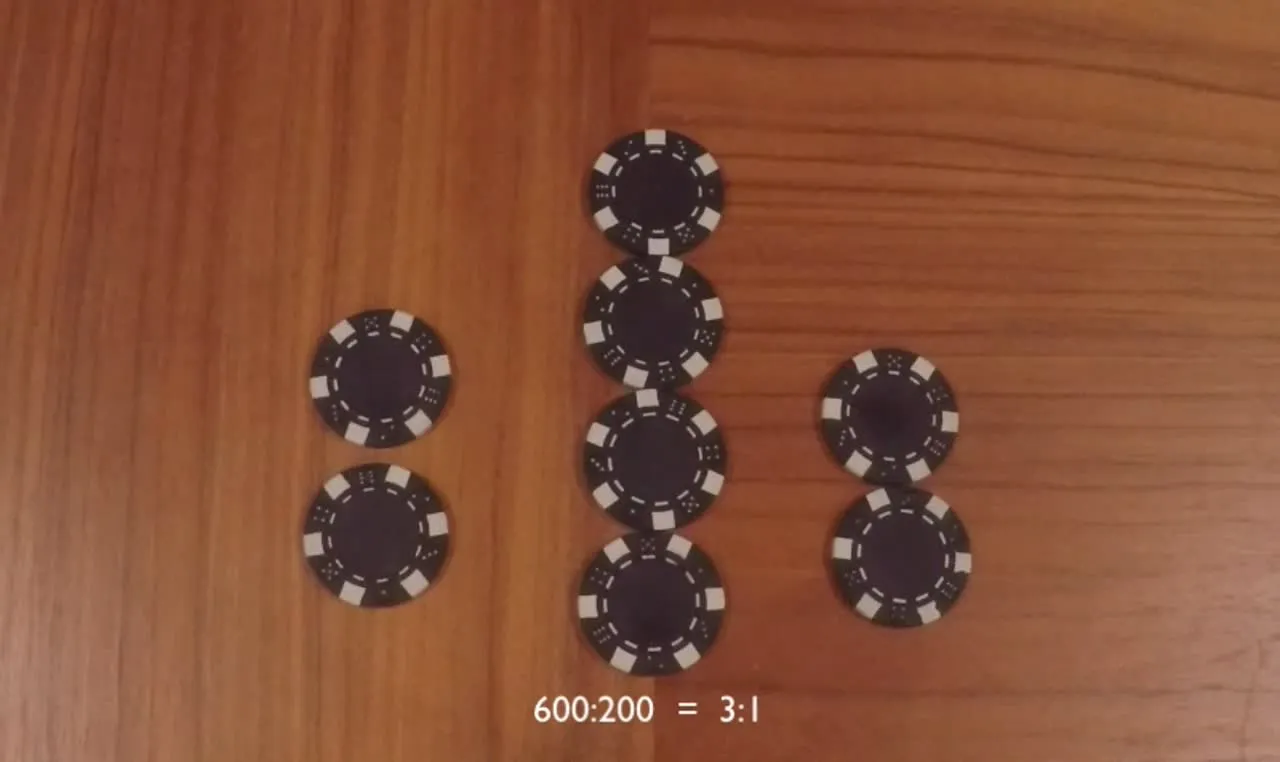
Lee sometimes uses rough at-table shortcuts. His approximation for facing a three-quarter-pot bet is slightly generous, so close decisions still need the actual calculation. But he explicitly calls it an approximation and stresses understanding the formula. The strength of this section is how patiently he explains where the numbers come from.
The later maths work is more useful than a list of formulas. In Advanced Math in Action, Lee uses stack-to-pot ratio to plan bet sizes across the remaining streets. You can see how an awkward river stack starts with an earlier sizing choice. That is a practical reason to learn the arithmetic.
The later lessons ask quite a bit more of you
Fast Track gets more demanding once it starts building betting ranges. The postflop fundamentals explain why a bluff needs useful future cards, then the flop lessons ask which value hands can keep betting. Following this properly means thinking about the other hands you could have, even when the live footage shows one obvious decision.
The flop lesson from the caller’s side is especially useful. Lee works through why one board gives the caller room to raise while another does not. He also shows how to simplify a mixed solver strategy into a more manageable live approach. You still have to understand the range, but you are not left trying to remember every small frequency on the screen.
One of the better examples comes after the preflop raiser checks. Lee first considers a balanced checking range, then changes the assumption to an opponent who bets all the strong hands. The caller can now bet much more often. This is a good explanation of what an exploit actually depends on: a specific weakness in the opponent’s play, rather than a general instruction to be more aggressive.
The turn material carries that thinking forward. In a double-barrelling example, Lee explains how the turn improves a draw and changes the advantage between the ranges before opening PioSolver. He also acknowledges that the real players could have wider ranges than the ones entered into the model. That qualification matters when learning from a live hand with uncertain preflop assumptions.
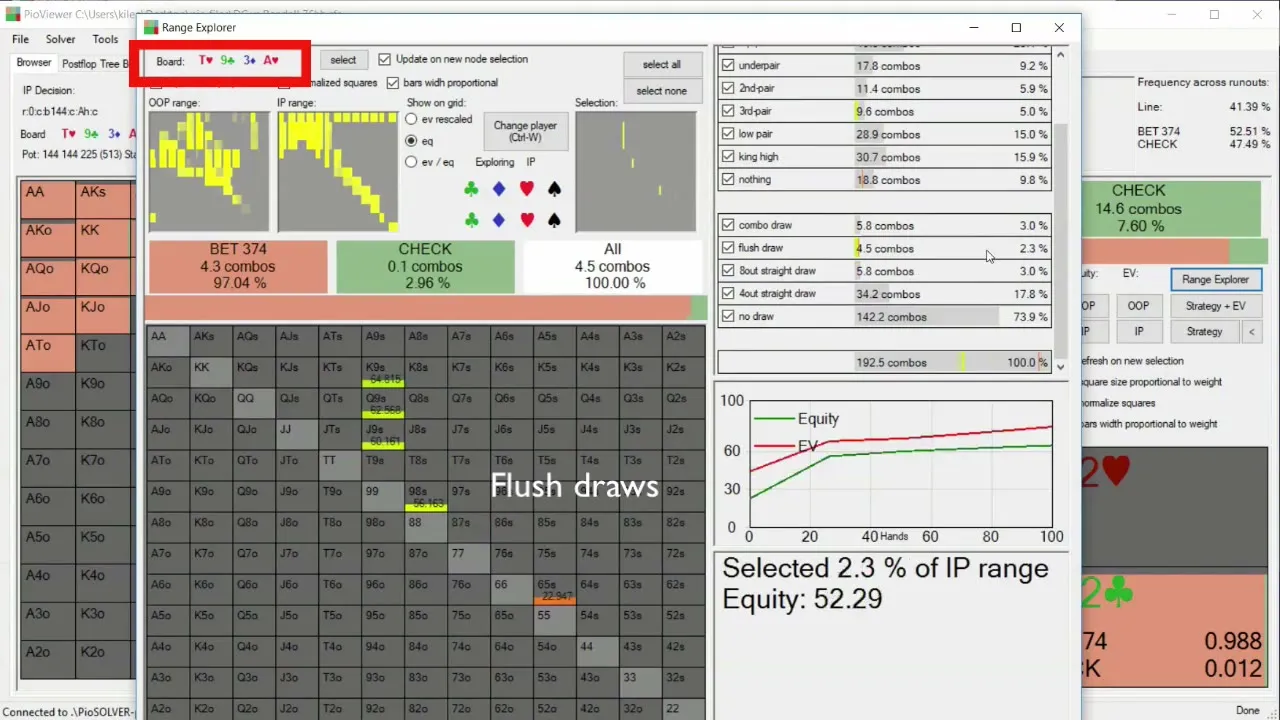
The turn-caller lesson also questions a winning hand. After a player calls the flop and takes the pot away on the turn, Lee still explains why the original call was too ambitious. The missing backdoor suit and the players left to act matter even though the bluff worked. This helps separate a good decision from a good result, which is easy to lose sight of when studying live footage.
The river-caller lesson briefly hides a player’s cards, letting you consider the situation before seeing the holding. That is a useful way to get beyond judging the hand by its result. The explanation then follows the ranges through the earlier streets, and the closing summary makes clear that a plan may need to change or be abandoned when the board favours the opponent.
Knowing When to Give Up supplies the other side of the aggressive game plan. It opens with Lee’s own failed bluff, then later examines a separate hand where giving up is sensible even though the revealed opponent happened to hold something that could fold. The important question is what range survived the earlier action. That is a more useful lesson than deciding every missed bluff was a mistake once the cards are shown.
This is substantial study for someone who started with pot odds. Lee explains the steps, but you will need to pause and work through the ranges yourself. A player hoping for a few quick rules for the next casino visit may find the later material heavy going.
Practice tools help, but watch the subscription
CLP offers lesson quizzes and links a preflop chart app with a trainer. The app includes a separate Fast Track section with simplified ranges, and guest drills have a daily limit. That gives you a way to practise preflop decisions alongside the videos. It does not turn the course’s later solver examples into postflop exercises.
The advertised membership route for the course is Premium at US$54.99 per month. The cheaper Basic plan is for audio content and does not include the course videos. Elite costs US$549.99 per year, which is difficult to justify for Fast Track alone unless you already want a longer CLP membership.
Monthly access makes sense if you are ready to study regularly. It becomes expensive if the course sits unopened while payments continue. The subscription renews automatically, and CLP’s published terms call for cancellation at least ten days before renewal and no refunds for partially used periods. Check those conditions before subscribing.
Who should study Fast Track Poker?
Fast Track is worth considering for a newer live NLHE cash player who wants to understand the decisions behind a sensible game plan. The basic maths explanations are approachable, and the hand analysis gives those early concepts a purpose. Be prepared to separate the updated preflop material from the older examples and spend time on the later range work.
An experienced cash player already comfortable with range construction has less reason to buy a membership for this course. For the player still guessing why a bet or raise makes sense, Lee provides a useful foundation. That is the reason to choose Fast Track, provided you will actually use the access you are paying for.
Official course page: Fast Track Poker at Crush Live Poker (opens in a new tab)