Poker course review
Mid-Stakes Mastery review: is it worth $597?
Mid-Stakes Mastery has strong online MTT hand reviews, plenty of PKO material and a useful 2025 update. At $597, it makes most sense if you already play tournaments regularly. The lessons have a lot to offer, but the order and presentation need work.
Learning MTTs with Wasserman and Paris
Mid-Stakes Mastery is worth a look if you already play low or mid stakes online tournaments. Finding your way through the course takes more work than it should.
The hand reviews take you through $30 and $55 tournaments, huge fields and turbos. There is plenty of PKO work, along with database reviews, student coaching and final-table ICM. Later lessons add mystery bounties and heads-up play. You get a lot of tournament poker here, although it can be hard to know where to start.
The verdict: Mid-Stakes Mastery
Strong MTT hand reviews for regular low and mid stakes players, with plenty to offer if you play PKOs.
The good
You already play low or mid stakes online MTTs and enjoy working through hands, checking the numbers and hearing two good players question each other’s decisions.
The bad
You are still learning tournament basics, or want a short course with a clear order to follow.
The advertised price is $597+, with more than 50 hours of material. You get 75 videos and four audio sessions. The December 2025 additions cover ICM and tournament trends, with short lessons on particular spots and a heads-up review.
Mike Wasserman and Bryan Paris have built this around real tournament hands, adding more lessons over time. Some of the poker discussion is excellent. Just keep in mind that the 2026 name does not mean every video was newly recorded or planned as part of one tidy course.
If you want a broader training membership, have a look at the Upswing Lab 2.0 review. If you mainly want help studying with a solver, the Simplifying Solvers review is more relevant. This course spends most of its time on MTT hand histories.
What comes with Mid-Stakes Mastery?
| Section | Files | What it covers | Verdict |
|---|---|---|---|
| Introduction | 1 video | How the coaches approach the library and who it is for | A useful orientation, though it already shows the course’s informal style. |
| Audio content | 4 sessions | Additional tournament and hand-history discussion | Useful for listening away from a desk, but not the reason to buy the course. |
| Large Field MTT Strategy | 27 videos | A 13-part Fifty Stack review and a 14-part huge-field tournament review | The main strategic backbone and one of the strongest sections. |
| Turbo Strategy | 10 videos | Live play, final-table decisions and short tactical hotspots | Practical and honest, but uneven in depth. |
| PKO Strategy | 21 videos | Two long progressive-knockout series, including quizzes and ICM work | The most distinctive part of the package. |
| Live Coaching Sessions | 5 videos | Student sessions, database analysis and hand review | Strong at turning broad advice into identifiable leaks. |
| Common Mistakes and Key Points | 2 videos | Recurring low-to-mid-stakes errors and review points | A good capstone that should be watched early, then revisited. |
| 2025 to 2026 Update | 9 videos | ICM, current trends, mystery bounties, heads-up play and hotspots | A real update at the edges, not a replacement for the older core. |
The large-field and PKO sections alone contain 48 videos. There is plenty to work through. The harder part is choosing the hands that will help your own game and finding a useful order to watch them in.
The course is better when the coaches disagree
Some of the best moments in Mid-Stakes Mastery come when Wasserman and Paris see a hand differently.
One suggests a play, the other questions it, and they use ICMizer or GTO Wizard to check a spot when needed. They also talk about how people actually play at these stakes and what they know about the particular table. You get to hear why they favour a decision, including what could make them change their minds.
They are willing to question their own play too. Wasserman goes back over a shove he probably missed in the turbo session. Paris picks apart decisions from a tournament he won. Winning the tournament does not make every hand a good one, and the reviews are better for acknowledging that.
These discussions can drag, though. A close decision sometimes turns into a long conversation before the point becomes clear. It helps to pause at the quizzes and make your own choice. Letting the videos run in the background would miss much of what makes the format useful.
Following a tournament from the early levels
The large-field reviews follow actual tournament runs. The Fifty Stack series starts in a $55 event, and the other long series takes you through a huge-field tournament from the early stages. You can follow how the decisions change as the run goes on.
Early on, there is more room to play after the flop and use reads on the field. As stacks get shorter, the discussion turns to open-shoves and rejams, including spots where keeping your stack matters. Near the later payouts, winning chips is no longer the only consideration. The coaches explain how the money at stake changes what each player wants to do.
One early Fifty Stack hand is a good example. A small continuation bet can work well when opponents do not check-raise often enough. Against stronger players who attack that bet more, it becomes much less comfortable. The useful part is hearing why the same bet can work against one field and get you into trouble against another.
The reviews regularly stop before revealing the next action. You have to think about the range, choose a size and consider what could happen on the next street. That gives you something to do with the hand before hearing the coaches’ answer.
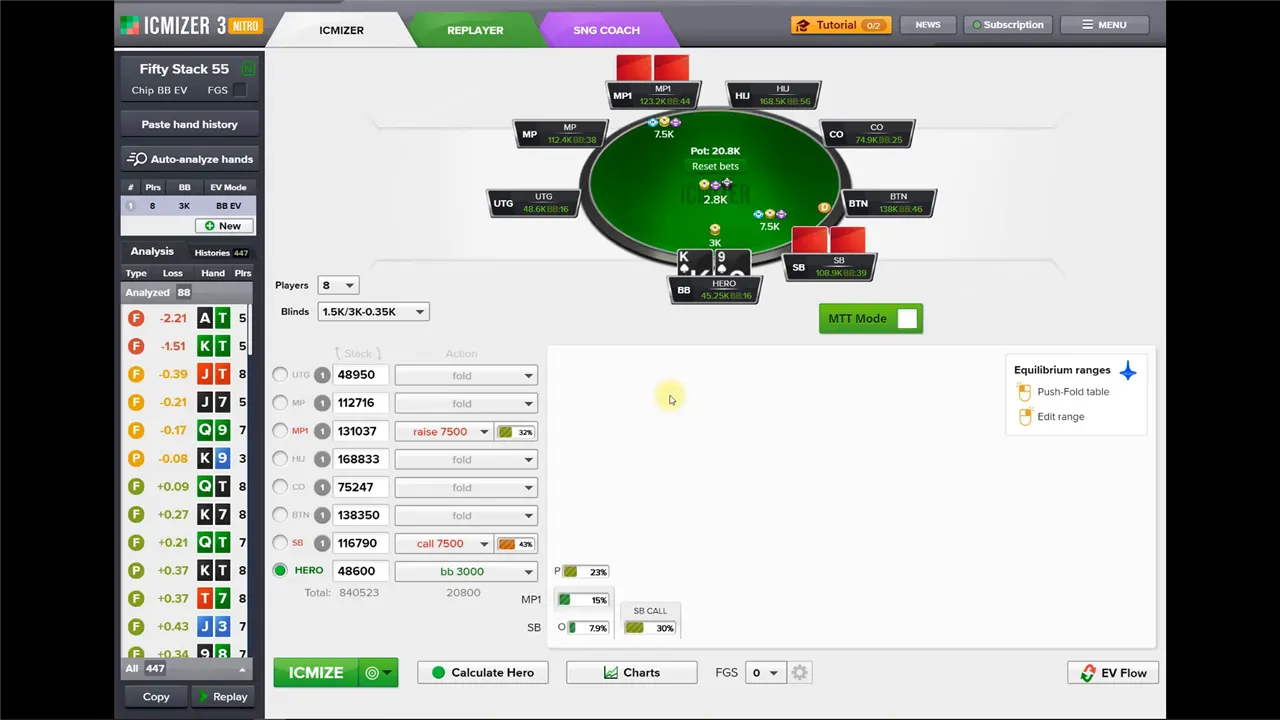
There is some repetition across the 27 videos. A few hands get more discussion than they need. Watching a smaller part of the series and keeping notes on mistakes that come up again is more useful than trying to get through the whole thing in one go.
Two final tables at once in the turbo sessions
The main turbo play-and-explain has Wasserman at two final tables at once, with another tournament running off-screen. It feels much less rehearsed than a prepared lesson. You see him having to make decisions while several things need his attention.
He lets some playable hands go to protect his stack, plays back at an opponent opening too often, and weighs a close shove against staying in the tournament. A fold that looks questionable gets another look after the session. He does not try to make every decision sound perfect.
That is a good part of the teaching. Stacks and positions change quickly in turbos, and a close decision can look quite different once you consider how the opponent is playing. You hear him work through that while the tournament is still going.
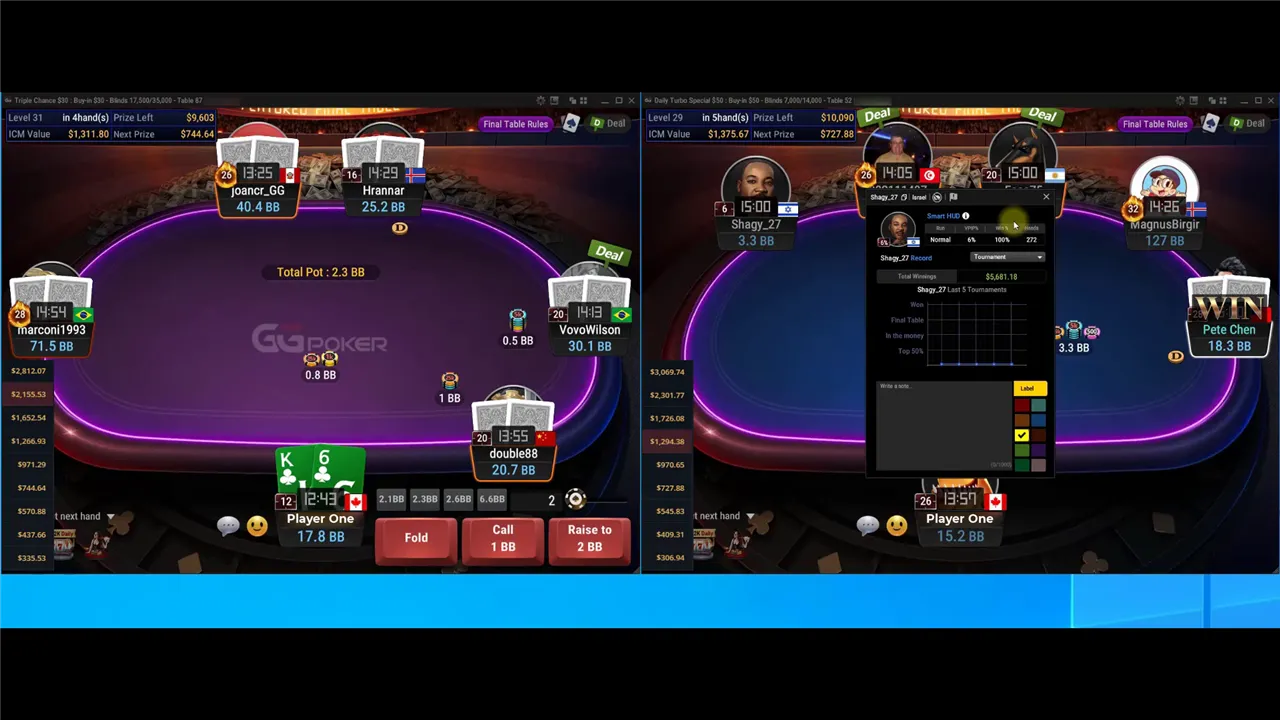
The shorter hotspot videos are less consistent. One makes a useful point about passing up a marginal shove. You have more time to wait in a slow tournament; in a turbo, the blinds may take a much bigger part of your stack before another good hand comes. Some of these videos explain their point well, but others feel more like a quick note than a full lesson.
PKOs are the strongest reason to consider it
The coaches spend real time on what bounties change. They discuss when to register or re-enter and how much a bounty should change the hands you play. Who covers whom matters, as does the value of your chips as the field gets smaller. The PKO lessons keep bringing those questions back into the hand reviews.
The first PKO series starts with late registration. Some bounty money has already gone by the time you enter, even though you still pay the same buy-in. Paris uses the share of the field already eliminated to help judge a re-entry. Treat his cutoff as a rule of thumb, but the reason behind it is clear: less bounty money is left for you to win.
The quizzes ask you to choose a play before the coaches discuss it. They then use ICMizer to show why the bounty values, players remaining and payout setup need to be right. They also allow for opponents playing differently from the solver’s assumptions. A recreational player’s bet size, for example, can change their view of a close spot.
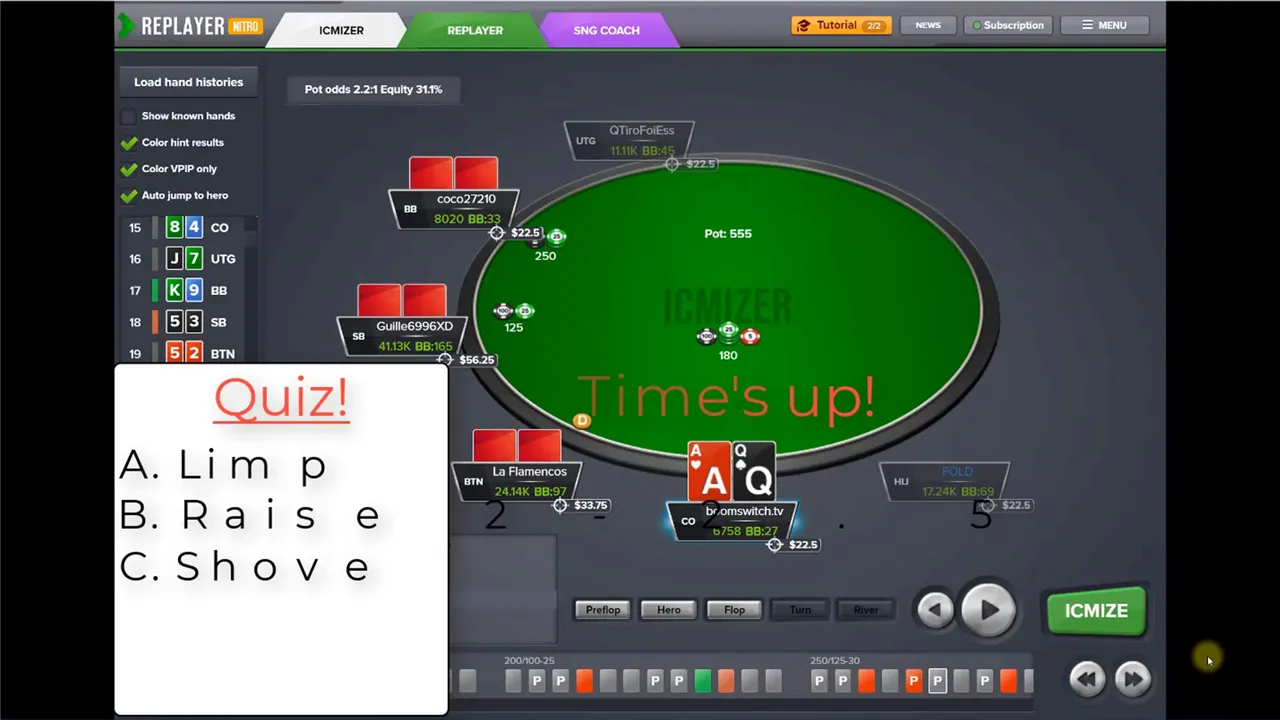
The 21 videos give the PKO section room to follow different events through the early and later stages. If knockouts make up a good part of your schedule, there is more here to get into than a brief introduction to bounty play. This is one of the clearest reasons to choose the course.
Some of these recordings date from 2024, and you can see the age in the presentation. There is still good poker in them. Just do not expect the whole advertised 50-plus hours to have been newly recorded for the latest package.
The coaching sessions show how to find leaks
The recorded student sessions are a useful change from following the coaches’ own tournament runs. You see them work out where another player is going wrong.
These are recordings of the coaches working with another student. Buying the course lets you watch that work; it should not be treated as booking a session for your own hands or database. If personal feedback is the main thing you need, confirm a separate coaching arrangement before spending the course money.
In the database review, they start with the results and look at opening rates, blind play and defending against steals. They compare positions too. A button opening number means more once you know the player’s average stack depth, while a call-steal stat can point to a problem that is easy to miss when you only look at individual hands.
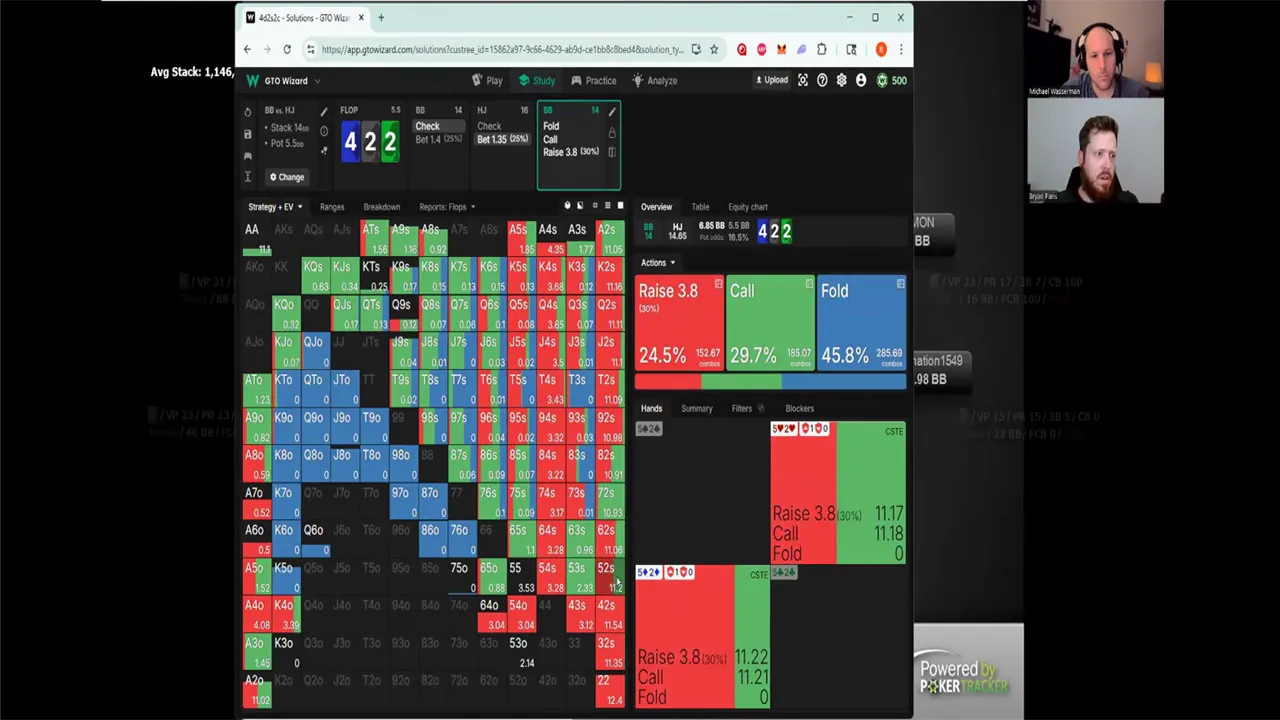
They give a useful explanation of hands where a solver mixes a 3-bet and a call. A loose opener, with a good player still to act behind, can make the 3-bet more appealing. You get a reason to choose it at that table, beyond copying how often the solver uses each play.
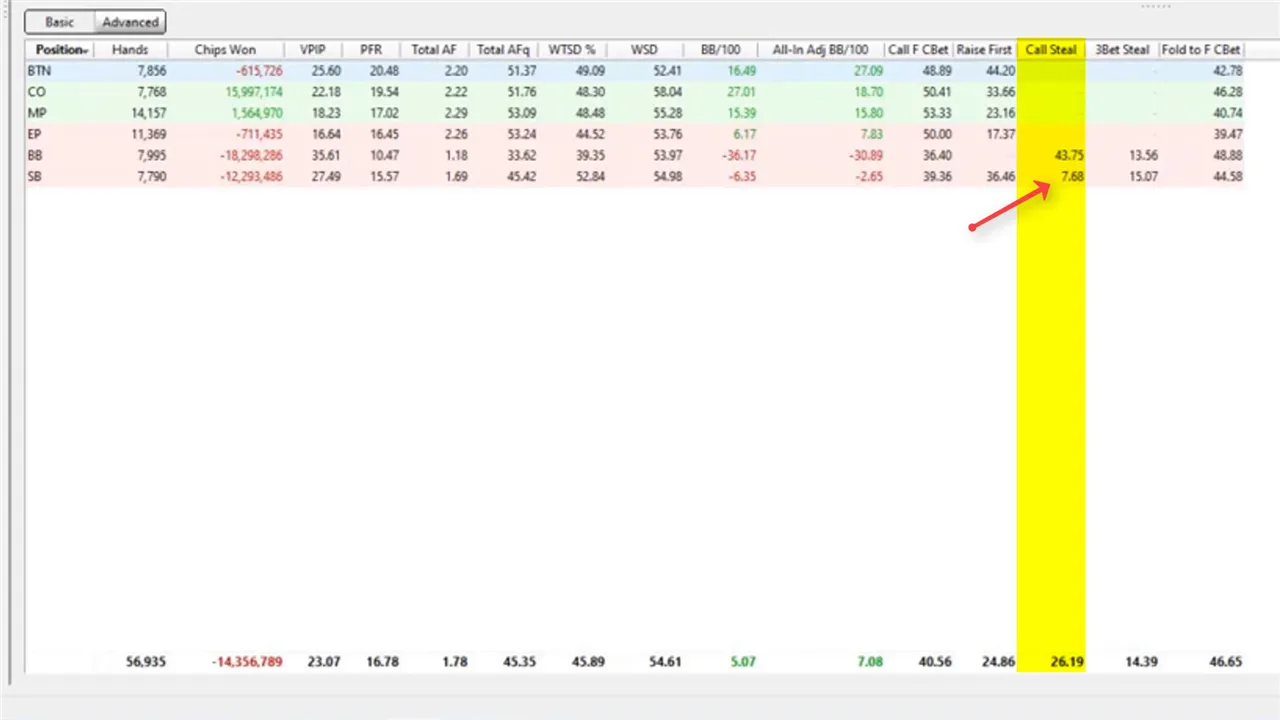
If you have a decent database of your own hands, this section gives you a useful way to work through it. Start with a number that looks odd, bring up the hands and find out why it looks that way. Copying the student’s target stats would miss the point, because your games and stack sizes may be different.
Watch Common Mistakes early
The Common Mistakes lessons pull together problems that keep coming up in the longer reviews. One looks at players raising and folding too much with stacks that could open-shove or rejam. Another goes through river mistakes, including missed thin value bets and calls that give opponents too much credit for bluffing.
The examples still depend on the opponent. A 30-blind jam can be good against one opening range and bad against another. The lesson helps you spot a possible mistake in your own hands, then check whether the same reasoning applies.
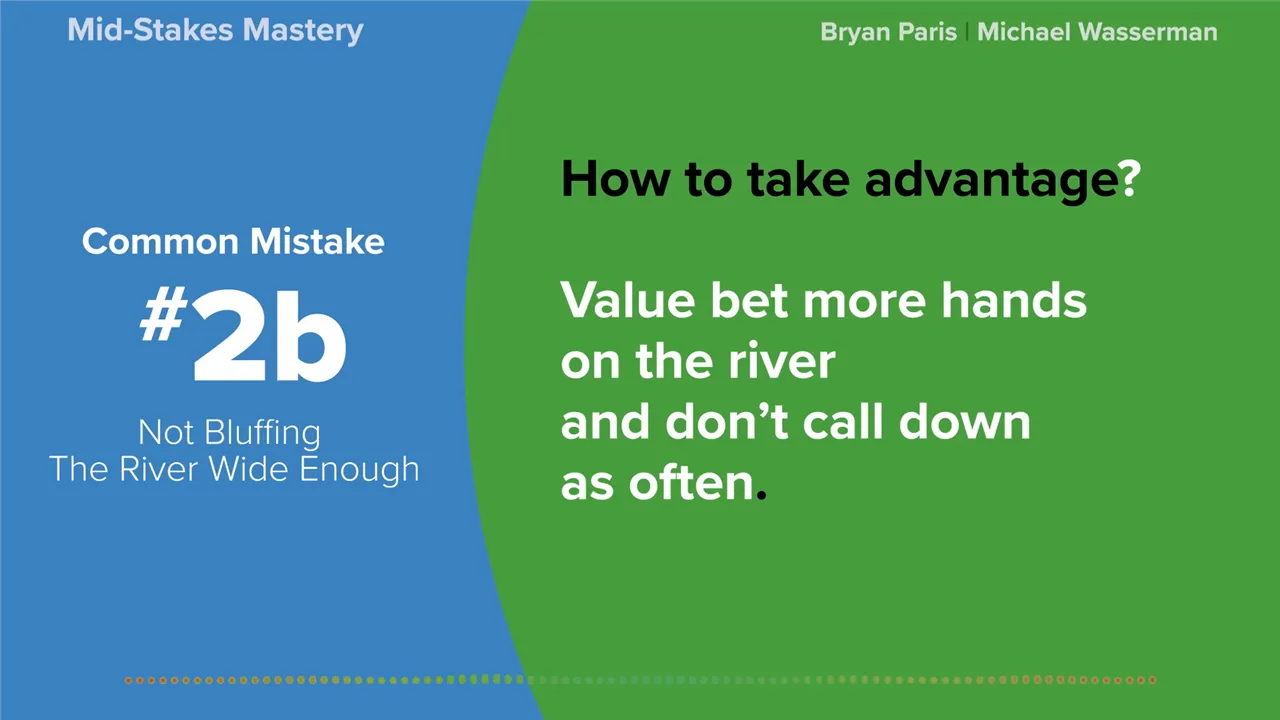
The study advice is straightforward. Talk through difficult hands and explain why you chose a play. Work on one leak at a time, and do not let a short run of results decide whether the work was worthwhile. After so many hand reviews, it is a useful reminder of what to take back to your own games.
What the 2025 to 2026 update adds
There is new material worth watching in the update, especially the ACR ICM review.
The ACR hands show how the same stack can need a different range once the bubble or a payout jump matters. At around 10 to 14 blinds, some of the ICM examples still use small opens without going all-in. That can surprise you if your chip-EV study has mostly shown limping or jamming. The exact play depends on the hand’s setup, so a single short-stack chart will not cover it.
Another hand looks at calling a 3-bet and then check-folding. After losing a third of your stack, you have less room to rejam later and less chance of making someone fold. That helps explain why the solver may prefer a 4-bet or a fold in the first place. Keeping chips has a purpose here: they let you put pressure on someone in a later hand.
The Current Trends lesson also explains how to think about mystery bounties. When they become available, the remaining bounty pool and number of players give you an average bounty value. The buy-in split tells you how much money went into that pool. Play can change a lot when the mystery prizes first become available, then settle closer to normal once the biggest ones have gone.
There is also a heads-up match review at about 22 blinds effective. It explains the very wide button range, how limping avoids repeatedly raising and folding, and how to respond when an opponent opens too often. It is useful for the end of an MTT, although it is only a small part of a complete heads-up education.
Those additions make the course more useful. They do not replace the older core lessons. The Current Trends discussion is also more likely to go out of date than a review explaining why a particular hand was played a certain way.
The lessons can be untidy
You can read the screens and follow what is happening in the poker tools. The course feels much like sitting in on a long coaching call, though. If you want a tightly edited lesson that gets straight to each point, some of these videos will test your patience.
Sound levels and picture quality vary between recordings. You move from older ICMizer and hand-replayer screens to newer GTO Wizard work, and the chapter names do not always make the order clear. A few introductions spend time on promotion before getting to the hands.
The poker can still be very good. At $597, though, it is fair to want an easier course to work through. You are paying for the coaches’ hand analysis; the editing and lesson order are much less impressive.
The four audio sessions give you more hand-history discussion to listen to while travelling. They are a useful extra. For the ranges and database work, the videos are easier to follow because you can see the stack sizes and the numbers the coaches are talking about.
Is Mid-Stakes Mastery worth $597?
If you regularly play $30 to $200 online MTTs, this is a course worth considering.
That is especially true if your schedule includes big fields and PKOs. The two-coach reviews give you plenty of close hands to work through, and the database sessions show how to look for similar problems in your own play. With the ICM update and more than 50 hours advertised, there is enough here to study over months if you use it alongside your own hands.
It is a harder buy when tournament poker is still new to you. The coaches expect you to understand ranges and stack depth, and to have some idea of ICM and solver results. They do not stop to teach all of that from the beginning. You also have to choose a route through the lessons before you really know which parts of your game need work.
At the other end, an experienced high stakes player may already know a fair amount of this. The strongest fit is a low or mid stakes regular who understands the basic tools but wants more help thinking through difficult tournament hands.
The PKO reviews, large-field runs and student coaching are what make the price reasonable for that player. A big video library would not be enough on its own. Here, the useful hand discussion earns the recommendation, while the older recordings and loose lesson order remain real drawbacks.
Do you need the software shown in the lessons?
You can follow a recorded hand and pause for the quizzes without buying every program on screen. Repeating the analysis with your own hands is a different commitment. The ICM work uses tools such as ICMizer and GTO Wizard, while the database coaching relies on a tracker and a useful collection of your own hand histories.
The course listing does not promise licences for those programs as part of the package. Budget for the tools you actually intend to use, and check that the plan you choose supports the tournament analysis you need. Start with the software you already understand. Buying several unfamiliar programs alongside the course would give you more to learn before you can use the lessons.
Where to start in the library
You do not have to follow the file order. If you buy it, this is a more useful way to get started:
- Start with the introduction and Common Mistakes lessons.
- Pick the Fifty Stack series or the first PKO series to match the tournaments you play most.
- Pause at the quizzes and write down your play before hearing the coaches’ answers.
- Use the database session to choose two or three filters for the next set of hands you play.
- Watch the ACR ICM update before getting to the later stages of the huge-field review.
- Try using what you learned from one long series at the tables before starting the second.
That way, you have something to work on between videos. It is easy to keep watching hands without ever going back to see whether you make the same mistakes.
Who gets the most from it?
The course is a good fit if most of this sounds like you:
- You regularly play online No Limit Hold’em tournaments.
- You understand ranges and stack sizes, with some knowledge of ICM and solver results.
- Large fields, turbos or PKOs make up a good part of your schedule.
- You like following a full hand history and hearing the decisions discussed.
- You have your own hand database to use alongside the coaching sessions.
- You will stop for the quizzes and choose which lessons to work on next.
When to leave it alone
There are good reasons to save your money if any of these apply:
- You are still learning how tournament poker works.
- You need a clear week-by-week course to follow.
- You mainly want help with cash games, live tells, sit-and-gos or Pot Limit Omaha.
- You learn better from short, edited lessons than long conversations.
- You are likely to watch the videos without reviewing your own hands.
- The $597 would put pressure on your poker bankroll or household budget.
Final verdict
Wasserman and Paris give regular tournament players a lot of good material to work with. The PKO reviews are a particular strength, and their disagreements make the hand analysis more useful. You hear them explain their thinking and question decisions even when a tournament ended well.
The database coaching and ICM examples add to that. They show why a number needs a closer look, or why keeping your stack can matter more than it first appears. Those are good reasons to spend time with this course if they match the problems in your own MTTs.
You will have to put up with older recordings, some slow discussion and a lesson order that leaves plenty for you to sort out. That makes it a poor first tournament course. For an active low or mid stakes regular who likes studying hand histories, there is enough good poker here to justify considering the $597 price.
Choose it for the detailed MTT and PKO reviews, provided you are happy to organise the study yourself.
Official course page: Mid-Stakes Mastery at Mike Wasserman & Bryan Paris (opens in a new tab)
Frequently asked questions
How much does Mid-Stakes Mastery cost?
The official Gumroad listing was $597+ on October 6, 2026. Have a look at the course page before paying, because the price can change.
How long is Mid-Stakes Mastery?
The seller advertises more than 50 hours. There are 75 videos and four audio sessions, covering large-field MTTs, turbos and PKOs, plus coaching sessions, Common Mistakes and the 2025 to 2026 update.
Is Mid-Stakes Mastery a completely new 2026 course?
No. Older core lessons sit alongside later additions. The newest update was added in December 2025, with ICM work, tournament trends, heads-up play and short lessons on particular spots.
Who teaches Mid-Stakes Mastery?
Mike Wasserman and Bryan Paris. Both are experienced online tournament players and coaches. The two-person hand reviews are among the best parts of the course.
Is the course good for beginners?
It would be a difficult first course. The teaching assumes you understand tournament ranges, stack sizes and ICM, and are familiar with tools such as ICMizer or GTO Wizard. A developing player can follow parts of it, but the course expects you to bring the basics with you.
Does the course cover PKO tournaments?
Yes. There are 21 PKO videos, with hand reviews and quizzes, plus discussion of registration, re-entry, bounty-adjusted ranges and ICM. It is one of the course’s strongest sections.
What does the 2025 to 2026 update add?
Five ACR ICM lessons, a Current Trends discussion, a heads-up review and two hotspots. The ICM hands, mystery-bounty discussion and short-stack examples are the most useful additions.
Is Mid-Stakes Mastery worth it for cash-game players?
Usually not. Some of the range discussion and database work can help, but most of what you are paying for is online MTT study. Much of the ICM, bounty and tournament-structure material will have little direct use in your cash games.
Sources
Disclosure
This review is editorial analysis, not a promise of results. Poker carries financial risk, and training does not guarantee profit. Do not spend course or playing money that cannot comfortably be lost.