Poker course review
Simple Poker Systems review
Jordan Drummond builds practical plans for tournament players. Here is who the course suits.
The complete review
Practical tournament postflop
US$185

Simple Poker Systems is Jordan “BBZ” Drummond’s course for players who want a better plan for the hands they run into in tournaments. He starts with a way to play a spot, then uses hands and solver work to show where it holds up.
The course is built for no-limit hold’em tournament players who want a clearer plan after the flop. The title is a little misleading if you’re brand new, though. You don’t need to own a solver, but you do need to be comfortable with poker ranges and the usual tournament language.
The verdict: Simple Poker Systems
The good
A practical way to work through common tournament postflop spots, with hand examples and solver comparisons.
The bad
Not an ideal starting point for complete beginners, or players looking for a full ICM or bounty course.
At $185 for lifetime access, it’s worth considering if you’ve learned the basics and still find yourself guessing in common postflop spots. If you’re looking for a first introduction to tournaments, there are better places to start.
Who is Simple Poker Systems for?
The best fit is a tournament player who knows which hands and positions are being discussed, but wants more structure when the flop arrives. Perhaps you know how to open from the button, yet aren’t sure which boards to bet or what to do when the big blind pushes back.
Drummond builds plans for spots like those. He also looks at river bluffs, value bets and hero calls, so this isn’t a course that stops as soon as the flop has been dealt.
There is a short preflop section, but don’t mistake that for lessons on the rules of poker. Terms like range, equity and 3-bet are part of the conversation early on. Later videos bring in blockers, frequencies and more detailed solver work. If that already sounds like another language, start with a foundation course and come back to this one.
How the teaching works
Drummond starts by breaking a situation into a few groups. He then looks at hands played by his students and compares the decisions with a solver. That’s useful because you can see the idea applied to an actual hand instead of being left with a slide to memorise.
The solver doesn’t always agree with his first guess. In a river value lesson, for example, he makes a prediction and then changes his view after looking at the result. He also explains why he sometimes prefers a simpler plan to copying every mixed decision the software suggests.
That doesn’t make a shortcut right in every game. The examples depend on the ranges and assumptions put into the model. Drummond does address that, including how stack depth or a different board can change the decision. Those conditions are worth paying attention to when you try to use the ideas yourself.
A quick start before the flop
The preflop lessons look at opening, defending against a raise and 3-betting against steals. Drummond spends time on the hands near the edge of a range, because those are often the ones a player isn’t sure about.
There are plenty of examples, but they move quickly. He expects you to recognise positions and hand notation as he goes. This is useful as a refresher or a way to spot mistakes in familiar ranges. It isn’t the part to buy if you need every preflop decision explained from scratch.
He also makes clear that some early examples are from the start of a tournament, away from the bubble and final table. Keep that setting in mind. A decision made for chips early on won’t necessarily be the same when payouts start to matter.
A clearer plan for c-betting
The first systems look at what happens after you raise and the big blind calls. Drummond groups flops by their features and starts with a simple plan, then works through examples where the plan needs adjusting.
That second part is important. A paired or monotone board, for instance, can change how comfortable you should be betting your entire range. He doesn’t leave you with a rule and expect it to work on every flop.
There is a separate lesson on checking from the button too. That gives you more to think about than which hands to bet. You’ll see why some hands are happier checking and how the range you arrive with affects the next decision.
The explanations get more technical as he works through hands. If you know the basics of ranges but haven’t spent much time looking at solver screens, expect to pause the video. The lesson moves from a broad idea to individual combinations pretty quickly.
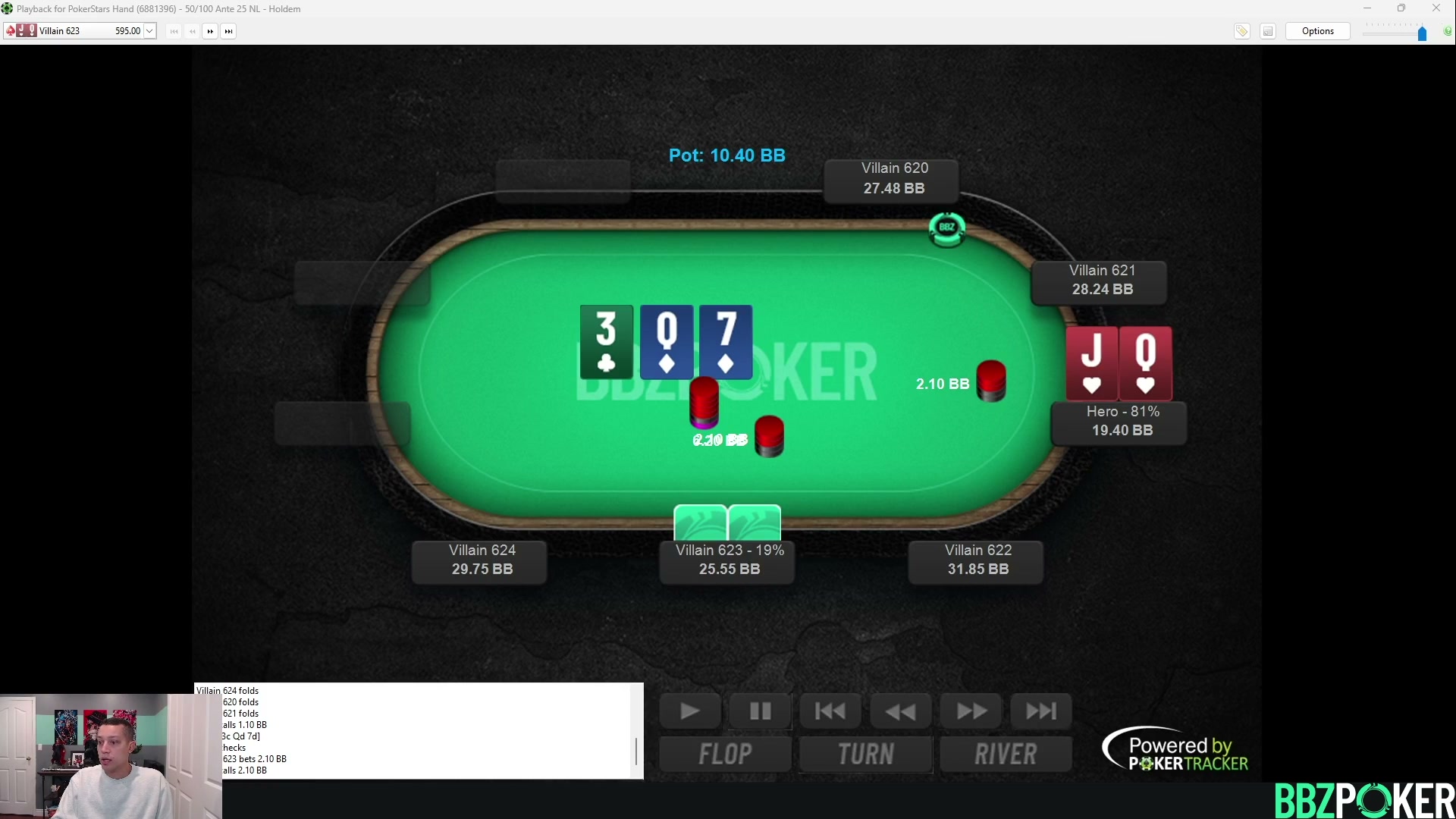
Playing back from the blinds
One lesson looks at defending the big blind when the small blind limps before the flop and then bets. That’s a useful spot to give its own attention, because both players reach the flop with different ranges than they would after a normal raise.
Drummond talks through several boards and checks his assumptions against a model. He points out that the number of players paying an ante can affect the comparison, so the example isn’t something to copy without looking at your own table.
Later lessons look at defending against flop bets and what happens when you’ve bet and face a raise. There is also a dedicated lesson on check-raising top pair at shorter stacks.
The river gets proper attention
If the river is where your confidence disappears, there’s a fair amount here for you. Drummond spends time on choosing bluffs, finding value bets and deciding when a hand can call.
The bluffing lessons go beyond picking a hand because it blocks something strong. He also looks at how the action on earlier streets changes what either player can reasonably have by the time the river arrives. That gives the discussion a connection to the hand you’ve actually played.
The value-betting work deals with the opposite problem: checking a hand that may still get called by worse. Drummond looks at what an opponent’s earlier check can suggest about their range, then uses that information when considering a river bet. It’s a useful reminder that the river decision doesn’t begin with the river card.
The hero-calling material asks more of the viewer. Pot odds and blockers are part of the discussion, and some examples involve assumptions about how an opponent plays. Don’t treat those assumptions as proof that everyone in your games behaves the same way.
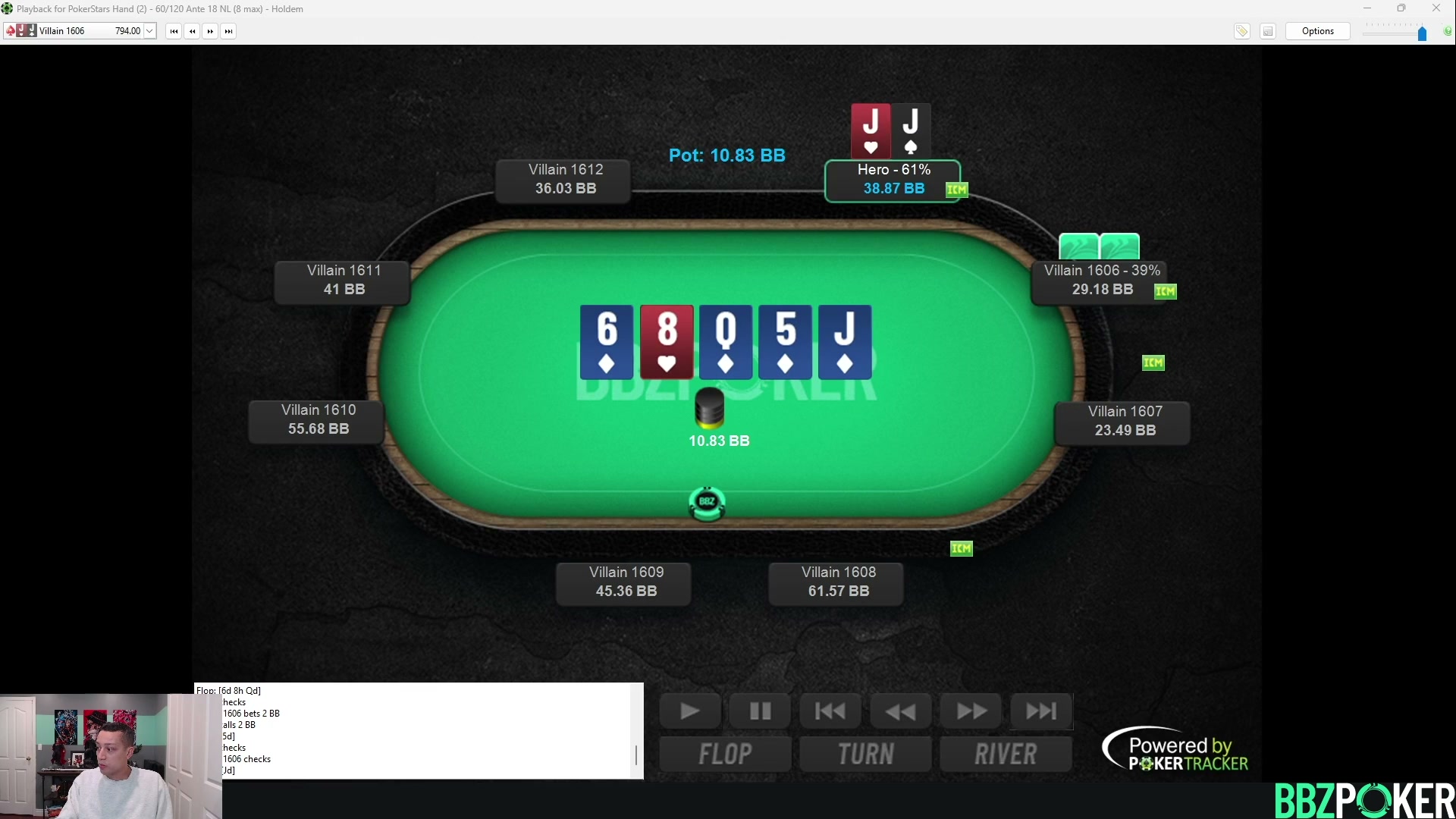
What is it like to study?
The lessons use slides, hand histories and solver screens. There’s a lot of repetition as Drummond works through similar situations. If you learn by seeing the same idea applied to different hands, that can help it stick.
If you prefer a short explanation followed by a neat summary, the pace may take some getting used to. Some of the later examples stay with a single decision while he works through the ranges. You’ll get more out of the course when you can stop and consider the hand yourself before he opens the model.
BBZ says you don’t need additional software to take the course. That matters because Drummond uses tools in his demonstrations. Seeing one on screen doesn’t mean a subscription to it comes with your purchase, or that you have to buy it to follow the lessons.
Where the course has limits
The focus is tournament strategy, with a lot of attention on common postflop decisions. It isn’t a complete tour of tournament poker from your first hand to the final table. If your main problem is ICM, payouts or bounty-specific decisions, check for a course built around those subjects before buying this one.
The final system looks at playing out of position after calling a 3-bet. That gives you a starting point for a difficult spot, although players looking for a full 3-bet course will need more.
Simple Poker Systems or From the Ground Up MTT?
These courses make sense at different stages. From the Ground Up MTT is the better starting point if you’ve played some tournaments but haven’t learned the fundamentals in order. Owen Shiels explains the basics and gives ICM and changing stacks proper attention.
Simple Poker Systems makes more sense once that language is familiar and you want to work on particular postflop decisions. Drummond’s hand reviews let you see his systems put to the test. Pick the course that addresses the gap you have now.
Price, access and value
BBZ lists Simple Poker Systems at US$185 as a one-time purchase. The seller says you get lifetime access to the course, including material added later. Applicable taxes can change the final amount.
At that price, the one-time access is appealing if you want to return to a particular postflop topic without keeping a membership active. Make sure that’s the work you want to do, though. A player who needs a broader tournament foundation may get more value from starting there.
BBZ’s published terms direct buyers to contact the company about its refund policy. Check that before paying if the ability to change your mind matters to you.
Final verdict
Simple Poker Systems gives tournament players a practical way to organise tricky postflop decisions. The hand reviews make the systems easier to understand, and Drummond explains the situations where he would change his approach.
If ranges and positions already make sense to you, this is a good course to consider for c-betting, blind play and difficult river decisions. If you’re still learning the fundamentals or mainly need ICM and bounty strategy, put the $185 towards a course that covers those needs first.
Official course page: Simple Poker Systems at BBZ Poker (opens in a new tab)