Poker course review
Red Line Mastery review
Thejericho2’s course puts calling and aggression together. It asks plenty of the player, and the US$999 price makes the fit especially important.
Red Line Mastery is worth considering if you already play online cash games seriously and keep giving up when opponents put pressure on you. Thejericho2 explains the calling decisions that hold a range together, alongside the aggressive plays that win pots. That makes this a useful course for a regular who wants to become harder to play against.
The US$999 price needs some thought, though. You need to understand your basic ranges before the finer examples will help, and the course asks you to do plenty of work with your own hands afterward. Buying it because your red line slopes down would be a pretty expensive diagnosis.
The verdict: Red Line Mastery
Worth considering for an experienced cash-game regular who will work through their own hands. The calling explanations and the conditions attached to aggression are the strongest reasons to buy.
The good
The calling lessons explain why particular hands can continue against pressure. The aggressive plays are tied to both ranges, with room to check and defend when the board calls for it.
The bad
The US$999 fee is hard to justify while your basic ranges still need work. Getting the most from the teaching means checking it against your own hands away from the tables.
Calling gets proper attention
One of the better decisions in Red Line Mastery is to give calling a central role. Thejericho2 points out that players who want to become more aggressive often put their effort into finding bluffs. Meanwhile, they keep giving up too easily when somebody bets into them.
The calling lessons get into why particular hands can continue. In a button versus big blind check-raise example, he explains how changing the suit of a card changes which backdoor bluffs the opponent can have. So two hands that look much the same at first can make different calling choices.
That's useful teaching. You get a reason to look past the strength of your own pair and think about the range betting into you. It also tells you something about the level of the course. If you're still trying to get comfortable with ranges, these details will take some work.
The river material tackles another familiar problem. A call can lose most of the time and still make money at the price you are getting. Thejericho2 explains this with pot odds before moving into examples, which helps connect an uncomfortable decision with a reason for making it.
Some of his language is forceful. The instruction to lean toward a call comes after considering the line and sizing, along with the opponent and relevant blockers. Those conditions matter. Treating it as permission to call every close river decision would miss the work behind the recommendation.
The graph needs a qualification
There's an awkward piece of framing running through the course. The red line is repeatedly described as 50% of your winnings. Showdown and non-showdown winnings are two components of the total, but that doesn't mean each should contribute half.
Thejericho2's own explanation of calling shows why this matters. When you fold, the result goes into your non-showdown winnings. When you call on the river, the result goes into your showdown winnings. A river call can therefore protect the red line while losing money on the blue one.
The important test is whether those decisions improve your total results. A healthier red graph on its own cannot settle that. This is a useful course for investigating passive habits, but the graph should lead you back to the hands and the reasons for playing them.
He does put a limit on the target in the introduction. He says a very heavy red-line style might be suboptimal in 200NL pools and frames the course around preparing for stronger games. That's a more useful buying qualification than the promise of making both lines go up.
The aggressive plays come with conditions
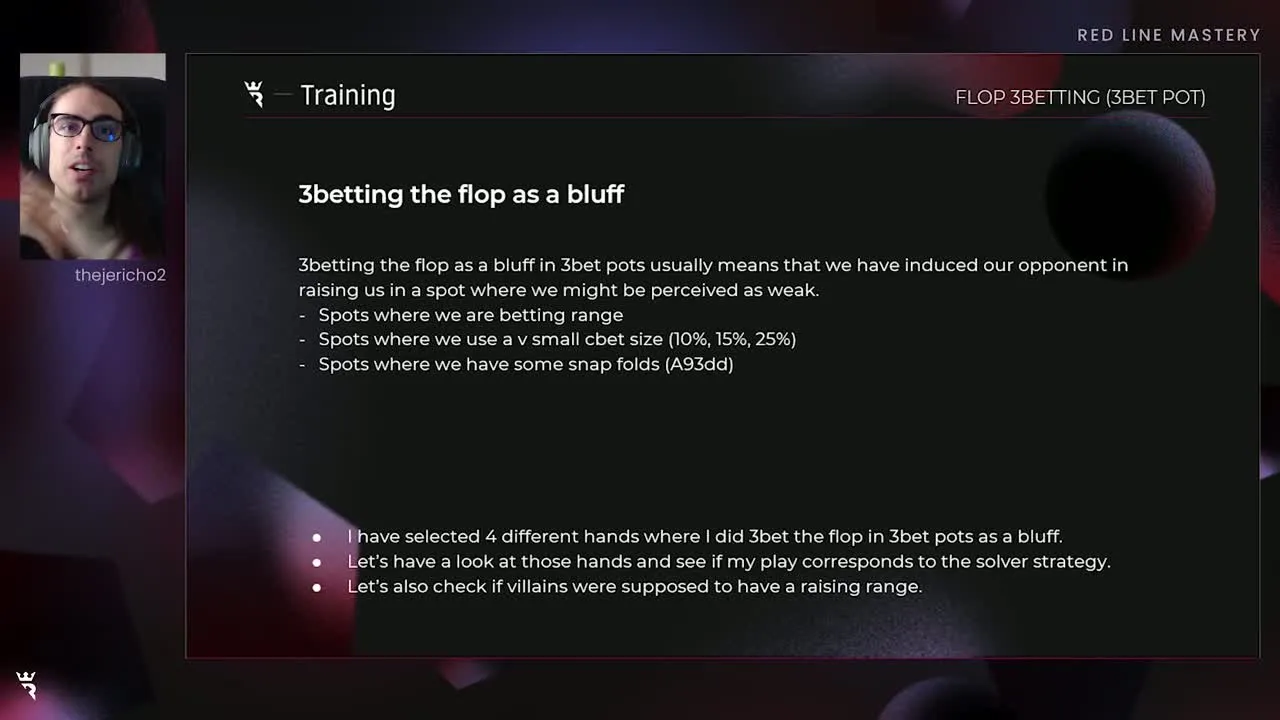
The flop 3-betting lesson gives a good example of how he approaches aggression. He explains how a small continuation bet can invite raises, then sets up a comparison of his own hands with solver output. He also asks whether the opponent should be raising in the first place.
That second question helps. An aggressive hand makes a lot more sense when you understand what the other player is responding to. The lesson gets you looking at both ranges before you decide whether to fight back.
The turn-barreling discussion follows the same idea. An opponent who has called a small flop bet can still have a wide range on the turn. Thejericho2 explains why that creates room to apply pressure, while acknowledging that many of those flop calls are reasonable. He gives you the cause of the opportunity.
There's also room for checking. In the blind versus blind material, he explains why the small blind needs to check and defend on boards that favour the big blind. Trying to force aggression with a weak overall range would leave the rest of that range exposed.
This is where the course earns more trust than its big claims about becoming a red-line player. It explains situations where the aggressive player has to slow down.
Your opponents still change the answer
The multiway section makes the limits especially clear. When somebody bets into several players, the course accepts tighter folds, particularly on the earlier streets. The explanation connects a loose call now with the chance of losing more before folding later.
The recreational-player material has useful qualifications too. Thejericho2 warns against isolating a weak player with almost anything when regulars are still waiting in the blinds. He also keeps the multiway caution when a regular and a recreational player are both in the pot.
So the adjustments are about the whole lineup. The presence of one weak player doesn't make everyone else disappear.
His reads on particular pools deserve some care. In the 4-betting discussion, he says he doesn't track the GG pool as such and describes under-4-betting as an impression. The sizing-tells lesson also presents its patterns as his experience and says they aren't completely reliable.
Those observations can help you ask better questions about your own opponents. They're a weaker basis for copying a particular adjustment than the range and sizing explanations shown in the theory. You'll need to decide how well the read fits the games you actually play.
Be ready to work with your own hands
The study advice is one of the stronger parts of the course. Thejericho2 recommends marking troublesome hands and writing down your own assessment before checking the solver. That gives you something specific to compare with the answer. It also makes it harder to glance at a solution and tell yourself you understood it all along.
The PioSOLVER review gives a useful example. He checks a fold, changes the flop bet size in the analysis and looks at how the continuing range changes. The conclusion is sensitive to the price. This is the sort of demonstration that helps you understand why a remembered answer can stop fitting when the details change.
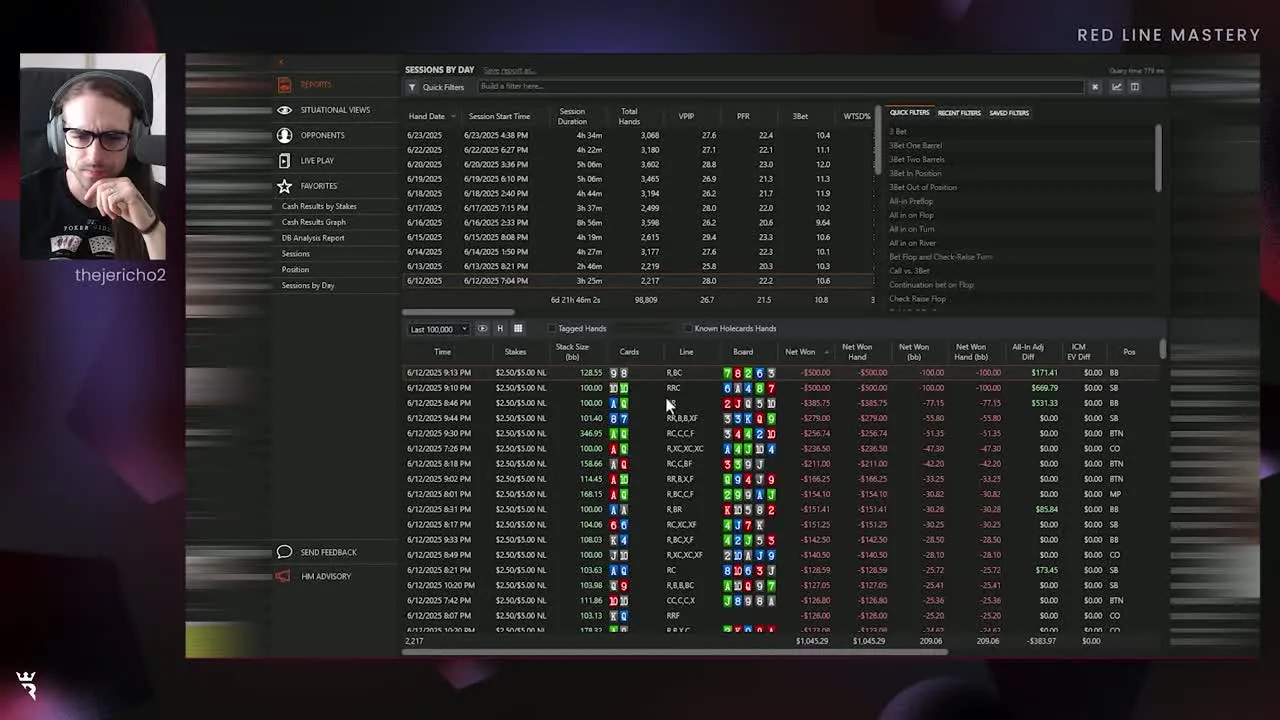
You can follow the on-screen demonstrations without owning a solver. But the study routine he recommends involves database review and checking your decisions in tools such as PioSOLVER or GTO Wizard. Following along and repeating that work with your own hands are different commitments. Allow for any separate software you choose to use.
He also discusses how rough the adjustment can feel when wider calls lose and big bluffs keep running into strength. That matters with this course's style of play. The final lesson is sensible about the work ahead, making clear that finishing the videos won't change those habits overnight.
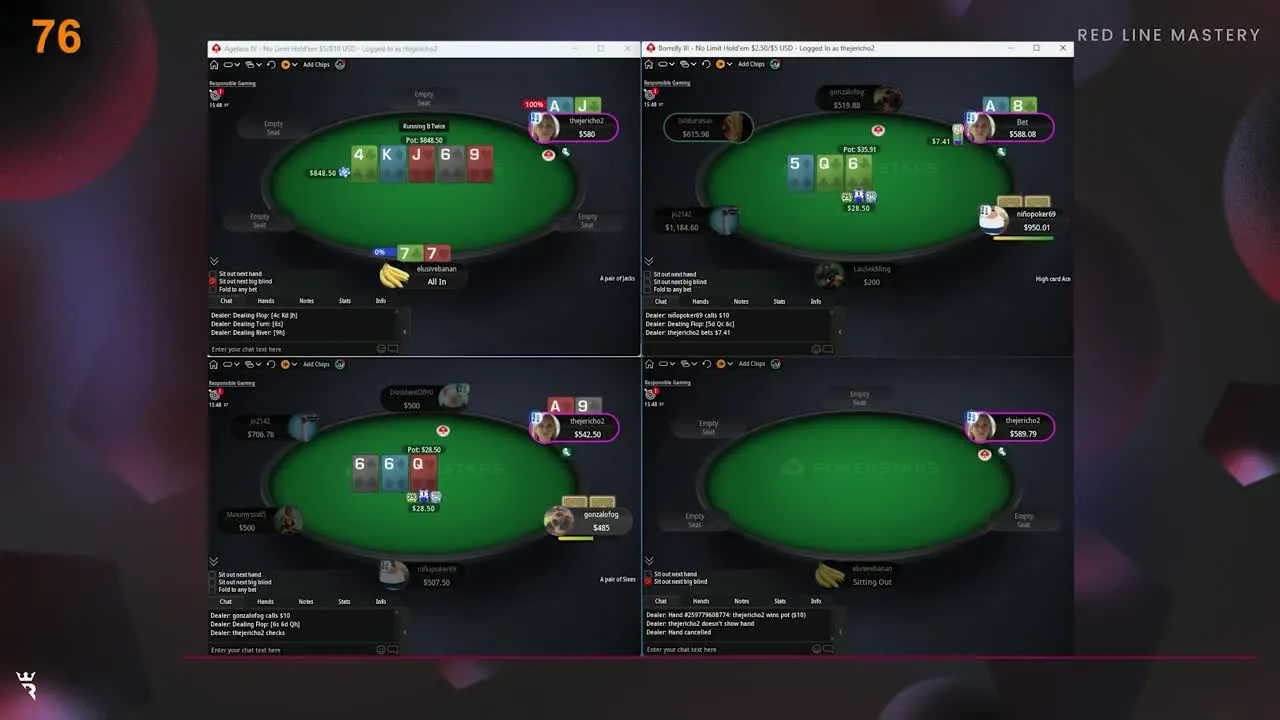
The practical sessions bring this back to online tables, although they can be harder to follow. In the PokerStars 500NL and 1kNL session, the commentary moves between several tables, and he acknowledges the difficulty of talking through so much action. You'll want to pause and go back to individual decisions. These sessions make more sense once the theory feels familiar.
Price and who should buy it
Run It Once currently lists Red Line Mastery at US$999 as a one-time purchase with lifetime access. It advertises quizzes and printable Key Takeaways, plus a Red Line Stat Checker and a private Discord with thejericho2. This is the full standalone course, separate from his earlier Elite mini-course with a similar name.
At that price, the strongest case is an established cash-game regular who understands ranges and has specific trouble defending against pressure or finding aggressive plays. The detailed explanations can help that player examine decisions they have been avoiding. The hand-review routine gives them a way to keep working after a lesson ends.
If you're still learning which hands belong in your preflop ranges, this would be an expensive place to begin. The course quickly asks you to think about individual combinations and how earlier decisions shape the rest of a hand. Those are useful questions once the basics feel comfortable.
Red Line Mastery is a worthwhile option for that more experienced player who will put the ideas through their own hand reviews. Its calling explanations and the limits it puts on aggression are the reasons to consider it. The US$999 fee is much harder to justify if all you want is a quick fix for a downward line.
Official Red Line Mastery course page