The short version
- The outcome is drawn from a random number generator at the moment you press spin.
- Reel animation, near misses and bonus build-ups are display, not mechanism.
- Hit frequency and RTP are different numbers, and the more interesting one is rarely published.
A physical slot machine once had mechanical reels whose stopping positions determined the prize. Nothing about a modern online slot works that way, and understanding the difference removes most of the folklore that surrounds these games.
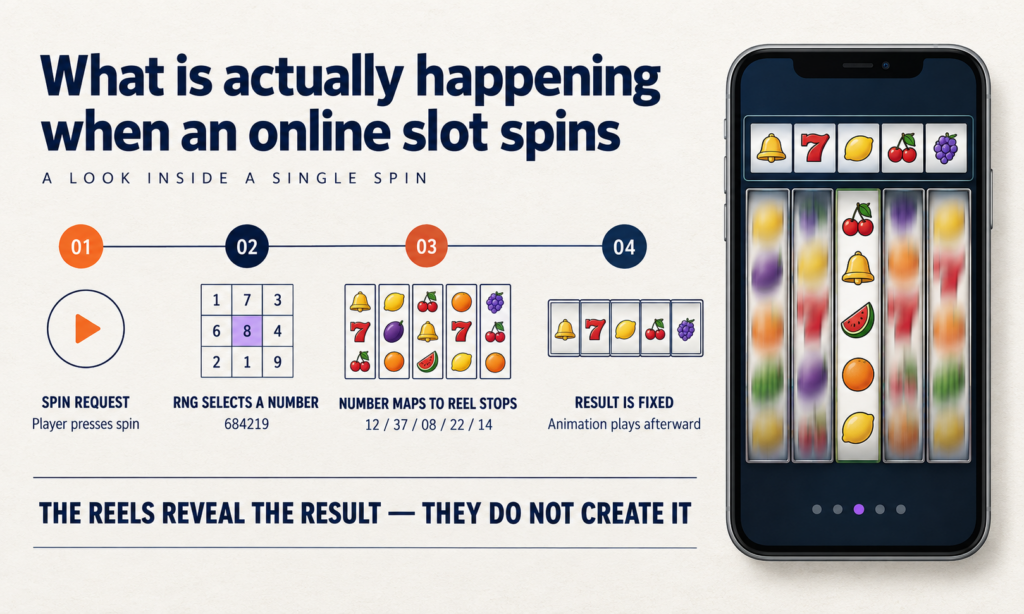
The sequence of events
When you press spin:
- The game requests a value from a random number generator (RNG) — an algorithm producing a sequence of numbers with no practical pattern, seeded so that the sequence cannot be predicted or reproduced.
- That value is mapped onto the game's outcome table, which determines the symbols on every reel and therefore the win or loss.
- The result is sent back and the client animates reels spinning to a stop at the positions already decided.
The animation exists for you. The result was fixed at step one. Stopping the reels early, holding the button, or changing stake mid-session cannot alter an outcome that has already been drawn. In some markets that kind of interaction has been restricted specifically because it creates a false impression of control: Great Britain's regulator banned features that speed up play or give the illusion of influence over the result, along with autoplay, with operators required to comply by the end of October 2021.
Testing and certification
Licensed markets do not take an RNG on trust. Independent test laboratories examine the generator for statistical randomness and unpredictability, verify that the game's actual return matches its stated RTP over very large simulated samples, and check that the certified version is the one deployed. The regulator then holds the operator responsible for running only certified builds.
Two honest caveats:
- Certification says the game behaves as specified. It does not say the specification is generous. A certified 88% RTP slot is certified to take 12% of turnover.
- Certification is jurisdictional. A game approved in one licensed market is not automatically the same build, or the same RTP, in another. Some titles ship with several configurable RTP settings, and which one an operator selects is not always disclosed to the player.
Hit frequency, and why it is the number you can feel
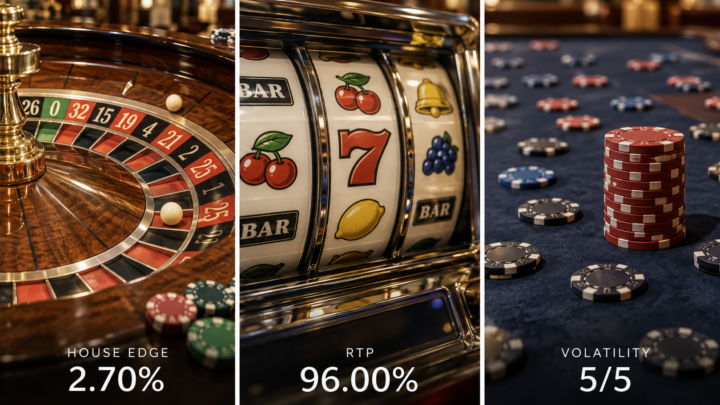
RTP is how much of total turnover comes back. Hit frequency is how often a spin returns anything at all. They are only loosely related.
A game might have a hit frequency near 20% — roughly one spin in five returns something — while most of those returns are smaller than the stake. That is the mechanic sometimes called a loss disguised as a win: the celebration animation plays, coins fall, and the balance goes down. Britain's 2021 package also prohibited sounds or imagery that suggest a win when the return is equal to or below the stake, which tells you how deliberate the effect had become.
If you want to know what a session will feel like, hit frequency and volatility matter far more than the RTP figure. They are also the two numbers least likely to be printed on the game information screen.
Paylines, ways and cluster mechanics
Modern titles have largely abandoned fixed paylines in favour of "ways" systems — any matching symbols on adjacent reels from the left — or cluster mechanics, where groups of touching symbols pay.
The important thing to understand is that these are presentations of the same maths. A 243-ways game is not 243 times more generous than a single-payline game. The stake is spread across more opportunities, each worth proportionally less. The total return is set by the outcome table, and the structure only changes how that return is packaged into wins.
The same applies to features that feel like extra value: free spins, expanding wilds, multipliers, hold-and-spin rounds. Every one of them is inside the RTP figure. A game with an exciting bonus round funds that round by paying less during base play. Nothing is added from outside.
Bonus buys and progressive jackpots
Some games offer to sell you direct entry to the bonus round. The RTP of a bought feature is typically similar to the game's overall RTP, sometimes slightly higher, but the stake is many times a normal spin — often 50 to 100 times. The edge is a percentage of turnover, so multiplying turnover multiplies the expected loss. Bought features are the fastest legitimate way to lose money in a casino, and several regulators have restricted or banned them for that reason.
Progressive jackpots work by diverting a slice of every stake into a shared pool. The advertised RTP of such a game usually includes the jackpot contribution, which means the return you experience while the jackpot is not won is lower than the headline. One player eventually receives the pool. Almost everyone funds it.
What this leaves you with
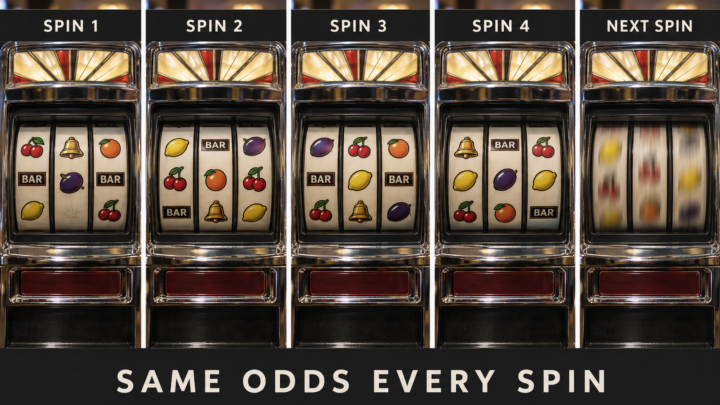
There is no timing, no stake pattern and no sequence of games that changes the outcome distribution. The RNG is indifferent to how long you have played, what you staked last, and how the reels stopped.
What is genuinely within your control is the stake, the number of spins, and the decision to stop — which is why every meaningful tool a licensed operator offers is a limit rather than a strategy.
Sources and checking
Great Britain's 2021 online slots measures — the 2.5-second minimum spin speed, the autoplay ban, the prohibition on presenting sub-stake returns as wins, and the permanent ban on reverse withdrawals — are set out by the Gambling Commission: https://www.gamblingcommission.gov.uk/news/article/gambling-commission-announces-package-of-changes-which-make-online-games