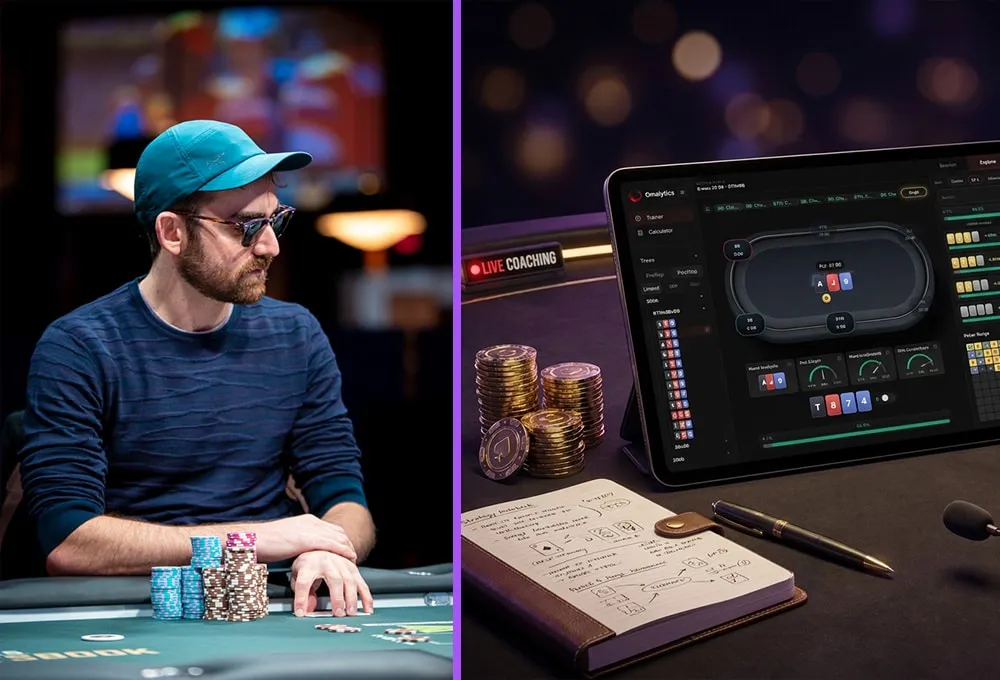
Dylan Weisman, creator and coach of Crushing PLO Tournaments.
Crushing PLO Tournaments is one of the few poker courses where the subject alone almost justifies its existence. There are endless courses on six max cash, heads up pots and standard tournament poker. Serious PLO tournament strategy is still a much thinner market.
Dylan Weisman goes straight into the spots that make the format difficult. Limping at different stack depths, multiway flops, short stack incentives, ICM pressure and final tables where one bad collision can cost more than several buy-ins.
That makes the course useful. It does not make it an easy recommendation. The price is $999, the material gets technical quickly, and some of the longest videos have much less teaching than the polished core lessons.
Quick verdict
- Best for: serious intermediate and advanced PLO tournament players who already understand the game and want a proper MTT framework
- Skip it if: you are new to PLO, mainly play cash, or tend to watch courses without doing any work away from the videos
- Current price: $999 for lifetime access to the course
- Best part: the ICM and final-table material gives PLO MTT players something that is hard to find elsewhere
- Biggest weakness: the turn and river module is short, while the long play videos often have too little explanation
ChipVerdict rating: 8.8/10
If you mainly play hold’em, compare our Upswing Lab 2.0 review for a broader learning path. For deep live cash, read our Destroy Live Cash review.
What is inside Crushing PLO Tournaments?
Upswing describes the main course as more than 50 lessons and roughly 20 hours of core training. The complete package is considerably larger once the final-table reviews, play sessions and bonuses are included. The version I examined contained 92 videos and just under 41 hours of footage.
Do not confuse that total with 41 hours of tightly edited theory. The central course is the focused part. Several bonus sessions are long recordings where the actual teaching comes in bursts.
| Section | What it covers | My view |
|---|---|---|
| Preflop | Limping, raising and responding across 100, 35, 20 and 10 big blind stacks | Detailed and essential |
| Flop | Heads up and multiway strategy with range and equity work | Strong, but fairly technical |
| Turn and river | Practical later-street heuristics | Useful, but too short |
| ICM | Bubble pressure, stack roles, sizing, future game and common mistakes | The best part of the course |
| Spotlights | Focused ideas such as key cards and bad cards | Memorable and practical |
| Final-table reviews | Real WSOP and Triton PLO tournament decisions | Excellent application |
| Play and Explain | Long live sessions and tournament footage | Mixed learning value |
| Brad Owen bonus | Dylan coaches Brad through PLO tournament spots | More accessible than the core theory |
This is not a beginner PLO course
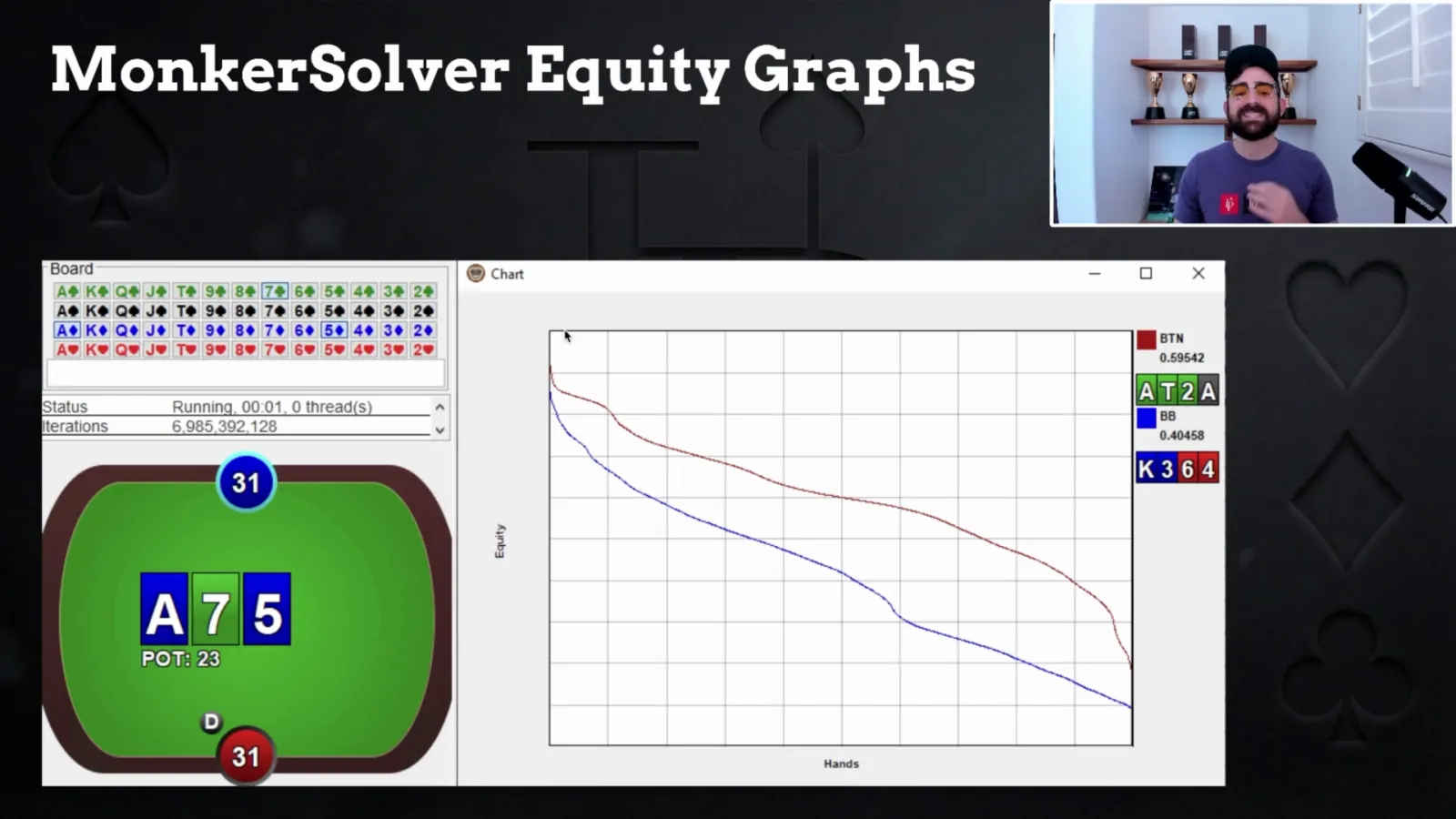
Dylan calls the course a textbook and that is about right. He expects you to follow it in order, revisit earlier ideas and understand why a range behaves the way it does. The lessons use MonkerSolver outputs, equity graphs, range comparisons and a lot of PLO shorthand without slowing down to teach the basics.
A newer player can still learn from it, but they will spend half the time trying to understand the language. If you are still unsure why double suited hands matter or how stack-to-pot ratio changes a hand, there are cheaper and friendlier places to start.
The course is best for somebody who already plays PLO and has discovered that cash-game knowledge does not solve tournament PLO. That gap is exactly where Dylan is strongest.
The preflop section gives the course its backbone
PLO has more than 270,000 starting hand combinations. Memorising every output would be ridiculous. Dylan groups hands by the qualities that actually drive the decision: suitedness, pairs, high cards, connectivity and how well the hand survives a three bet or a multiway pot.
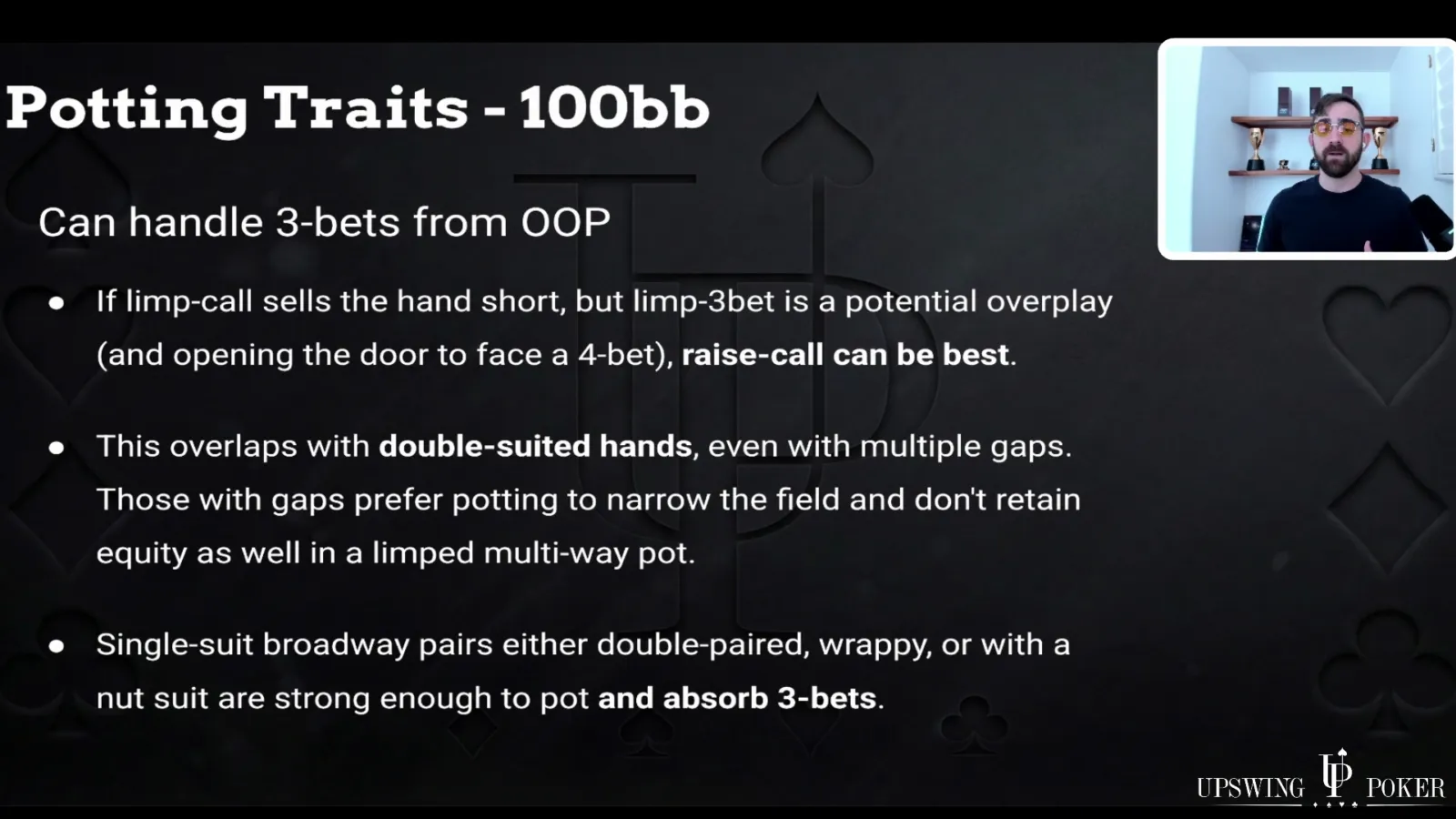
The central idea is not simply whether a hand opens. It is whether it belongs in the limp range or the pot range. Hands that can take pressure and still realise their equity are better candidates for raising. Other playable hands prefer keeping the pot smaller and preserving their multiway value.
The interesting part is how that logic changes with stack depth. At 20 big blinds, a raised pot can become a two-street hand very quickly. At 10 big blinds, limping disappears and high cards and suits gain even more value. Low disconnected cards become expensive baggage.
This is much better than receiving four static charts and being told to study them. Dylan is trying to give you a way to reconstruct the strategy when you cannot remember a specific combination. That is exactly what a good course should do.
The ICM module is the real reason to buy it
The ICM section is where Crushing PLO Tournaments separates itself from normal PLO training. Tournament incentives do not just change which hands enter the pot. They change sizing, limping, pressure and which stack is allowed to start a fight.
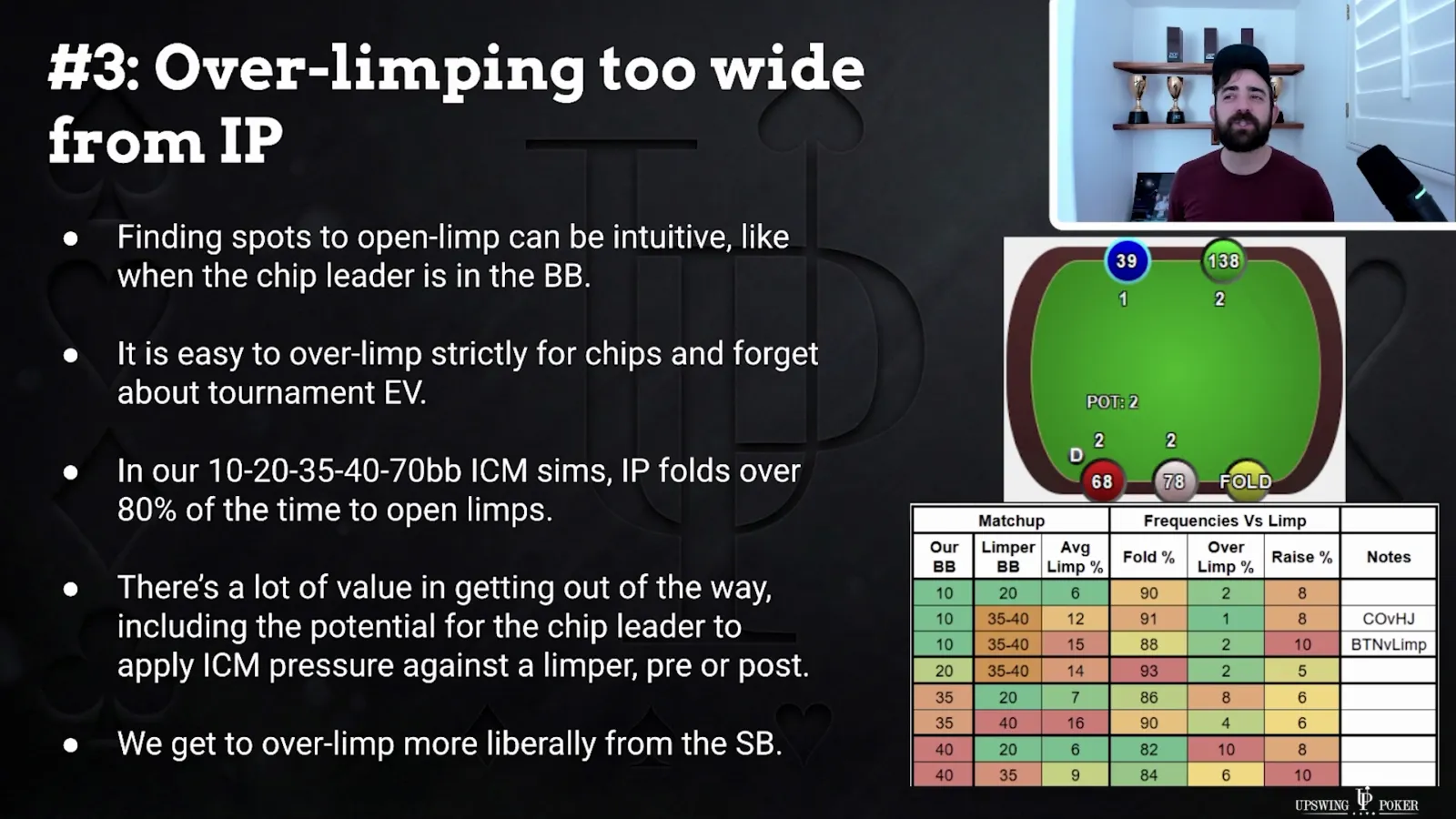
Dylan shows why the chip leader can use sizes that would look strange in a cash game, why medium stacks need to avoid unnecessary collisions and why a short stack may flat preflop with a plan to stop and go after the flop. The examples are tied to actual tournament incentives, not generic advice about playing tighter near a pay jump.
The lesson on common final-table mistakes is especially good. Dylan covers chip leaders using sizes that are too small, players over-limping from position and short stacks misplaying attractive ace-high rundowns. These are believable mistakes. They are also exactly the sort of decisions that cash players get wrong when they move into PLO tournaments.
If you already understand regular PLO but feel lost when four stacks and three pay jumps start pulling the hand in different directions, this section can justify a large part of the price.
Key cards, bad cards and future game
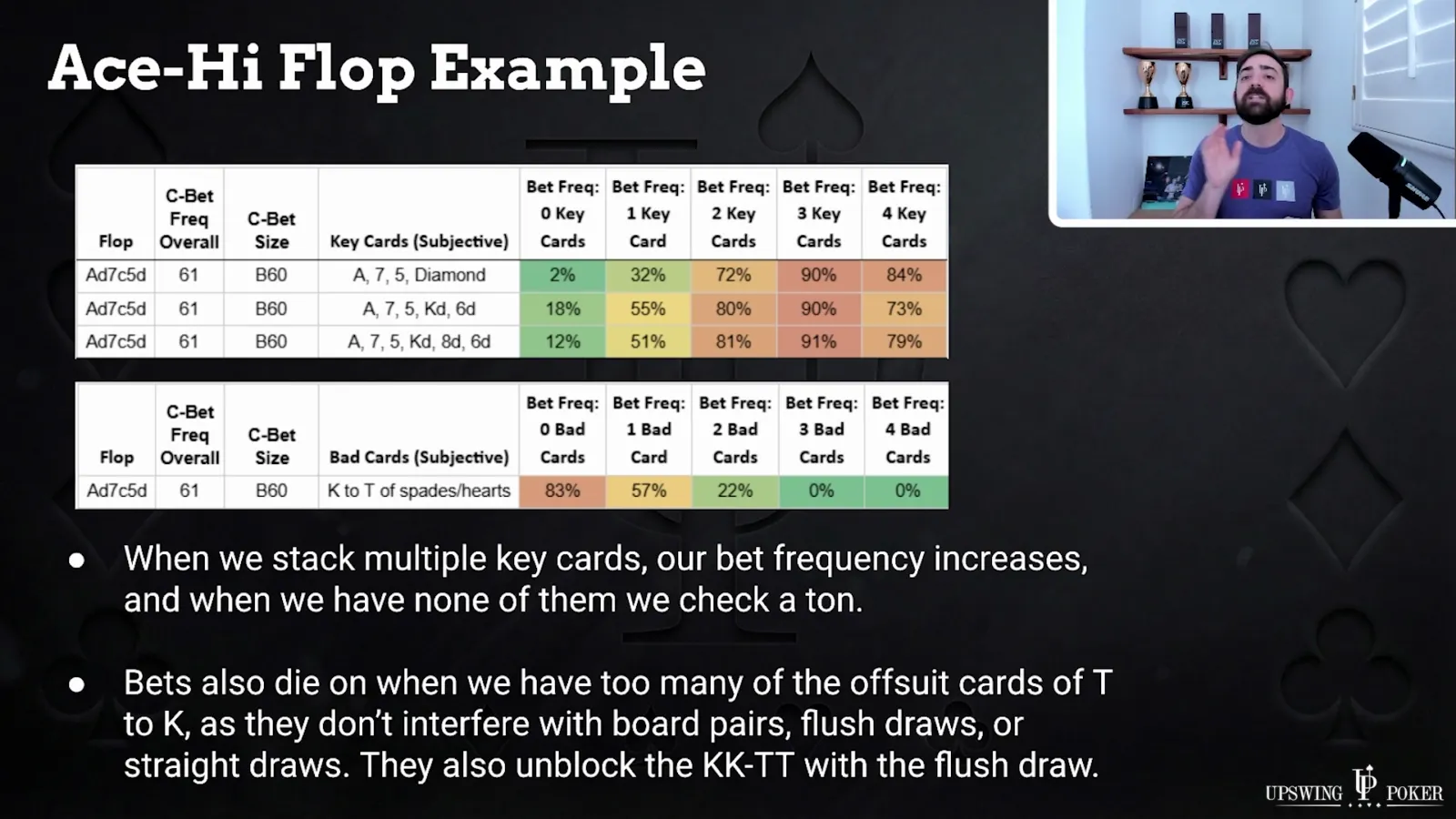
Some of the best ideas are simple enough to remember without opening a solver. The key-card lesson asks how many relevant cards your hand holds on a particular board. When your hand controls more of the important cards, betting becomes more attractive. When you hold cards that unblock the opponent’s continuing range, checking gains value.
The future-game material is more subjective. Dylan asks whether doubling up would let you abuse the next stage of a bubble or final table, and whether that extra leverage should affect a close decision now. He is careful about the danger: players love using “future game” as a clever excuse for an ICM punt.
I liked the lesson because it treats the idea honestly. There is no perfect solver answer waiting behind every future tournament state. This is a useful layer of judgement, but it should not overrule a clearly bad present decision.
The turn and river section is too short
The main weakness in the course structure is obvious once the modules are put next to each other. Preflop gets almost five hours. Flop gets more than three. The dedicated turn and river material adds up to less than half an hour.
Dylan gives a reasonable explanation. Multiway PLO solver work becomes less trustworthy as the hand moves away from clean assumptions and into a real tournament field. He therefore teaches heuristics instead of pretending the output is exact.
I respect that. I still wanted more. Later streets are where pots get large and tournament mistakes become painful. More hand examples built around the heuristics would have made the course feel better balanced without requiring fake precision.
The final-table reviews make the theory feel real
The final-table reviews are among the most convincing parts of the package. Dylan revisits hands from major WSOP and Triton events, then tests the decision against the framework taught earlier in the course.
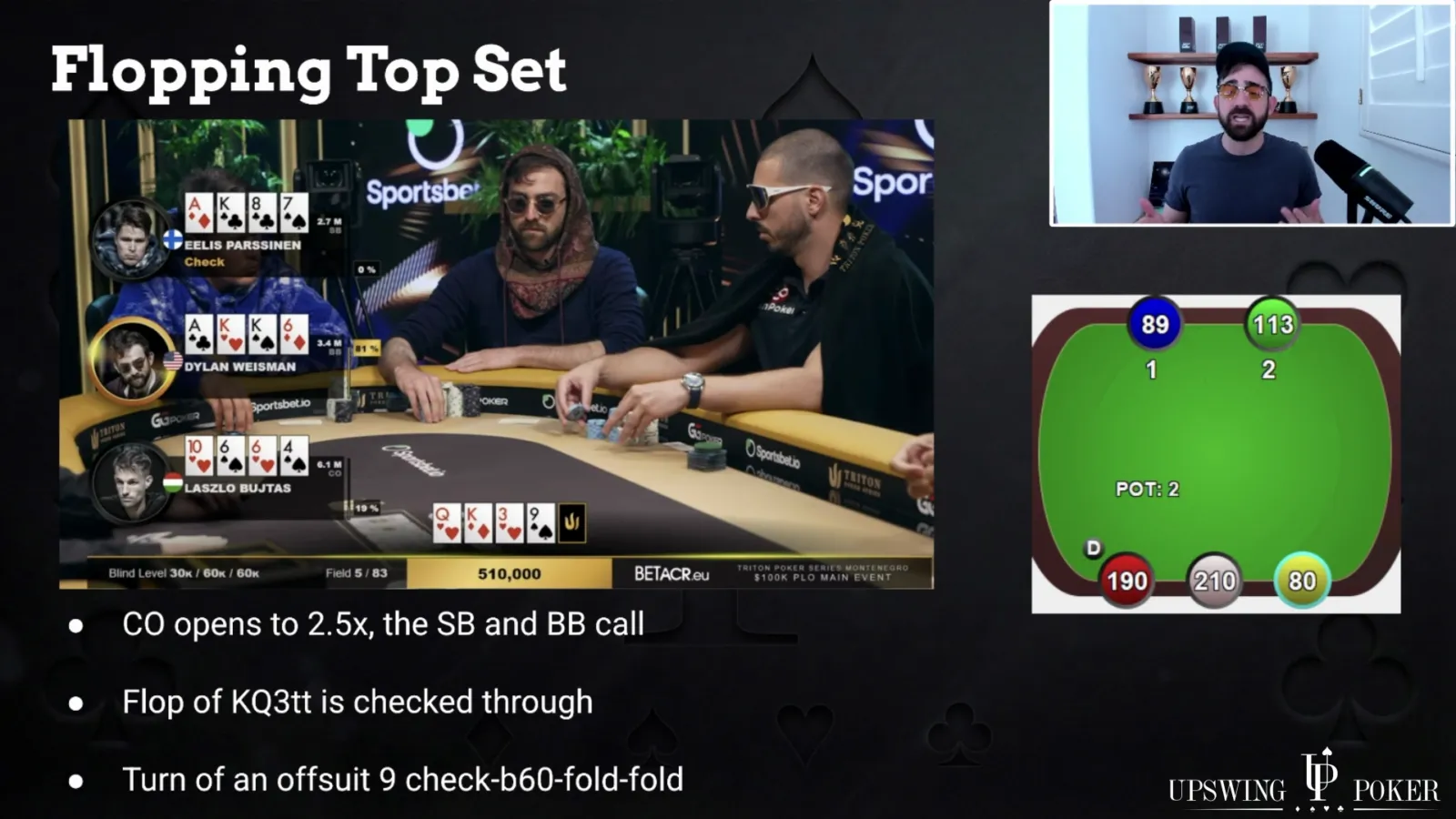
These lessons work because he does not rewrite history. When a size was poor or a decision ignored an important incentive, he says so. That matters in a premium course. A highlight reel of correct plays teaches far less than seeing where a strong professional drifted away from his own best process.
The $100K Triton review is particularly useful. The table is strong, the pay jumps are serious and the stack collisions are not theoretical. You can see why a hand that looks aggressive in isolation may be reckless once the full table is considered.
Dylan coaching Brad Owen is a smart bonus
The Brad Owen sessions are easier to watch than the densest solver lessons. Brad asks the questions a capable poker player would ask while learning the format, and Dylan has to correct a real thought process instead of presenting a finished answer.
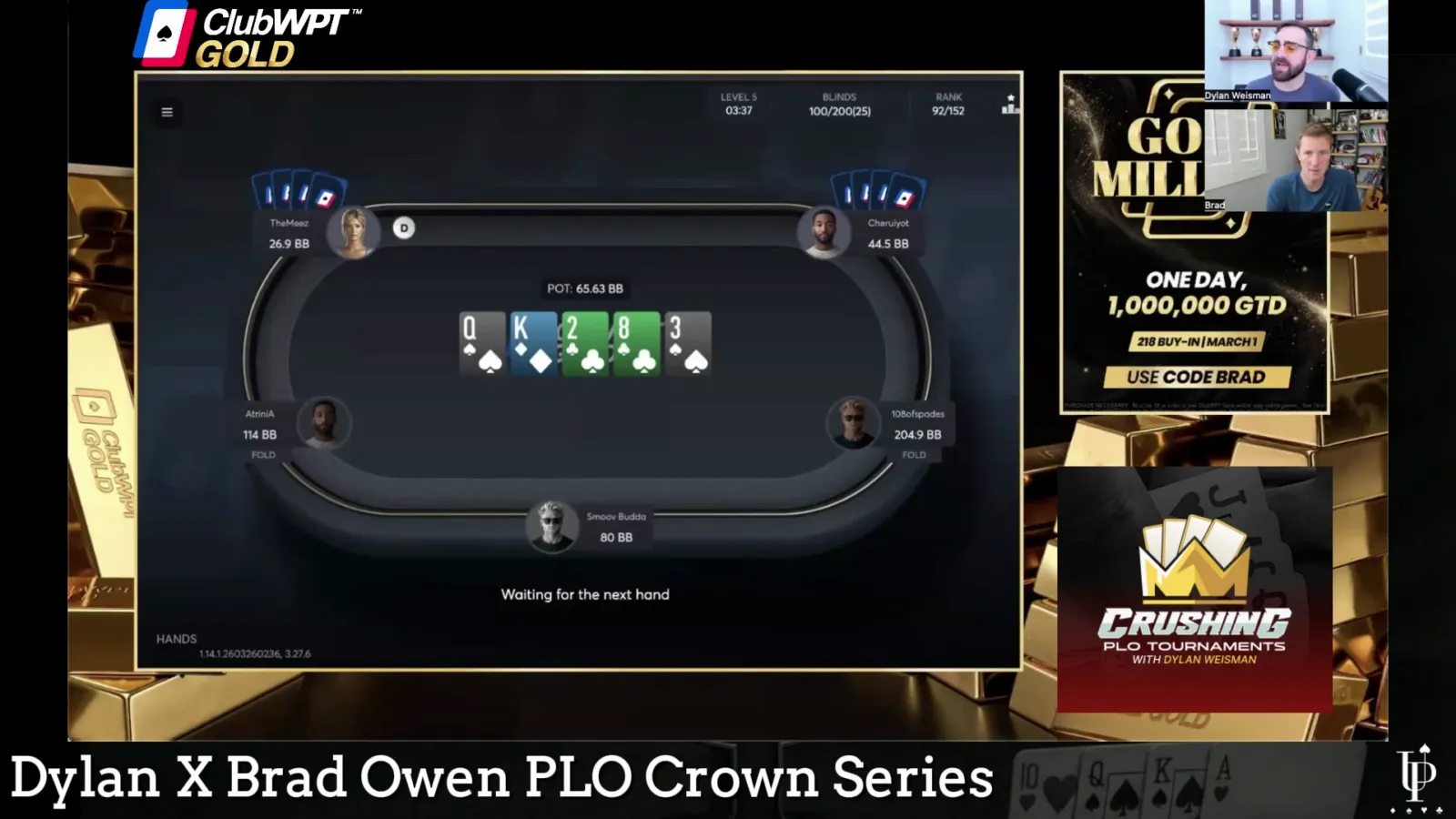
That format exposes common misunderstandings quickly. A hand can look attractive in four-card poker while still being a poor raise at the current stack depth. A familiar hold’em size can create the wrong incentives in PLO. Hearing Dylan respond to those assumptions is often more useful than another prepared slide.
The Play and Explain videos are the weakest part
The long play sessions sound valuable on the sales page. There are useful moments and plenty of real examples, but too much dead time between them. Some stretches are mostly table action, setup or chat, with very little explanation of the decisions.
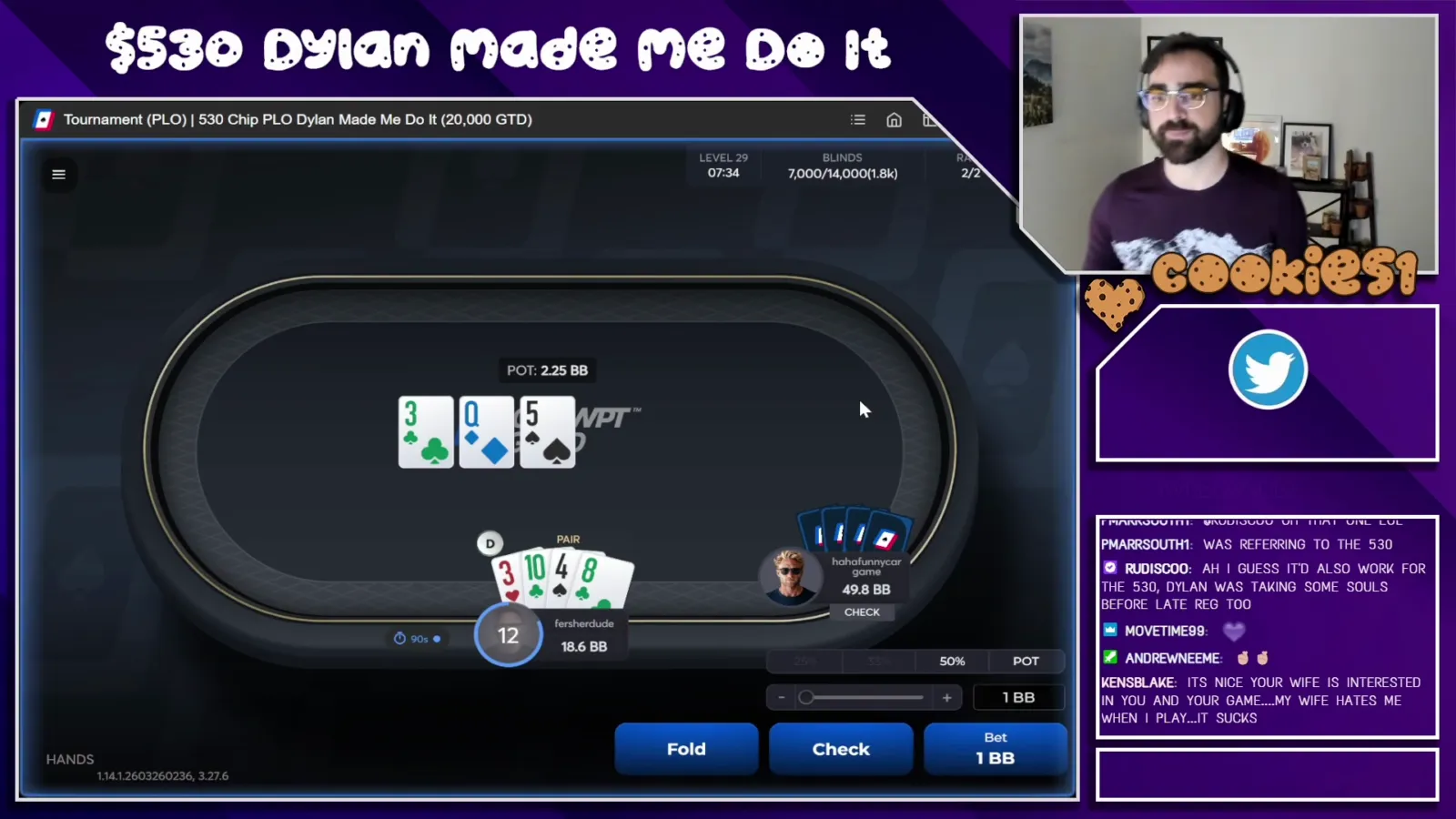
I would treat these videos as extra table time with Dylan, not as the main reason to buy the course. They are useful after the structured modules because you can look for the concepts in a messy environment. They are not a replacement for those modules.
What about the PLO Trainer?
The offer includes access to Upswing’s PLO Trainer, also called Omalytics on current Upswing pages. This is potentially a valuable part of the package because the course repeatedly asks you to understand ranges rather than just watch a coach explain them.
The current official pages are not perfectly aligned on the access terms. The course page mentions one free month, while another Upswing page describes beta access and later subscription pricing. The Omalytics page currently shows a $199 monthly beta rate that locks in before a planned move to $299.
Check the exact trainer terms before paying. The course itself is sold as lifetime access. The software should be treated as a separate recurring cost unless Upswing confirms otherwise at checkout.
A free Dylan Weisman lesson is worth watching first
Upswing has a public lesson called “How To Win Your First PLO Tournament.” It is not a substitute for the course, but it gives you a fair sense of Dylan’s pace, vocabulary and way of reducing PLO decisions to practical rules.
If this feels too fast or too technical, the $999 course will not suddenly become easier.
What do other players say?
There is not enough detailed, independent buyer feedback on this exact course to pretend a real consensus exists. Most search results currently lead back to Upswing, Dylan’s launch material or sites with a commercial reason to recommend poker courses.
The most detailed outside review I found reaches a similar conclusion to mine. It praises the rare focus on PLO tournaments and the ICM material, while criticising the slow pace and limited commentary in the Play and Explain section. That review contains commercial links, so it should not be treated as neutral proof.
Older poker forum discussions are generally positive about Dylan as a PLO coach, but they mostly concern his earlier material. Other players question whether premium PLO courses reveal enough new information to justify four-figure prices. Both views are reasonable. Neither tells you much about this course unless your game, stakes and study habits are similar to theirs.
Upswing offers a 30-day Fair Play guarantee, but eligibility and consumption limits apply. Read those conditions before relying on it as a free trial.
Who should buy Crushing PLO Tournaments?
- You already play PLO and want to move seriously into tournaments.
- You play PLO MTTs but still rely too heavily on cash-game intuition.
- You struggle to adjust limping and raising ranges as stacks get shorter.
- You want detailed ICM and final-table work for a format with limited training available.
- You will use the trainer, review ranges and pause the videos to make your own decisions.
- The $999 price is a reasonable study expense for your stakes and bankroll.
Who should skip it?
- You are still learning basic PLO hand selection and postflop concepts.
- You mainly play cash and do not expect to play many tournaments.
- You want entertainment, quick tips or a simple chart pack.
- You need detailed turn and river libraries to be the centre of the course.
- You already own several expensive courses that you have not finished.
Is Crushing PLO Tournaments worth $999?
For the right PLO tournament player, yes. There simply is not much serious competition covering this exact mix of stack depths, ICM and high-level final-table decisions.
That does not mean the course will earn back $999 by itself. Its value depends on how often you play, how large the decisions are and whether you turn the material into actual study. Watching 40 hours while half-reading your phone is a very expensive way to feel productive.
A regular playing meaningful PLO MTT volume can recover the price by avoiding one or two large final-table mistakes. A low-stakes player who enters a PLO event twice a year probably cannot.
My final verdict
Crushing PLO Tournaments is not broad poker education with four cards added. It understands why PLO tournaments are their own game.
The preflop work gives the course a strong structure. The ICM module is the standout. The final-table reviews prove that the framework survives contact with real money, real opponents and ugly stack distributions. Dylan is also willing to admit where solver work becomes less reliable, which is better than selling false certainty.
The package is not flawless. Turn and river deserve more examples. The longest play videos need tighter commentary. The trainer terms should be clearer, and $999 remains a serious price for anybody outside a committed PLO MTT schedule.
Still, this is one of the more defensible premium poker courses I have seen. It is aimed at a real gap, taught by somebody with current high-stakes results, and strongest in the areas where ordinary PLO knowledge tends to break down.
If you are already a serious PLO tournament player, I think it is worth considering. If you are hoping the course will turn you into one without a lot of work, keep the money in your bankroll.
Crushing PLO Tournaments FAQ
How much does Crushing PLO Tournaments cost?
The official Upswing page currently lists the course at $999 with lifetime access to the course material.
Is the course suitable for PLO beginners?
Not really. It assumes that you understand normal PLO concepts, tournament language, stack depth and basic solver ideas. A beginner would be better off building a cheaper foundation first.
How long is the course?
Upswing advertises more than 50 lessons and roughly 20 hours in the main course. The wider package contains many additional hours of final-table reviews, coaching and Play and Explain footage.
What is the strongest part?
The ICM section. It explains how stack roles, payout pressure and future leverage change actual PLO decisions instead of stopping at the usual advice to tighten up near a pay jump.
Does it include solver access?
The current offer includes some access to Upswing’s PLO Trainer or Omalytics. Official pages differ on the exact duration and ongoing price, so confirm the terms shown at checkout.
Who is Dylan Weisman?
Dylan Weisman is a PLO specialist, two-time WSOP bracelet winner and high-stakes tournament player. Upswing currently lists more than $8.6 million in live tournament winnings, including a seven-figure Triton score.
Sources checked
- Official Crushing PLO Tournaments course page
- Upswing’s PLO tournament course overview
- Official course preview
- Dylan Weisman’s official coach profile
- Official Omalytics PLO Trainer page
- Upswing’s public Dylan Weisman PLO tournament lesson
- CountingOuts review used for an outside comparison
- Dylan Weisman’s Reddit AMA and course discussion