René “TheWakko” Kuhlman, technical coach for The Mechanics of Poker.
The Mechanics of Poker is one of the better poker courses I have reviewed. It is also one of the hardest to recommend. Both can be true.
The poker content is strong. René “TheWakko” Kuhlman does not just open a solver, point at a frequency and call that coaching. He keeps asking the question that actually matters at the table: what makes money against the player or pool in front of you?
Then you see the price. The current public offer costs €2,997. For that money, a course cannot get by on a few clever videos and a mountain of old calls. It has to make you better. I think it can do that for the right online cash player. For everybody else, it may become a very expensive reminder that buying a course is much easier than studying one.
Quick verdict
- Best for: serious online cash players with solid fundamentals who already study with a database or solver
- Skip it if: you are a beginner, play casually, mainly want charts or would be spending a large part of your bankroll
- Current price: €2,997 according to the official payment page
- Best part: learning how to turn theory into decisions that work against real player pools
- Biggest concern: parts of the mindset section sound more scientific than the material really is
ChipVerdict rating: 7.8/10
If this is more course than you need, our Upswing Lab 2.0 review looks at a cheaper monthly library. Live players can compare it with our Destroy Live Cash review.
What is actually inside?
The course has three main parts: poker strategy, mindset, and the business side of being a poker player. The current sales page advertises 14 modules, more than 65 lesson videos and over 40 hours of main course content. The package also includes a large library of recorded Q&A calls.
| Area | What it covers | My view |
|---|---|---|
| Technical game | Solver work, EV, exploitative play, population research, concepts, live play and hand reviews | The reason to consider the course |
| Mindset and performance | Emotions, focus, routines, meditation, sleep and performance habits | Useful in places, oversold in others |
| Management | Feedback loops, bankroll, volume, game selection and moving through stakes | Sensible and practical, but not revolutionary |
| Recorded Q&A | Technical questions, mindset discussions and live interaction | Can be valuable, but much less efficient than the main lessons |
There is a lot here, but hours are a cheap way to make a course sound huge. Roughly 66 of the 134 video hours I found were Q&A sessions. Some of those calls have excellent discussions. They also have small talk, detours and questions that may have nothing to do with your games. One hour of a focused lesson is not the same as one hour of an old group call.
The technical game is the real strength
One of the best lessons I checked was not about some sexy river bluff. It was about why poker players misuse solvers.
A solver answers the exact question you give it. Change the ranges, rake or bet sizes and the answer changes. Real players do not reach the river with perfect ranges. They miss value, use weird sizes and show up with too many or too few bluffs. The course starts with the theory, then looks at where real poker has already moved away from it.
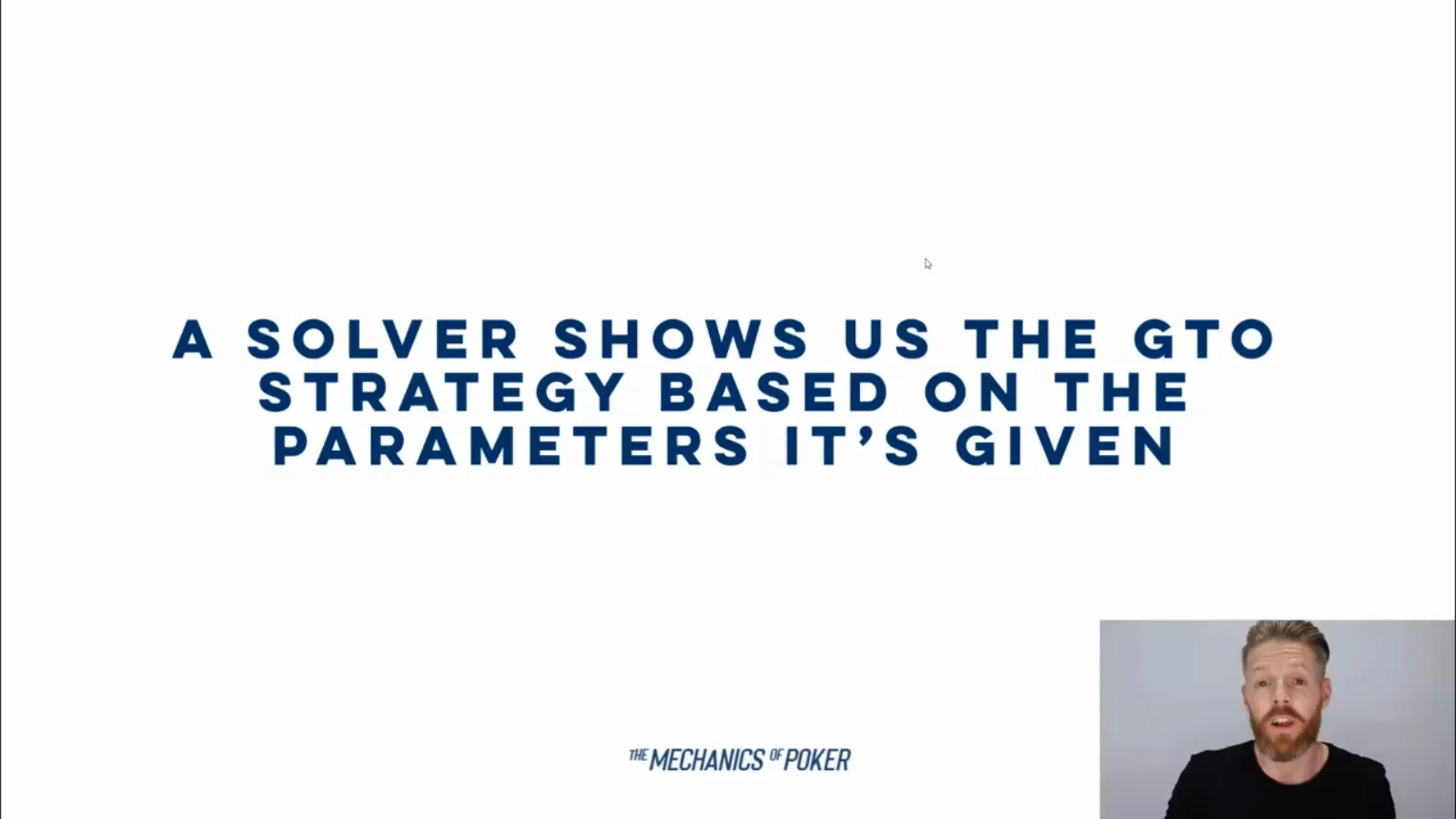
That may sound obvious, but a lot of poker study still ends with somebody copying a frequency they do not understand. TheWakko is good at cutting through that. He looks at spots where two actions are close, which hands benefit first when a pool overfolds, and whether balance even matters against somebody who is not paying attention.
Theory without worshipping the solver
The course does not turn GTO and exploitative poker into two rival religions. Theory gives you a starting point. The pool and the opponent tell you when to move. You stay closer to theory when you are making the other player respond. You can push an exploit harder when they have already built their range badly.
I also liked the warning against fake precision. A microstakes player using a random number generator to protect a perfectly balanced checking range may be solving a problem that does not exist. If the pool folds too much, betting the profitable hands more often can be better than performing balance for an audience of one.
Population research that leads to a decision
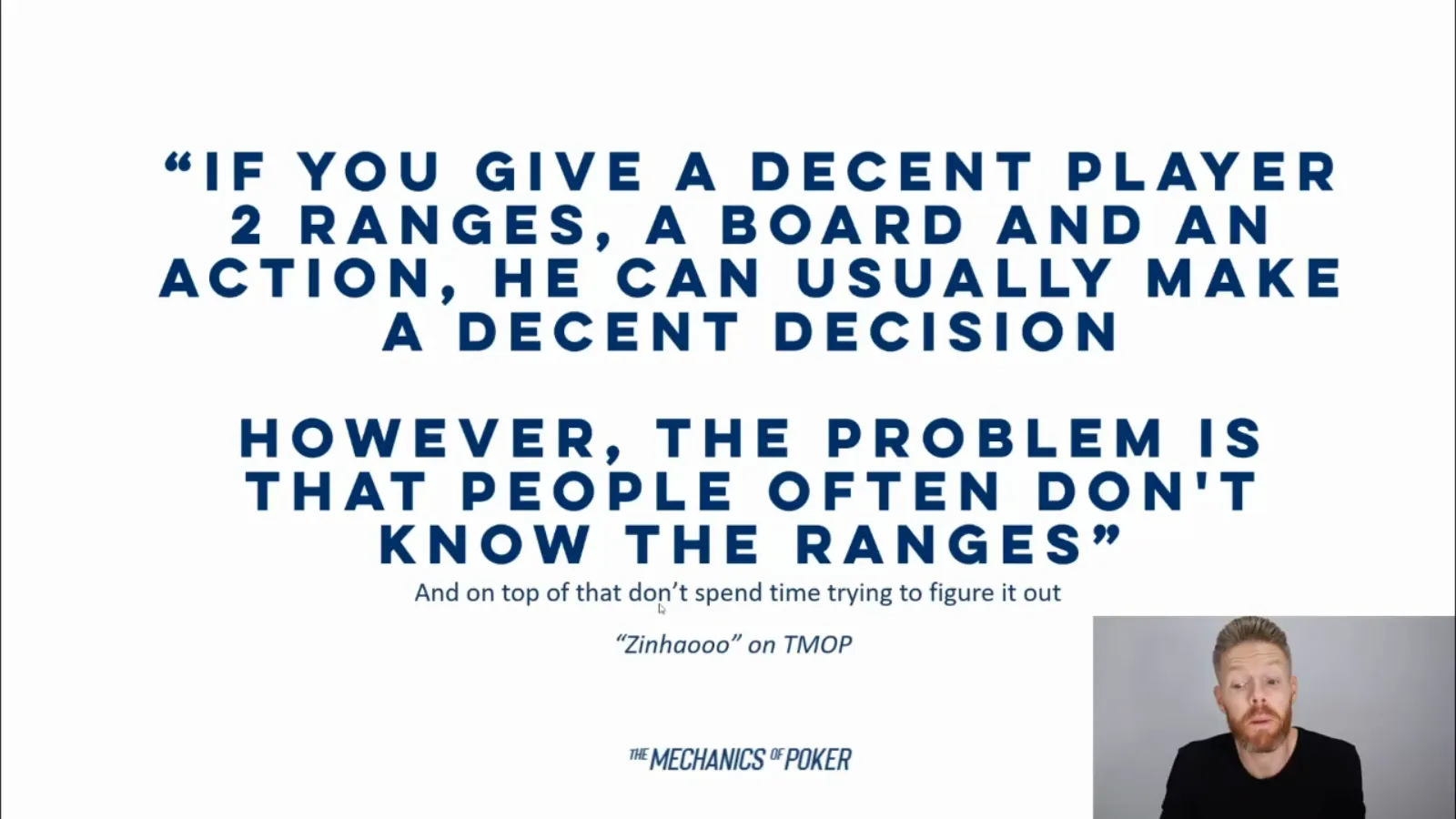
The mass data analysis material is another strong section. It is not presented as a collection of magic numbers. The point is to find spots where a pool reaches the wrong range, uses a weak size, underbluffs or folds too much, then build an adjustment that can actually be used while playing.
The course also talks about site rules and the line between legal study data and information the poker room does not allow. That matters. An edge is not worth much if it gets your account closed.
Specific concepts are explained properly
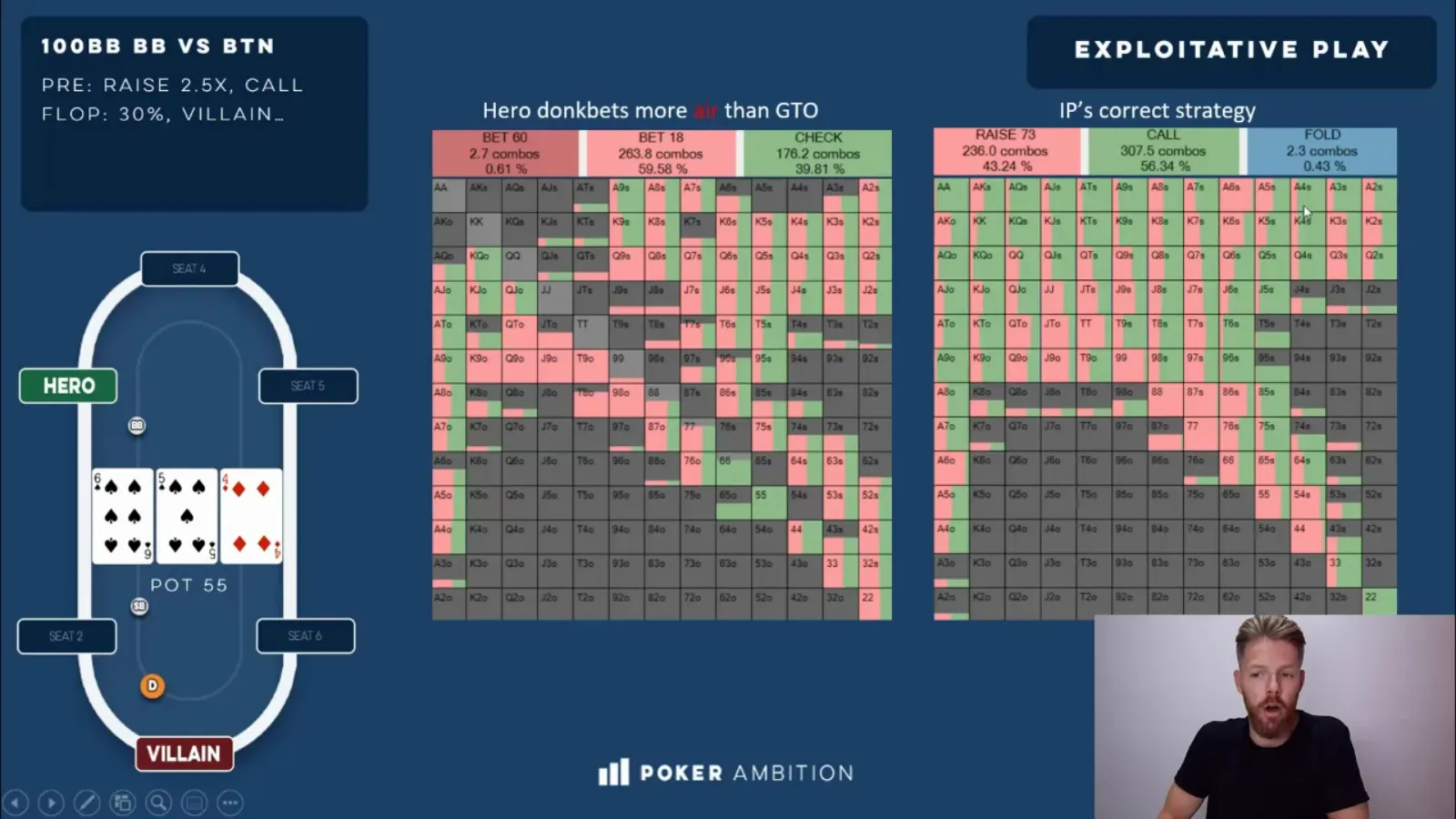
The donk betting lesson is a good example. It does not stop at “the solver leads here.” It explains why a solver comparison can make the lead look less useful than it may be in a real game, because both sides defend perfectly in the sim. A human does not. Leading can attack a change in equity, stop an easy check back and make the next street simpler.
The live play and student review videos confirm that this thinking survives contact with real hands. The coach repeatedly changes a mixed theoretical action into a clear decision when the player type, position or pool gives a reason. Even basic words such as protection are challenged. A bet only protects a hand from the part of a range that actually folds.
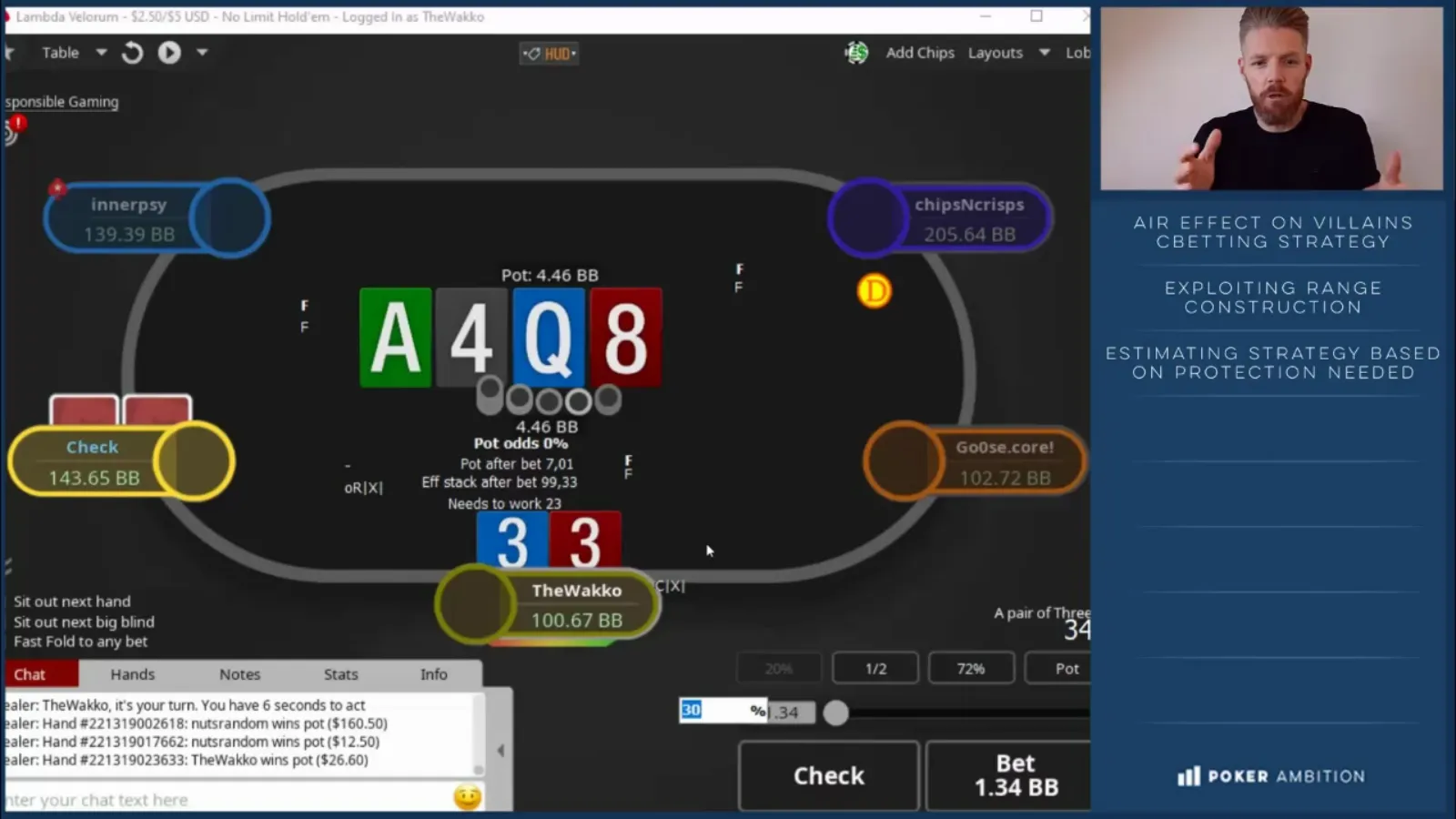
This is the part I trust most. It is not a bag of tricks. It shows how to move from a clean solver world to a messy poker game without inventing an exploit because you feel like it.
The mindset section is useful, but it needs a filter
Adam Carmichael’s material is more difficult to judge because the good and weak parts often sit next to each other.
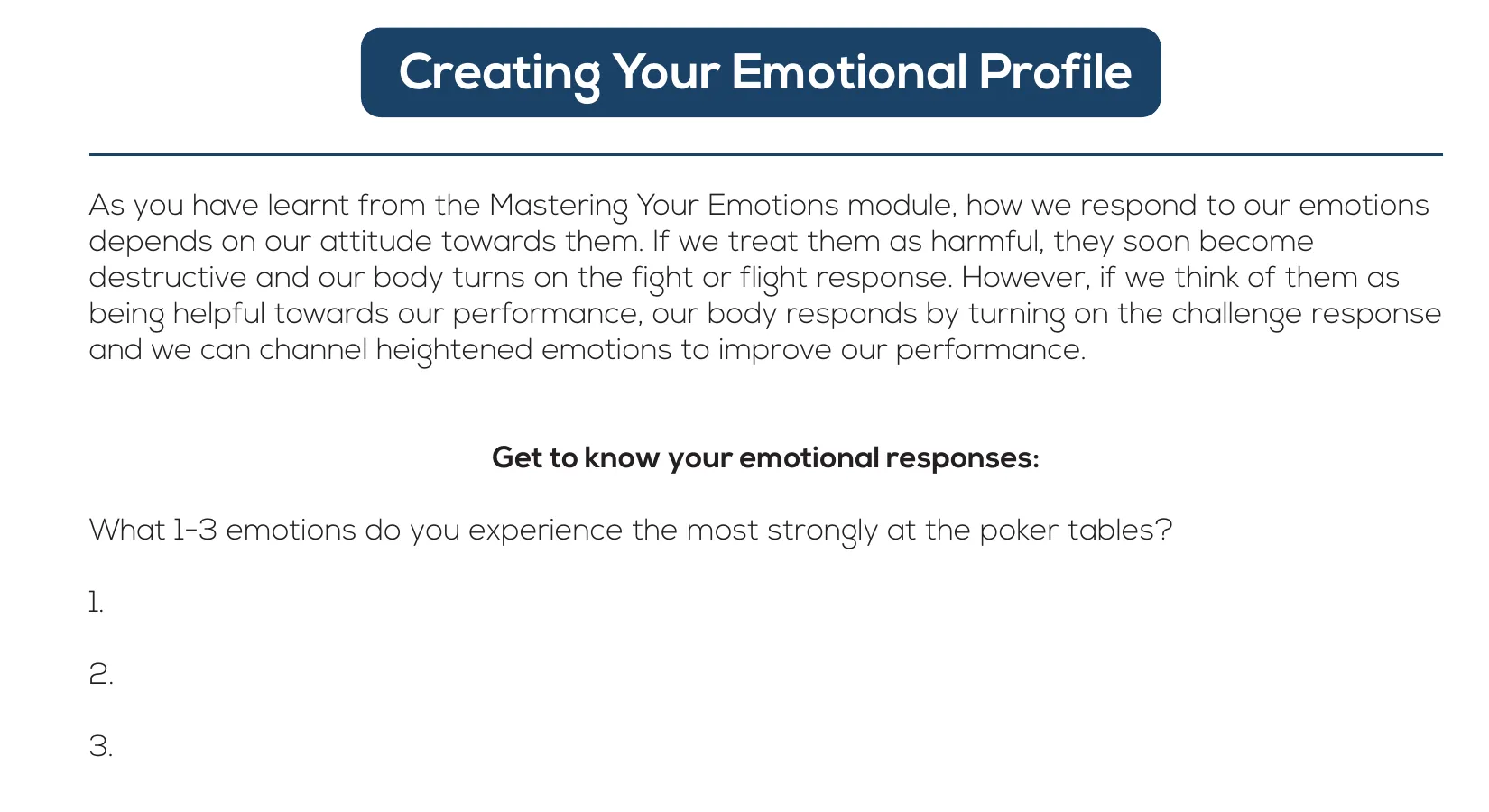
The practical stuff is useful. You are asked to spot the emotions that keep showing up, notice what happens in your body and decide how you want to react before the next ugly session. The advice on sleep, focus, warmups and steady study is sensible. The mindset Q&A I checked also felt human. It pushed consistency instead of another ridiculous seven day life reset.
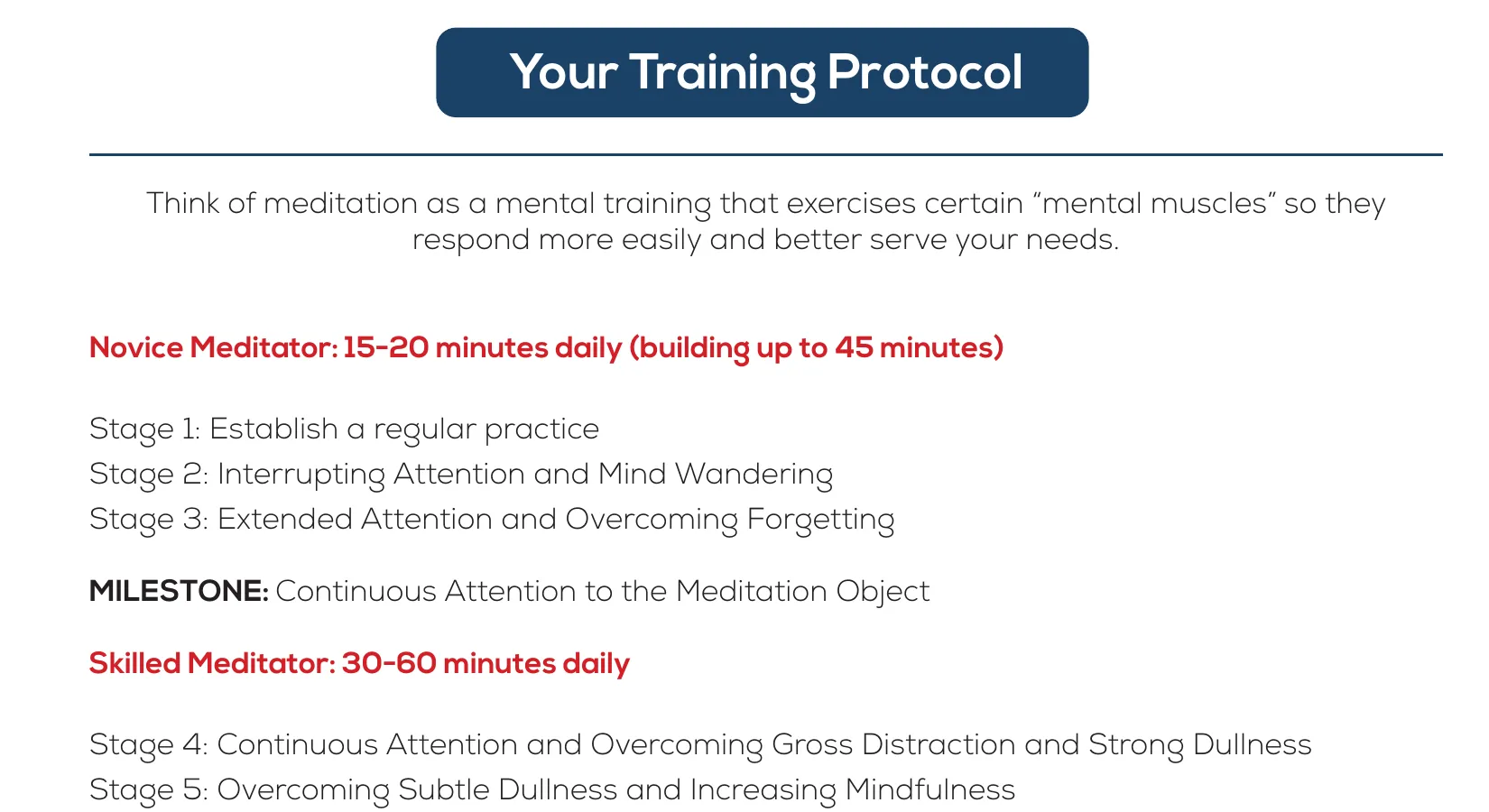
Then the language gets carried away. Some lessons talk about reprogramming emotions, controlling every area of life and becoming the ultimate master of the mind. Emotions are described as energy in motion. A meditation progression is presented with claims that go well beyond what the course demonstrates.
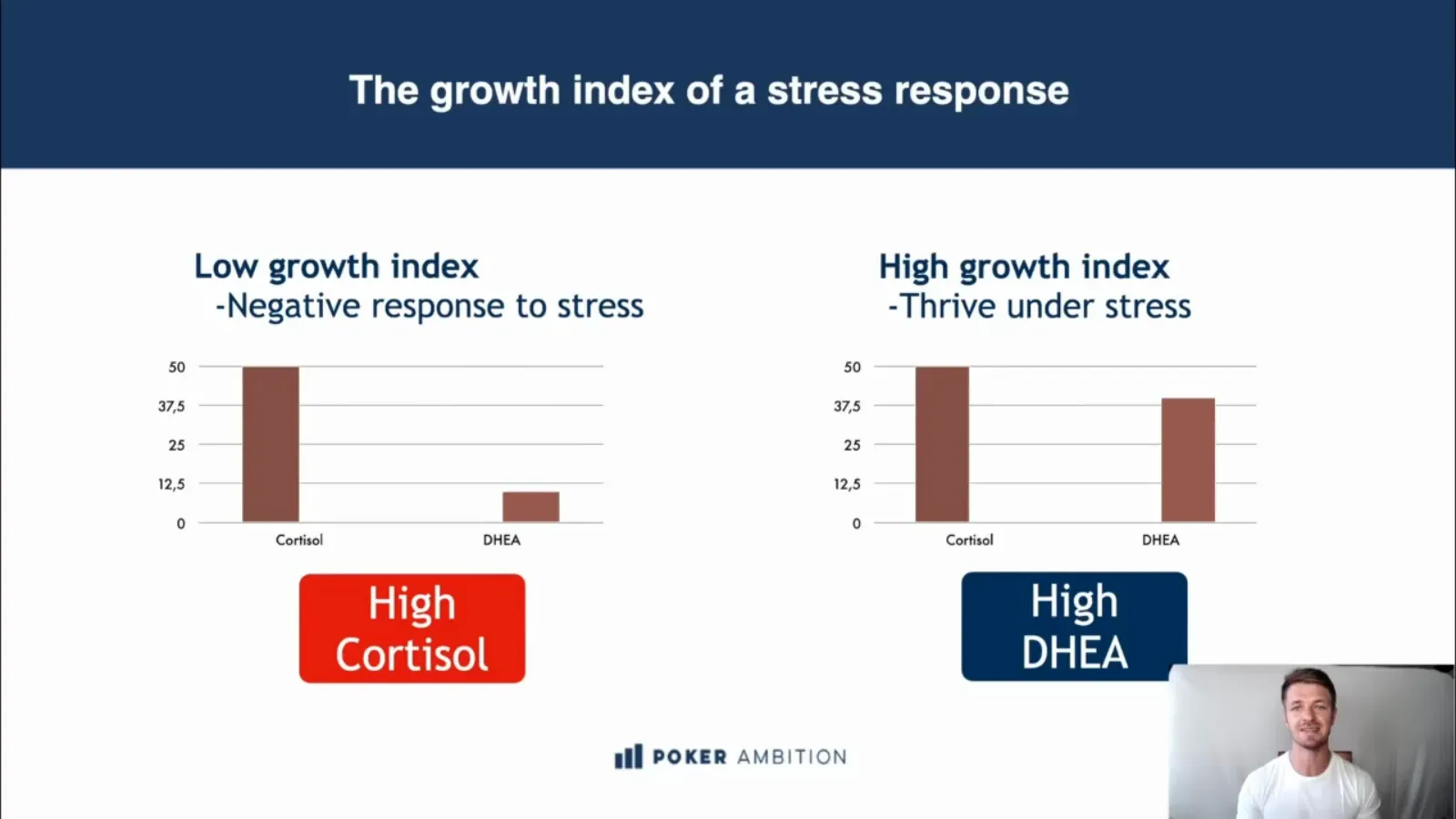
I do not think this part is nonsense. A player who tilts, avoids study or plays half asleep can lose far more from that than from a small strategy leak. The exercises can help. I just would not swallow every confident claim as science. Keep what improves your play and leave the big promises behind.
Management is practical rather than groundbreaking
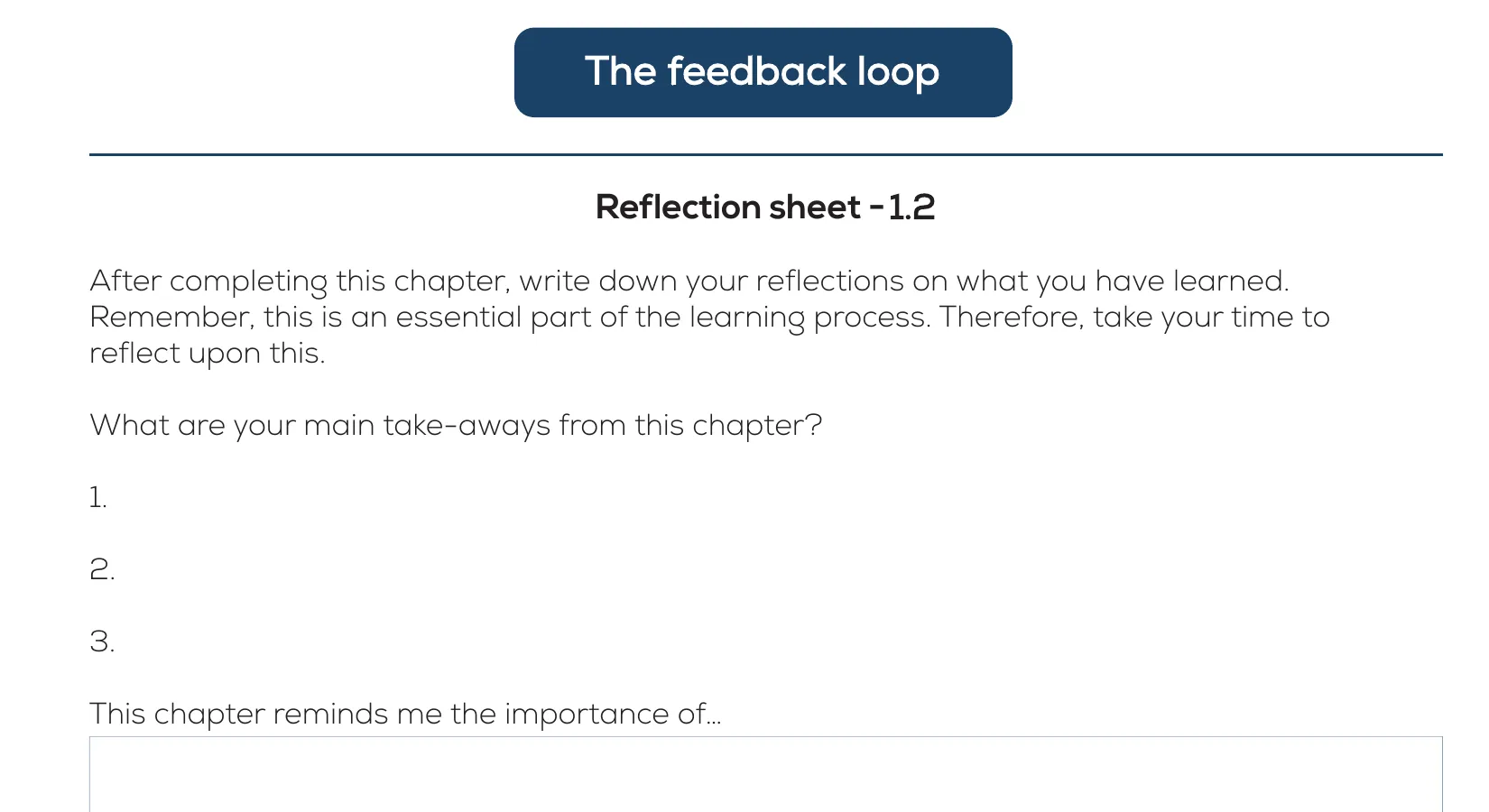
The management part covers bankroll decisions, game selection, volume, win rate and moving between stakes. The basic idea is simple. Find a real problem, work out what causes it, fix one part and check whether the leak comes back.
None of that is revolutionary. It does not need to be. Poker players are very good at collecting ten possible leaks and fixing none of them. The course is strongest when it forces a player to choose one problem that can be measured and turn it into work for the next week.
The bankroll and shot taking advice is equally sensible. Choose games that justify the risk, move down quickly when the shot fails and do not confuse a bigger stake with a better career decision. This is the kind of advice most players already know and regularly ignore.
Are the worksheets worth anything?
The worksheets range from useful to very basic. The emotional profile gives the student a concrete task. The technical reflection sheets help turn a lesson into questions for real hands. Other files are mostly blank prompts, and the meditation protocol is a general practice plan rather than a unique poker tool.
They improve the course if you actually fill them in. They do not add much value if they stay in a download folder. The same is true of most poker homework, but it matters more when the course costs almost three thousand euros.
The teaching style
TheWakko likes to take an idea apart and keep asking where the money comes from. It never turns into a boring solver recital. Strong players will like that. Somebody looking for a quick chart and one easy rule may find him slow.
The structured lessons are much better than the recorded calls. One technical Q&A I checked contained detailed range and population discussion in the middle, but it opened and closed with material that could have been cut. That is normal for a live call. It is also why the total hour count should not impress you by itself.
The course expects active study. It regularly asks the viewer to pause, answer a question and compare the answer with the coach’s reasoning. If you do that, the slower pace makes sense. If you play every video in the background, you will finish with a lot of familiar words and the same decisions.
What do other players say?
What I found from buyers was positive, but there is not enough of it to pretend the whole poker world agrees.
In a PokerStrategy training blog, one buyer called the course fantastic and specifically praised the focus on understanding why a play works. In separate Reddit discussions, two commenters said the course was worth the money despite its cost. Another discussion praised the free Mechanics of Poker podcast for its mental game conversations and guests, while also noting that episodes can run long.
Those comments line up with what I saw. They are still only a handful of people. Liking a free podcast also does not prove a €2,997 course is worth the money. I found several other “reviews” that looked like reseller copy, with near perfect scores and barely any criticism. I ignored those.
Who are the coaches?
René Kuhlman, known online as TheWakko, teaches the technical game. His public profile and long form interviews centre on high stakes online cash play and coaching. The public Hendon Mob database lists his live tournament results, but those results do not prove or disprove an online cash career. They are different games and different records.
Adam Carmichael teaches mindset and performance. His official biography says he has a sports science degree and has worked individually with hundreds of poker players from 32 countries. That is the creator’s own claim. I could not independently verify the client number, so I would not use it as the reason to buy.
This public interview gives more background on TheWakko’s poker career and the way he thinks about the game.
The price changes the verdict
The current payment page lists The Mechanics of Poker at €2,997, reduced from a stated regular price of €3,997. It advertises lifetime access, a private Discord, monthly group coaching, two individual coaching sessions and bonus material on blind versus blind play and river decisions.
At this price, the videos are only part of the calculation. The live calls, community and individual coaching have to matter to you. A serious 200NL player can recover the fee through a small improvement in win rate or game selection. A 10NL player can learn the same concepts and still make a terrible bankroll decision.
There are much cheaper ways to study with a plan. Upswing Lab currently sells a big course library, charts, weekly sessions and a community for $99 per month or $699 per year. It is not the same product. The Mechanics of Poker is more focused and includes closer coaching. Still, once the price hits €2,997, it has a lot more to prove.
Ask for the guarantee terms before paying
The official offer advertises a value guarantee. The general terms say that one off products cannot be refunded once the service starts and refer buyers to specific terms for this course. I could not find a clear public explanation of exactly how the advertised guarantee is judged or claimed.
That does not mean the guarantee is false. It means I would ask for the exact conditions in writing before sending €2,997. At this price, “terms apply” is not enough information.
Who should buy it?
- You play online cash seriously and your fundamentals are already solid.
- You use a tracker, database and solver, but struggle to turn analysis into decisions against real players.
- You are willing to bring hands to calls, use the community and take the individual coaching seriously.
- The price is a business expense you can afford, not money taken from a fragile bankroll.
Who should skip it?
- You are still learning basic preflop ranges and pot odds.
- You mainly play casual live poker and do not plan to work with databases or solvers.
- You already own several courses that you have not finished.
- You want a short program that tells you exactly what to do without showing the reasoning.
- Paying €2,997 would reduce the bankroll you need to play comfortably.
My final verdict
I think The Mechanics of Poker is a very good course and a difficult purchase.
The technical section is excellent. It teaches a way of thinking that still works after a chart gets old and a solver output is forgotten. The live play and hand reviews show that it also works at the table. That is rare enough to matter.
The mindset material is more uneven. Some exercises are practical and useful. Some claims dress ordinary coaching ideas in language that sounds more scientific and transformative than it needs to be. The management section is sensible, although much of it will feel familiar to an experienced professional.
At €2,997, I would only buy it if I were already playing meaningful online cash stakes and intended to use the calls, community and coaching. I would not recommend it to a beginner, a passive viewer or someone hoping that an expensive purchase will create discipline.
The right player can probably get more value from it than the price. The wrong player will get 134 hours of intelligent poker content and exactly the same problems they had before.
Sources checked
- Official Mechanics of Poker course page
- Official payment and offer page
- Mechanics of Poker terms
- Official Adam Carmichael biography
- GipsyTeam profile of René Kuhlman
- René Kuhlman’s Hendon Mob profile
- PokerStrategy buyer discussion
- Reddit buyer discussion
- Reddit poker course discussion
- Upswing Lab offer used for price context